The Real Story behind the Virgin Birth in Christianity | Bart Ehrman

377 views  ·  Last viewed: 4 hrs ago
Uploaded: 16 Dec 2025   (9 months ago)  ·  Shared: 25 Feb 2026
  JESUS

Video Description (from Youtube)

Links Mentioned in this Episode: - https://www.bartehrman.com/500 - Dive into the complex history, diverse beliefs, and political evolution of early Christianity with one of the world’s most acclaimed

historians, Paula Fredriksen. We start Jan 27 and run through April 23. Enroll now!
- https://bartehrman.com/herod - Join Dr. Jodi Magness for Herod: The Tyrant of Christmas, a live two-lecture event exploring the real man behind one of history’s most infamous rulers. 
- https://bartehrman.com/facetoface - Face to Face on the Bible is back with its second installment, a special Christmas edition. 
- https://www.bartehrman.com/courses - Up to 60% off our Christmas courses in a limited time Christmas bundle.

*Episode Description*

Christian tradition often places the virgin birth of Jesus at the heart of its theology and Christmas celebrations. But as Megan Lewis and Bart Ehrman reveal, the historical roots of this doctrine are far more complex—and more recent—than many might assume.

This episode kicks off with a playful discussion about holiday plans and the latest Christmas-themed courses being offered, including “Herod, the Tyrant of Christmas” and a lively debate: “Was Jesus really born in Bethlehem?” But it quickly pivots to scholarly inquiry: When did stories of the virgin birth first appear in the Christian canon? What do the earliest Gospel texts and other ancient sources actually say about the birth of Jesus?

Bart Ehrman first reflects on how his views about biblical scholarship have evolved, particularly regarding Jesus’ divinity in the Gospels, setting the stage for a nuanced exploration of the virgin birth story. The conversation turns to the Greco-Roman context: While ancient myths abound with gods fathering children with mortal women (looking at you, Zeus!), these figures were rarely born to virgins. Instead, classical demigods’ births usually involved physical unions.

Moving through the New Testament, the hosts clarify that Mark, the earliest Gospel, contains no mention of Jesus’ virgin birth, nor is it found in John, Paul’s letters, or other early Christian writings. The story first surfaces in Matthew, likely written in the mid-80s CE, as part of an attempt to fulfill prophecy. Luke follows, but with a subtly different spin—presenting Jesus’ birth as an act of divine intervention akin to Greco-Roman demigod stories, yet distinct in its emphasis on Mary’s virginity.

Why did this idea take such hold in later Christian theology? Bart Ehrman discusses the theological tension between Jesus’ humanity and divinity, and how the virgin birth provided a solution for those seeking to affirm both. However, he points out, even these Gospel accounts do not fully reconcile the nuances later found in official Christian creeds.

Throughout, the episode carefully distinguishes the distinct messages and intent behind each Gospel’s presentation of Jesus’ origin, cautioning against the tendency to harmonize divergences—a practice that often obscures the unique perspectives of each author.

The show closes with a bonus segment (“Misquoting Bart”), where Bart Ehrman directly responds to critiques of his work, clarifying misconceptions about biblical inspiration and transmission of the text.

*3 Key Takeaways*
- The Virgin Birth Story is a Later Development. The doctrine does not appear in the earliest Christian sources (Mark, John, Paul, or other early writings), but rather emerges in the Gospels of Matthew and Luke—decades after Jesus’ death.
- Biblical Prophecy Was Misinterpreted. The prophecy in Isaiah 7:14 originally referred to a young woman, not a virgin, and was a contemporary sign for a political crisis—not a messianic prediction. The confusion stemmed from translation errors and retroactive interpretations by early Christians.
- Each Gospel Has a Distinct Take. Matthew’s account roots the virgin birth in fulfilled prophecy; Luke’s portrays a unique divine intervention. John omits the virgin birth entirely, focusing instead on the incarnation of the divine Word. These are separate and, at times, contradictory conceptualizations.

*Key Points*
- The virgin birth is not found in the earliest Christian writings—neither Mark nor Paul mentions it.
- Matthew’s account aims to fulfill a misunderstood prophecy from Isaiah 7:14.
- Luke’s narrative is influenced by ancient stories but emphasizes Mary’s virginity and God’s direct role.
- Classical mythology often involves gods fathering children with mortals, but rarely through virgin births.
- The Hebrew term “alma” means “young woman,” not “virgin”; mistranslation led to doctrinal development.
- John’s Gospel presents Jesus as the incarnation of the Word but does not mention virgin birth.
- Early Christians retroactively interpreted Hebrew scriptures to fit their theological narratives.
- Theological necessity for Jesus to be both fully human and fully divine increased the virgin birth’s importance.

Explore More

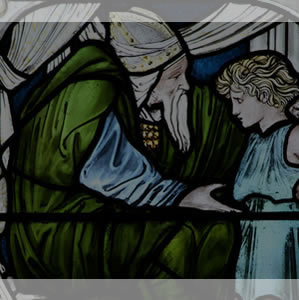
What was the Virgin Birth?
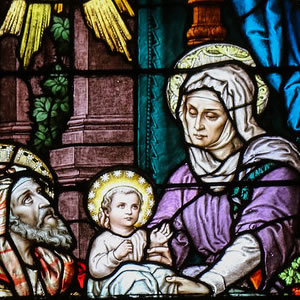
In Christianity and Islam, it is asserted that Jesus of Nazareth was conceived by his mother Mary solely through divine intervention and without sexual intercourse, thus resulting in his virgin birth. In accordance with these beliefs, Jesus had just

one biological parent instead of the necessary two; Mary's husband Joseph was his father only in the legal sense. Most Christians hold that Mary's virginity was perpetual. Though not biologically related, Jesus being Joseph's adoptive son is cited as linking him to the Davidic line. The Christian understanding is that the birth of Jesus by a virgin woman was made possible by the Holy Spirit of the Trinity.
What is Christianity?
Christianity is a global religion centered on the life and teachings of Jesus Christ, who followers believe is the Son of God. It's a monotheistic faith, meaning Christians believe in one God who exists in three co-equal persons: God the Father, God

the Son (Jesus Christ), and the Holy Spirit. Christianity is based on the Bible, with the Old Testament and New Testament serving as sacred texts.

Who is Bart Ehrman?
Bart Ehrman (born 1955) is an American New Testament scholar focusing on textual criticism of New Testament, historical Jesus, and development of early Christianity. Ehrman has written and edited 30 books, including three college textbooks. He has

also authored six New York Times bestsellers. He is currently the James A. Gray Distinguished Professor of Religious Studies at the University of North Carolina at Chapel Hill.


SUBSCRIBE

Receive the latest news and updates by email - Subscribe Now!
About  |  Q&A  |  Contact Us    •    Terms  |  Privacy  |  Disclaimer  |  Sitemap
Connect:      Facebook  |    Twitter  |    Youtube
MuslimProphets.com is an educational website on the Prophets of God: David, Noah, Abraham, Moses, Jesus and Muhammad, who established the Abrahamic faiths of Judaism, Christianity and Islam.

MuslimProphets.com explores contemporary social themes through Scripture, Evidences, Photo, Video, Maps, Current Affairs, Debate and 'alternative' Views held by Theologians, Apologists, Scholars and Street Preachers.

In accordance with Islamic etiquette, all prophet names should be followed with 'Peace Be Upon Him (PBUH)'. This is omitted to minimise text.

DISCLAIMER
The historical information provided on this website is for educational and informational purposes only.
History is an ongoing interpretation of past events. Historical accounts are shaped by the perspectives, biases, and cultural influences of their time; therefore, no content on this website should be taken as absolute, 100% factual truth. We encourage readers to approach historical narratives with a critical mind.

All website content is available in the public domain. While all information is gathered from sources believed to be reliable, its absolute accuracy cannot be guaranteed.

EXTERNAL LINKS & SEO
External links are provided as a convenience and for informational purposes only. They do not constitute an endorsement or approval of any products, services, or opinions of any organization or individual. Title and text links may be edited for external SEO, internal site structure, and keyword search purposes. We bear no responsibility for the accuracy, legality, or content found on any external website or its subsequent links.

MEDIA & SOURCE ATTRIBUTIONS
Unless otherwise indicated, all images and content are licensed under a Creative Commons Attribution License distributed by Wikipedia, Wikimedia Commons, Pixabay, Unsplash, and similar platforms. While every effort is made to accurately source all media, contact us if you believe your copyright has been infringed so we can address and resolve the matter promptly.

All videos are hosted on and viewable via YouTube servers. Video titles are generated based on the original video title, the overall content theme (including actual dialogue and transcripts), and AI-based recommendations optimized for SEO, keyword density, and internal search functions. Video titles do not represent the views held by the YouTube video uploader, or any associated individual, organisation, or business.

All Torah, Psalms, and Old/New Testament Bible quotes are from the King James Version (KJV) Holy Bible, which is in the public domain.
All Quran quotes are from the Taqi-ud-Din al-Hilali / Muhsin Khan English Quran translation.

CORRECTIONS
If you spot a mistake, error, or omission of information, please contact us so we can review and correct it.