634 views
·
Last viewed: 2 days ago
Uploaded: 29 Dec 2025 (10 months ago) · Shared: 23 Feb 2026
Duration: 12:19
Uploaded: 29 Dec 2025 (10 months ago) · Shared: 23 Feb 2026
Duration: 12:19
Youtube Description
Clip taken from: https://www.youtube.com/watch?v=WFWizN3QoPg Subscribe to the Predictive History Channel by Prof. Jiang Xueqin:https://www.youtube.com/@PredictiveHistory
Join Prof Jiang's discord server: https://discord.gg/dgCp3h7Spk
Explore More
Pax Americana Jiang Xueqin Technocracy GODSearch Google Search Explore Topics
 What is Pax Americana?
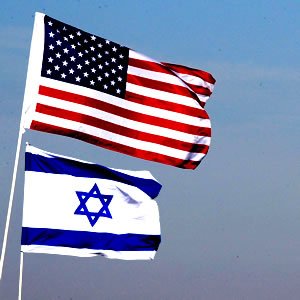
Pax is the Latin word for 'peace' denoting a state of harmony, tranquility, or the absence of hostility. In historical and political contexts, it refers to a lasting, often enforced, period of stability within a large area or empire under a dominant power. PAX ROMANA ('ROMAN PEACE'), 27 BC-180 AD This was the period of international peace where the world was subservient to the dominance of the Roman Empire. Definition: A roughly 200-year period of relative stability in the Mediterranean world initiated by Augustus, following the transition from Republic to Empire. Characteristics: Built on the overwhelming military power of the legions (gladii), it was enforced through direct territorial occupation and Roman law. Dark Side: Involved the brutal crushing of enemies, high taxes, and the assimilation of local identities into the Roman state. PAX BRITANNICA ('BRITISH PEACE'), 1815-1914 This was the period of international peace where the world was subservient to the dominance of the British Empire. Definition: The period of British dominance between the end of the Napoleonic Wars (1815) and World War I (1914), sometimes extended to 1956. Characteristics: Modeled on Pax Romana, this era was defined by the Royal Navy's control of the seas, free trade, and the expansion of the British Empire. Dark Side: It was an imperial project that facilitated colonial exploitation, often justified by a "civilizing" mission. PAX AMERICANA ('AMERICAN PEACE'), 1945-PRESENT This is the current period of international peace where the world is subservient to America USA. Definition: The period of US hegemony following World War II (1945), characterized by global relative stability overseen by the US. Characteristics: Maintained through alliances (NATO), international institutions (UN, IMF), economic superiority, and technological/military superiority. Dark Side: Described by some as more subtle than Rome's, yet it involves surveillance and, at times, unilateral intervention. It is currently seen as increasingly unstable. PAX JUDAICA ('JEWISH PEACE') This is a hypothetical period of future international peace based on submission to Israeli/Jewish dominance over international affairs. Definition: A concept, often discussed within Islamic eschatological studies or as a theoretical future, referring to an Israeli-led world order, often labeled the "Zionist World Order". Characteristics: Proposed as a successor to Pax Americana, it is conceptualized as a shift from direct military occupation to control via proxy power, AI, and intelligence-driven surveillance. Context: It is often portrayed as a dystopian or, conversely, a prophetic, centralized rule emanating from Jerusalem.
 Who is Jiang Xueqin?
Jiang Xueqin (born 1976) is a Chinese-Canadian educator, writer, historian, and geopolitical theorist based in Beijing, China. He is known for his contributions to education reform in China. In particular promoting creativity, critical thinking, and global citizenship, as well as for his YouTube channel Predictive History, where he applies structural historical analysis, game theory, and concepts inspired by Isaac Asimov's fictional psychohistory to interpret and forecast major geopolitical developments.
 What is Technocracy?
Technocracy is an ideological governing system in which decision-makers are selected on the basis of their expertise in Science or Technology. This system contrasts with the notion that elected representatives should be the primary decision-makers in government, though it does not necessarily imply eliminating elected representatives. Leadership skills for decision-makers are selected on the basis of specialized knowledge and performance, rather than political affiliations or parliamentary skills.
 Who is GOD?
In monotheism and henotheism, God is conceived as the Supreme Being and principal object of faith. The concept of God as described by theologians commonly includes the attributes of omniscience (infinite knowledge), omnipotence (unlimited power), omnipresence (present everywhere), omnibenevolence (perfect goodness), divine simplicity, and eternal and necessary existence. In theism, God is the creator and sustainer of the universe In deism, God is the creator, but not the sustainer, of the universe Monotheism is the belief in the existence of one God or in the oneness of God In pantheism, God is the universe itself In atheism, God is purported not to exist, while deemed unknown or unknowable within the context of agnosticism.