423 views
·
Last viewed: 14 hrs ago
Uploaded: 07 Feb 2026 (8 months ago) · Shared: 13 Feb 2026
Duration: 1:14:59
Uploaded: 07 Feb 2026 (8 months ago) · Shared: 13 Feb 2026
Duration: 1:14:59
Youtube Description
Was Jesus truly a historical figure… or a character shaped by the Roman Empire? In this explosive MythVision episode, Derek Lambert sits down withJames Valiant to discuss Francesco Pirotta’s controversial book “Jesus Was Caesar” and the shocking parallels between Julius Caesar and Jesus Christ.
This conversation explores a bold theory: that the New Testament may have been influenced — or even shaped — by Roman imperial propaganda, especially through the cult of the deified Caesar and political ideology designed to win the loyalty of the masses.
This episode examines striking parallels such as:
- Caesar and Jesus being called “Son of God”
- The “king/messiah” claim as a political threat
- The influence of the imperial cult on early Christianity
- Possible connections between Josephus, the Flavians, and the Gospels
- Symbolic and allegorical storytelling in New Testament literature
Is it conspiracy… or an overlooked historical hypothesis?
Watch until the end and decide for yourself.
#Mythical #JesusMythTheory #HistoricalJesus #JesusDebate #BiblicalCriticism #ReligiousHistory #JesusMyth #ChristMythTheory #Skepticism #SecularScholarship #CriticalThinking #AtheistPerspective #FaithVsFact #BeliefQuestions #HistoricalJesus #ApocalypticProphet #Eschatology #BiblicalStudies #NewTestament #MythVision #MythVision
#Mítico #JesusHistórico #DebateSobreJesus
============================
CONTACT ME
Website: 👉 https://mythvisionpodcast.com/
Email MythVision: 👉 mythvisionpodcast@gmail.com
Facebook Page: 👉 / mythvision
Facebook Group: 👉 / thewaterboyzradio
Twitter X: 👉 https://x.com/DerekPodcast - - @DerekPodcast
TikTok: 👉 / mythvision
Instagram: 👉 / dereklambert_7
Discord: 👉 / discord
===========================
Join this channel to get access to perks:
https://www.youtube.com/channel/UCgLZ5SDuR1W_xO8y3A_4VVw/join
Explore More
James Valliant Derek Lambert New Testament Roman MythSearch Google Search Explore Topics
 Who is James Valliant?
For over 30 years, Authors James Valliant painstakingly researched Christianity's mysterious origins. In the process, he formed a startling conclusion that was met at every turn by more and more compelling evidence. The theory, and the irrefutable proof found supporting it over three decades, will utterly change the understanding of some of the most important historical forces that are shaping our world to this day.
 Who is Derek Lambert?
MythVision Podcast (MVP) brings you some of the finest information surrounding Mythology. Knowledge from a variety of people in search of a better understanding of ancient text. We discuss mythology, syncretism, astrotheology, gematria, sacred geometry, secret societies, ancient languages, history, prophecy, scholarship, conspiracies, heretical ideas, myth interpretations and much more.
 What is New Testament?
The New Testament is the second part of the Christian biblical canon. The first part being the Old Testament, based on the Hebrew Bible. The New Testament discusses the teachings and person of Jesus, as well as events in first-century Christianity. Christians regard both the Old and New Testaments together as sacred scripture. The New Testament (in whole or in part) has frequently accompanied the spread of Christianity around the world. It reflects and serves as a source for Christian theology and morality.
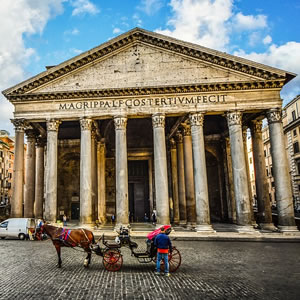 What is Roman?
In historiography, ancient Rome is Roman civilization. From the founding of the city of Rome in the 8th century BC to the collapse of the Western Roman Empire in the 5th century AD, encompassing the Roman Kingdom, Roman Republic and Roman Empire until the fall of the western empire. The civilization began as an Italic settlement in the Italian peninsula, dating from the 8th century BC, that grew into the city of Rome and which subsequently gave its name to the empire over which it ruled and to the widespread civilisation the empire developed. The Roman empire expanded to become one of the largest empires in the ancient world, though still ruled from the city, with an estimated 50 to 90 million inhabitants (roughly 20% of the world's population) and covering 5.0 million square kilometres at its height in AD 117.
 What is Myth?
Mythology refers to a collection of sacred, traditional tales from a specific culture that explain natural phenomena, world origins, and cultural values. This often featuring gods, goddesses, and heroes. It serves as a lens for interpreting shared human experiences through stories, rituals, and art. Myth is a genre of folklore consisting primarily of narratives that play a fundamental role in a society. For scholars, this is totally different from the ordinary sense of the term myth, meaning a belief that is not true, as the veracity of a piece of folklore is entirely irrelevant to determining whether it constitutes a myth. Myths are often endorsed by religious and secular authorities, and may be natural or supernatural in character. Many societies group their myths, legends, and history together, considering myths and legends to be factual accounts of their remote past. In particular, creation myths take place in a primordial age when the world had not achieved its later form. Origin myths explain how a society's customs, institutions, and taboos were established and sanctified. National myths are narratives about a nation's past that symbolize the nation's values. There is a complex relationship between recital of myths and the enactment of rituals.