991 views
·
Last viewed: 2 days ago
Uploaded: 09 Aug 2025 (1 year ago) · Shared: 03 Sep 2025
Duration: 19:10
Uploaded: 09 Aug 2025 (1 year ago) · Shared: 03 Sep 2025
Duration: 19:10
Youtube Description
Israel & Zionism get debunked historically, legally, politically, ethically and philosophically in this mammoth episode of OnGuard with AbdullahAndalusi joining our host Hamza Andreas Tzortzis.
Become a Guardian TODAY by visiting https://www.islam21c.com/guardians/
Chapters:
0:00 Intro
03:15 Crash course in 5000 years of history
19:51 DNA studies surprises
24:53 International Law after the Age of Empires
30:35 They argued against democracy
39:08 The Invention of the Anti-Semitism smear
48:59 The Safest Place on Earth for Jews
52:52 Islamic Rule
01:01:22 Why is Israeli occupation illegal?
01:11:04 A shocking counterargument
01:17:59 Peace without Justice
01:27:10 'Palestinians don't want peace'
01:29:46 Palestinians blamed for the Holocaust!?
01:37:12 The Mufti of Jerusalem - a shocking revelation
01:39:32 A home for Jews after the Holocaust
01:47:37 But Israeli Arabs!
02:01:56 Demystifying October 7th
02:08:30 If France invaded London
02:14:26 Does H*mas want to k*ll Jews?
02:23:35 Isn't Israel justified in exterminating H*mas?
02:29:21 What's the Islamic solution?
02:41:08 Military is NOT the solution?
02:45:10 End with one final shocker
02:48:04 Palestine Advocacy course coming soon
Palestinians have inhabited their land for millennia, with genetic studies confirming 70-90% correspondence between modern Palestinians and ancient Canaanites from 4,000 years ago. This scientific evidence directly contradicts the Zionist narrative that portrays Palestinians as newcomers to the region.
• Genetic research shows Palestinians have preserved more ancient Canaanite DNA than European Jews who have approximately 40-50% correspondence
• Ben-Gurion himself acknowledged Palestinians descended from Jewish farmers who lived in the region 2,000 years ago
• The land was called 'Palestine' for over two millennia, named after the Philistines encountered by Herodotus around 500 BCE
• Lord Balfour admitted Britain 'deliberately declined to accept the principle of self-determination' in Palestine
• Einstein opposed Zionist political control, advocating instead for a 'secured bi-national status in Palestine'
• Anti-Zionism is not anti-Semitism – Ben-Gurion understood Palestinian opposition was to foreign occupation, not Judaism
• The occupation of West Bank and Gaza violates the UN Charter principle that territory cannot be acquired through conquest
• Israel's security arguments parallel those used to justify slavery and other historical oppressions
• Under Islamic governance, Jews historically enjoyed protections and rights denied them in Christian Europe
Our history shows Muslims, Christians, and Jews can coexist peacefully under a system that respects religious differences while ensuring equal rights. We must challenge false narratives and work toward justice based on historical truth.
🌟 Support Our Mission 🌟
To extend the reach of our impactful content, kindly consider making a contribution (https://islam21c.com/guardians). Your support helps us make a difference.
👇 Stay Connected & Never Miss an Update 👇
1️⃣ Subscribe: Hit the 'Subscribe' button and don't forget to ring the 🔔 bell, ensuring you'll be the first to know when we upload fresh content.
2️⃣ Social Media: Stay up-to-date and join the conversation on our social media platforms:
📸 Instagram https://instagram.com/islam21c
👍 Facebook https://facebook.com/islam21c
𝕏 X https://twitter.com/islam21c
🗨️ Telegram https://t.me/islam21c
Thank you for your continued support and engagement.
Explore More
Abdullah Andalusi Palestine Religions Islam21c Israel IslamSearch Google Search Explore Topics
 Who is Abdullah Andalusi?
Abdullah al Andalusi is an international speaker, thinker and intellectual activist for Islam and Muslim affairs. His work involves explaining and demonstrating, by rational argument, the intellectual proofs for the Islamic belief system, and promoting the Islamic way of life and Islamic solutions for contemporary problems. In 2009, Al-Andalusi co-founded The Muslim Debate Initiative, a forum that promotes open dialogue and critical debate between thinkers, academics, politicians and public speakers of all backgrounds.
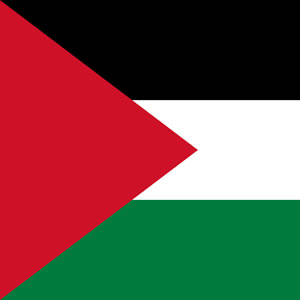 Where is Palestine?
Palestine is a geographic region in Western Asia. It is usually considered to include the Gaza Strip, the West Bank, Israel, and in some definitions, some parts of western Jordan. The name was used by ancient Greek writers, and it was later used for the Roman province Syria Palaestina, the Byzantine Palaestina Prima, and the Islamic provincial district of Jund Filastin. The region comprises most of the territory claimed for the biblical regions known as the Land of Israel, the Holy Land or Promised Land. Historically, it has been known as the southern portion of wider regional designations such as Canaan, Syria, ash-Sham, and the Levant. Situated at a strategic location between Egypt, Syria and Arabia, and the birthplace of Judaism and Christianity, the region has a long and tumultuous history as a crossroads for religion, culture, commerce, and politics.
What are Religions?Religion is a range of social-cultural systems, including designated behaviors and practices, ethics, morals, beliefs, worldviews, texts, sanctified places, prophecies, or organizations, that generally relate humanity to supernatural, transcendental, and spiritual elements. There is no scholarly consensus over what precisely constitutes a religion. It is an essentially contested concept. Different religions may or may not contain various elements ranging from the divine, sacredness, faith, and a supernatural being or beings. The origin of religious belief is an open question, with possible explanations including awareness of individual death, a sense of community, and dreams. Religions have sacred histories, narratives, and mythologies, preserved in oral traditions, sacred texts, symbols, and holy places, that may attempt to explain the origin of life, the universe, and other phenomena. Religious practice may include rituals, sermons, commemoration or veneration (of deities or saints), sacrifices, festivals, feasts, trances, initiations, matrimonial and funerary services, meditation, prayer, music, art, dance, or public service. There are an estimated 10,000 distinct religions worldwide, though nearly all of them have regionally based, relatively small followings. Four religions: Christianity, Islam, Hinduism, and Buddhism account for over 77% of the world's population, and 92% of the world either follows one of those four religions or identifies as non-religious, meaning that the vast majority of remaining religions account for only 8% of the population combined.
 Who are Islam21c?
We educate and inspire Muslims with divine guidance and solutions through transformational digital content. Islam21c has, since 2006, been inspiring Muslims to be confident in Islam and impact-driven by providing them with guidance, building their ability to articulate and actualise correct Islamic principles, in a modern context and address the unique situations and challenges faced by Muslims in the West.
 Where is Israel?
Israel, officially the State of Israel, is a country in the Middle East. Located on the southeastern shore of the Mediterranean Sea and the northern shore of the Red Sea. It has land borders with Lebanon to the north, Syria to the northeast, Jordan on the east, the Palestinian territories of the West Bank and Gaza Strip to the east and west, respectively, and Egypt to the southwest.
 What is Islam?
One of the major religions of the world, Islam literally translates to "submission," as a follower of Islam (Muslims) devotes their life to that of their God. The religion began with the teachings of Muhammad in the 7th century. The theology of Islam is based on the Qur'an, which was given to Muhammad by God. Some of the major fundamental principles of Islam include the Five Pillars, which hope to unite all Muslims into a community. Two different factions of Muslims exist - the majority are known as Sunni, with a small percentage known as Shi'a - both predominantly reside throughout the Middle East. Muhammad died in 632 AD and the religion of Islam formally started after his death. The Quran was formally compiled and finalised in 650 AD, prior to which it was 'memorised' and written across many parchments.