Homoousios ('same substance') was a confusing and theologically Ambiguous word used by Athanasius, Eusebius and Marcellus - Kegan Chandler

556 views  ·  Last viewed: 10 hrs ago
Uploaded: 17 Dec 2018   (8 years ago)  ·  Shared: 21 Aug 2019

Video Description (from Youtube)

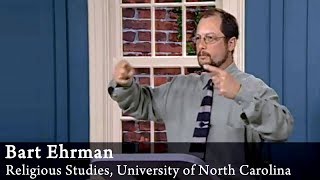
https://trinities.org/blog/podcast-247-kegan-chandler-on-the-term-homoousios/ The famous church historian Eusebius tells us that at the famous 325 council at Nicea, it was the emperor Constantine who

suggested using the word homoousios (variously translated as “consubstantial,” “same esssence,” “same substance”).

Is this plausible? And if so, why would Constantine have done such a thing? What, if anything, in his own religious background would point him towards that term? What was Constantine’s theology, and how might he have understood it?

In this episode Kegan Chandler answers these questions using the latest historical research. He argues that we can go beyond the now widely agreed point that homoousios was employed by this council because it was not then a popular or widely used term, and so it did not have any widely accepted meaning. This enabled the majority of bishops to use the term as a stick with which to drive out Arius and his party, who did not like the term, while various bishops chose to interpret it in various ways, depending on their theological proclivities (e.g. Marcellan neo-monarchianism or Eusebian subordinationism). Whatever the various anti-Arian bishops were thinking, here Chandler ventures an educated guess as to what Constantine was thinking… and it has something to do with Egypt!

Links for this episode @ https://trinities.org/blog/podcast-247-kegan-chandler-on-the-term-homoousios/

The live-streamed version of this lecture.
The God of Jesus in Light of Christian Dogma
his blog Buried Deep
The God of Jesus
@Academia.edu
Rufinus’s corruption of Origen’s On First Principles – Part 1
Rufinus’s corruption of Origen’s On First Principles – Part 2
podcast 30 – The Council of Nicea
podcast 175 – Marcellus of Ancyra
This week’s thinking music is “Again, Once Again” by fluffy.

Search Results on Homoousios ('same substance') was a confusing and theologically Ambiguous word used by Athanasius, Eusebius and Marcellus - Kegan Chandler

SCROLL TO :TOPICS |   4NEWS |   0ARTICLES |   1FAQ |   0VIDEO |   46LINKS |   0
TOPICS #ATHANASIUS EUSEBIUS HOMOOUSIOS KEGAN CHANDLER   Explore Topics   Google Search

Topics with Athanasius, Eusebius, Homoousios, Kegan Chandler (4)

Who was Athanasius?
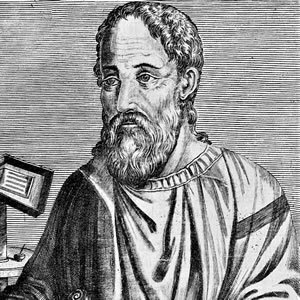
Athanasius of Alexandria (298-373 AD), also called Athanasius the Great, Athanasius the Confessor or Athanasius the Apostolic was the 20th bishop of Alexandria (as Athanasius I). His on-again-off-again episcopate spanned 45 years of which over 17 encompassed five exiles, when his episcopate was

replaced on the order of four different Roman emperors. Athanasius was a Christian theologian, a Church Father, the chief defender of Trinitarianism against Arianism, and a noted Egyptian leader of the fourth century. Conflict with Arius and Arianism as well as successive Roman emperors shaped Athanasius' career. In 325 AD, at the age of 27, Athanasius began his leading role against the Arians as a deacon and assistant to Bishop Alexander of Alexandria during the First Council of Nicaea. Roman emperor Constantine the Great had convened the council in August 325 to address the Arian position that the Son of God, Jesus of Nazareth, is of a distinct substance from the Father.
Who was Eusebius?
Eusebius of Caesarea (260-340 AD) was a historian of Christianity, exegete, and Christian polemicist. He became the bishop of Caesarea Maritima about 314 AD. Together with Pamphilus, he was a scholar of the Biblical canon and is regarded as an extremely learned Christian of his time. During the

Council of Antiochia (325) he was excommunicated for subscribing to the heresy of Arius (Arianism), and thus withdrawn during the First Council of Nicaea where he accepted that the Homoousion referred to the Logos. Never recognized as a saint, he became counselor of Constantine the Great, and with the bishop of Nicomedia he continued to polemicize against Saint Athanasius of Alexandria, Church Fathers, since he was condemned in the First Council of Tyre in 335.
What is Homoousios?
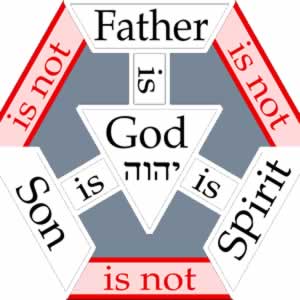
Homoousios or Homoousion ('same in being, same in essence') is a Christian theological term. Homoousios is most notably used in the Nicene Creed in 325 AD, for describing Jesus (God the Son) as "same in being" or "same in essence" with God the Father. The same term was later also applied to the Holy

Spirit in order to designate him as being "same in essence" with the Father and the Son. Those notions became cornerstones of theology in Nicene Christianity, and also represent one of the most important theological concepts within the Trinitarian doctrinal understanding of God.
Who is Kegan Chandler?
Kegan Chandler is a Christian author and researcher of Early Christianity, pagan religion, and Gnosticism. He is an adjunct professor at Atlanta Bible College. Chandler holds a Master of Theology from Campbellsville University's School of Theology, where he studied Church History and Theology, and

is a graduate of SCAD University, where he studied Graeco-Roman drama, medieval literature, and dramatic writing.
<br><br>
He is the author of the forthcoming book 'Constantine and the Divine Mind' (Wipf and Stock, TBD), and 'The God of Jesus in Light of Christian Dogma' (Restoration Fellowship, 2016). He is also an award-winning screenwriter, and currently writes for his blog on Church history.
<br><br>
Chandler also sits on the board of directors of the Unitarian Christian Alliance (formed 2019), and New Life Ministries of America, Inc., a small non-profit which has been producing Christian literature and financing overseas missions since 1994.

Articles on Athanasius, Eusebius, Homoousios, Kegan Chandler (1)

Arius vs Bishop Athanasius
28,227 views

Youtube Videos on Athanasius, Eusebius, Homoousios, Kegan Chandler (46)

Video: Early Christianity: Arius, Athanasius and Nicaea - Ryan Reeves Early Christianity: Arius, Athanasius and Nicaea - Ryan Reeves   32:34
1,082 views
Video: Arius, Athanasius & Constantine at Nicaea: Who won the debate? - Richard Rubenstein Arius, Athanasius & Constantine at Nicaea: Who won the debate? - Richard Rubenstein   55:53
847 views
Video: Origen (Lebanon, 253 AD) & Athanasius (Egypt, 363 AD) wrote of all 27 NT Bible books - Craig Blomberg Origen (Lebanon, 253 AD) & Athanasius (Egypt, 363 AD) wrote of all 27 NT Bible books - Craig Blomberg   0:40
710 views
Video: After Nicaea 325 AD, Constantine had Eusebius determine the earliest New Testament canon - Charles Hedrick After Nicaea 325 AD, Constantine had Eusebius determine the earliest New Testament canon - Charles Hedrick   1:48
837 views
Video: Athanasius (340 AD) compiled NT Bible canon, refering to Septuagint (Greek OT) - Charles Hedrick Athanasius (340 AD) compiled NT Bible canon, refering to Septuagint (Greek OT) - Charles Hedrick   1:19
535 views
Video: In 500 AD, Athanasius explained Trinity was 3 distinct persons, co-eternal, co-equal - Lorence Yufa | Milwaukee Atheists In 500 AD, Athanasius explained Trinity was 3 distinct persons, co-eternal, co-equal - Lorence Yufa | Milwaukee Atheists   2:00
878 views
Video: In 367 AD, Athanasius decided the 27 books to include in the Christian NT Bible - Bart Ehrman In 367 AD, Athanasius decided the 27 books to include in the Christian NT Bible - Bart Ehrman   0:39
1,003 views
Video: Greek: Iesous is not a translation of Hebrew: Yeshua, claimed Josephus, Eusebius, Clement & Cyril. We simply do NOT know Jesus Greek: Iesous is not a translation of Hebrew: Yeshua, claimed Josephus, Eusebius, Clement & Cyril. We simply do NOT know Jesus' real name - Mansur Ahmad vs Christian   26:36
831 views
Video: Jesus Jesus' Divinity: Decided by Arius and Bishop Athanasius   13:25
287 views
Video: Eusebius, an early Church Father loyal to Philo of Alexandria, who added the Eusebius, an early Church Father loyal to Philo of Alexandria, who added the 'God From God' pagan idea to the Nicene Creed in 325 AD - approvedofGod   2:23
1,067 views
Video: Eusebius (260-340 AD) praised Philo of Alexandria Eusebius (260-340 AD) praised Philo of Alexandria's contribution to Catholicism - approvedofGod   4:18
824 views
Video: Athanasian Creed was NOT written by Athanasius - approvedofGod Athanasian Creed was NOT written by Athanasius - approvedofGod   2:29
282 views
Video: Which Church Council gave Athanasius authority to decide the 27 New Testament books? - Mohammed Hijab vs Jason Which Church Council gave Athanasius authority to decide the 27 New Testament books? - Mohammed Hijab vs Jason   56:50
992 views
Video: In 367 AD, Athanasius decreed the 27 New Testament books. The Nag Hammadi Gnostic gospels declared illegal | ReligionForBreakfast In 367 AD, Athanasius decreed the 27 New Testament books. The Nag Hammadi Gnostic gospels declared illegal | ReligionForBreakfast   7:48
899 views
Video: In 325 AD, the Council of Nicaea defined Jesus as In 325 AD, the Council of Nicaea defined Jesus as 'Homoousios', of same substance with God - Kegan Chandler   1:00:25
599 views
Video: At Council of Nicaea 325 AD, who decided Jesus was Homoousios ( At Council of Nicaea 325 AD, who decided Jesus was Homoousios ('same substance') as God? - Kegan Chandler   3:04
724 views
Video: Emperor Constantine merged Pagan and Christian values to define Christianity - Kegan Chandler Emperor Constantine merged Pagan and Christian values to define Christianity - Kegan Chandler   1:17
954 views
Video: Council of Antioch 268 AD rejected the term Homoousios ( Council of Antioch 268 AD rejected the term Homoousios ('same substance') - Kegan Chandler   1:55
477 views
Video: Homoousios ( Homoousios ('same substance') first appeared in Poimandres, a 1st century Egyptian Pagan text - Kegan Chandler   1:57
681 views
Video: Early Christians rejected Homoousios ( Early Christians rejected Homoousios ('same substance'). Why? - Kegan Chandler   2:43
727 views
Video: Why did Early Christians accept Jesus and God as Homoousios ( Why did Early Christians accept Jesus and God as Homoousios ('same substance')? - Kegan Chandler   2:06
679 views
Video: Homoousios ( Homoousios ('same substance') was a confusing and theologically Ambiguous word used by Athanasius, Eusebius and Marcellus - Kegan Chandler   2:39
556 views
Video: Constantine inserted Homoousios ( Constantine inserted Homoousios ('same substance') into Christian doctrine, according to Eusebius - Kegan Chandler   3:21
913 views
Video: At Council of Nicaea, Constantine quoted Plato, a Pagan philosopher to justify Homoousios ( At Council of Nicaea, Constantine quoted Plato, a Pagan philosopher to justify Homoousios ('same substance') - Kegan Chandler   2:14
998 views
Video: Lucius Lactantius, advisor to Constantine, harmonized  Christianity with Paganism - Kegan Chandler Lucius Lactantius, advisor to Constantine, harmonized Christianity with Paganism - Kegan Chandler   2:29
1,224 views
Video: Homoousios ( Homoousios ('same substance') can be traced back to Pre-Christian Egypt - Kegan Chandler   3:46
676 views
Video: What did Homoousios ( What did Homoousios ('same substance') mean to Constantine? - Kegan Chandler   5:51
710 views
Video: Opposition to Homoousios ( Opposition to Homoousios ('same substance') was silenced at Council of Nicaea? - Kegan Chandler   4:24
896 views
Video: Christianity is primarily based on Gospel of John - Kegan Chandler Christianity is primarily based on Gospel of John - Kegan Chandler   1:31
1,105 views
Video: John John's Gospel is different from Mark, Matthew and Luke due to emerging Gnostic ideas - Kegan Chandler   2:28
1,010 views
Video: 2nd century Christians questioned John 2nd century Christians questioned John's Gospel due to Gnosticism - Kegan Chandler   1:58
985 views
Video: Hermes Trismegistus, an Olympian Greek god, was the  Hermes Trismegistus, an Olympian Greek god, was the 'Logos' or God's divine word manifest to Man - Kegan Chandler   1:45
217 views
Video: Gnostic Gnostic 'secret knowledge' of God features in Pagan, Christian & Spiritual teachings - Kegan Chandler   2:05
720 views
Video: Both Gnostic and Trinitarian Christians believe in Jesus Both Gnostic and Trinitarian Christians believe in Jesus' dual nature - Kegan Chandler   2:21
740 views
Video: John John's Gospel is anti-Gnostic. Jesus is made more human-like - Kegan Chandler   1:49
805 views
Video: Simon of Cyrene, bearer of Jesus Simon of Cyrene, bearer of Jesus' Cross, is absent from John's Gospel - Kegan Chandler   1:04
695 views
Video: John John's Gospel wrote a 'multi-level' history to counter Gnostic views on Jesus - Kegan Chandler   1:01
834 views
Video: Irenaeus (130-202 AD): John Irenaeus (130-202 AD): John's Gospel written to refute Gnosticism - Kegan Chandler   0:40
988 views
Video: Hermeticism, a pagan form of Gnosticism, believed God is within us all - Kegan Chandler Hermeticism, a pagan form of Gnosticism, believed God is within us all - Kegan Chandler   1:27
625 views
Video: Poemandres (Heremetic, Pagan text, c. 50 AD) bears striking textual similarities to John Poemandres (Heremetic, Pagan text, c. 50 AD) bears striking textual similarities to John's Gospel - Kegan Chandler   2:13
914 views
Video: Evidence that John Evidence that John's Gospel used Poemandres (Hermetic, Pagan, c. 50 AD) as a Source - Kegan Chandler   9:00
889 views
Video: Did John Did John's Gospel 'accidentally' copy Hermetism from Poemandres? - Kegan Chandler   2:58
707 views
Video: John John's Gospel parallels Gnostic-Pagan-Hermetic ideas (dualism, oneness/son of God, trinity, Father etc.) to promote his Jewish-Christianity - Kegan Chandler   10:06
1,778 views
Video: John John's Gospel depicts 'the right' Jesus; against Judaism, Gnostic-Christianity and Hermetism - Kegan Chandler   2:10
1,352 views
Video: Thallus, quoted by Africanus, then Eusebius (d. 340 AD) confirmed Earthquake at Jesus Thallus, quoted by Africanus, then Eusebius (d. 340 AD) confirmed Earthquake at Jesus' Crucifixion - TruthSurge   2:40
858 views
Video: Nicene Creed: Eusebius was influenced by Philo of Alexandria Nicene Creed: Eusebius was influenced by Philo of Alexandria   4:01
641 views
DISCLAIMER
All videos are shared for educational and information purposes only. All videos are hosted and viewable on Youtube servers. Video titles are generated using the original video title; overall content theme including actual dialogue and speech (Transcript); and A.I-based recommendations with a focus on SEO, keyword density, and internal search functions. The video title does not represent the views held by the Youtube video uploader, or any individual, organisation or business.

If you spot any mistake, omission or give feedback, kindly contact us with details

Latest videos  •  6,060 videos  •  0 viewed/24 hour

SUBSCRIBE

Receive the latest news and updates by email - Subscribe Now!
About  |  Q&A  |  Contact Us    •    Terms  |  Privacy  |  Disclaimer  |  Sitemap
Connect:      Facebook  |    Twitter  |    Youtube
MuslimProphets.com is an educational website on the Prophets of God: David, Noah, Abraham, Moses, Jesus and Muhammad, who established the Abrahamic faiths of Judaism, Christianity and Islam. MuslimProphets.com explores contemporary social themes through Scripture, Evidences, Photo, Video, Maps, Current Affairs, Debate and 'alternative' Views held by Theologians, Apologists, Scholars and Street Preachers. Take a Site Tour

In accordance with Islamic etiquette, all prophet names should be followed with 'Peace Be Upon Him (PBUH)'. This is omitted to minimise text.

DISCLAIMER: All website content is for general information and educational purposes only and available in the public domain. Whilst all information comes from sources believed to be reliable, this cannot be guaranteed. External links are provided as a convenience and for informational purposes only. They do not constitute endorsement or approval for any products, services or comments by organizations or individuals. Title and Text links may be edited for external SEO, internal site and keyword search purposes. We bear no responsibility for the accuracy, legality, or content found on any external website or its subsequent links. Unless indicated, all images and content is licensed under a Creative Commons Attribution License distributed by Wikipedia, Wikimedia Commons, Pixabay, Pxhere, Pexels, Unsplash, Flickr and others. All Torah, Psalms, Old and New Testament Bible quotes are from the King James Version (KJV) Holy Bible in the public domain. All Quran quotes are from Taqi-ud-Din al-Hilali/Muhsin Khan English Quran translation.

ALWAYS DO YOUR OWN RESEARCH. If you spot any mistake, error or omission of information, contact us so we can correct it.