762 views
·
Last viewed: 2 hrs ago
Uploaded: 12 Nov 2017 (9 years ago) · Shared: 28 May 2019
Duration: 2:25
Uploaded: 12 Nov 2017 (9 years ago) · Shared: 28 May 2019
Duration: 2:25
Youtube Description:
Should we take Paul's teachings in the context of him being a rabbi, and assume that anything questionable must just be a pharisaic teaching in favor of the Torah? Or does Paul himself give a different context?
(Thumbnail graphic from public domain)
Should we take Paul's teachings in the context of him being a rabbi, and assume that anything questionable must just be a pharisaic teaching in favor of the Torah? Or does Paul himself give a different context?
(Thumbnail graphic from public domain)
Explore More
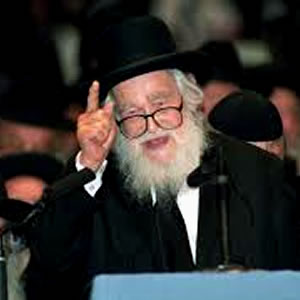 What is a Rabbi?
A rabbi is a Jewish preacher and religious leader in Judaism. A person becomes a rabbi by being ordained by another rabbi, known as Semikhah after following a course of study of Jewish history and texts, including the Tanakh, Midrash, Mishnah, Tosefta, Talmud, Halakha, and rabbinic commentaries thereon.
 What is Jews?
Judaism encompasses the religion, philosophy, culture and way of life of the Jewish people. Judaism is a monotheistic religion, with the Torah as its foundational text (part of the larger text known as the Tanakh or Hebrew Bible), and supplemental oral tradition represented by later texts such as the Midrash and the Talmud. Judaism is considered by religious Jews to be the expression of the covenantal relationship that God established with the Children of Israel. Judaism includes a wide corpus of texts, practices, theological positions, and forms of organization. Within Judaism there are a variety of movements, most of which emerged from Rabbinic Judaism, which holds that God revealed his laws and commandments to Moses on Mount Sinai in the form of both the Written and Oral Torah. The Jews are an ethnoreligious group and include those born Jewish and converts to Judaism. In 2012, the world Jewish population was estimated at about 14 million, or roughly 0.2% of the total world population. About 42% of all Jews reside in Israel and about 42% reside in the United States and Canada, with most of the remainder living in Europe.
 Who was Saul?
Saul was a monarch of ancient Israel and Judah and, according to the Hebrew Bible and Old Testament, the first king of the United Monarchy. His reign, traditionally placed in the late eleventh century BC, marked the transition of the Israelites from a scattered tribal society ruled by various judges to organized statehood. The historicity of Saul and the United Kingdom of Israel is not universally accepted, as what is known of both comes largely from the Hebrew Bible. According to the text, he was anointed as king of the Israelites by Samuel, and reigned from Gibeah. Saul is said to have committed suicide when he fell on his sword during a battle with the Philistines at Mount Gilboa, in which three of his sons were also killed. Saul's son Ish-bosheth succeeded him to the throne, reigning for only two years before being murdered by his own military leaders. Saul's son-in-law David then became king.
Who are RTC?Remember the Commands (RtC) is about seeking to do what the Creator has asked and about searching for His truth according to the text of His law. We want to move beyond traditions, such as the traditions of Christianity, Orthodox Judaism, Messianic Judaism, and Karaite Judaism, and try to look at what the text actually says. RtC seeks to value what the Holy One requires and advocate for the return of His people to His ways.