Youtube Description:
Translations of the Hebrew will often capitalize words they presume are referring to God or to a messiah according to their beliefs, but these capitals are not present in the Hebrew text. Even if we are aware of this issue, we are being primed to think about it according to their opinion.
Copyright Notice:
NKJV
Scripture taken from the New King James Version®. Copyright © 1982 by Thomas Nelson. Used by permission. All rights reserved.
Translations of the Hebrew will often capitalize words they presume are referring to God or to a messiah according to their beliefs, but these capitals are not present in the Hebrew text. Even if we are aware of this issue, we are being primed to think about it according to their opinion.
Copyright Notice:
NKJV
Scripture taken from the New King James Version®. Copyright © 1982 by Thomas Nelson. Used by permission. All rights reserved.
Explore More
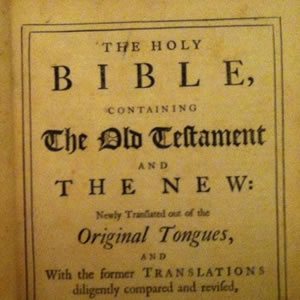 What is Old Testament?
The Old Testament (OT) is the first part of Christian Bibles. This is based primarily upon the Hebrew Bible (or Tanakh), a collection of ancient religious writings by the Israelites believed by most Christians and religious Jews to be the sacred Word
of God. The second part of the Christian Bible is the New Testament.
The books that comprise the Old Testament canon, as well as their order and names, differ between Christian denominations. The Catholic canon comprises 46 books, and the canons of the Eastern Orthodox and Oriental Orthodox Churches comprise up to 51 books and the most common Protestant canon comprises 39 books.
 Who are RTC?
Remember the Commands (RtC) is about seeking to do what the Creator has asked and about searching for His truth according to the text of His law. We want to move beyond traditions, such as the traditions of Christianity, Orthodox Judaism, Messianic
Judaism, and Karaite Judaism, and try to look at what the text actually says. RtC seeks to value what the Holy One requires and advocate for the return of His people to His ways.
What is Sin?In Abrahamic contexts, sin is the act of violating God's will. Sin can also be viewed as anything that violates the ideal relationship between an individual and God; or as any diversion from the ideal order for human living. To sin has been defined
as "to miss the mark".
Sins fall in a spectrum from minor errors to deadly misdeeds. Catholicism regards the least corrupt sins as venial sins which are part of human living and carry immediate consequences on earth, and, if unrepented for, more painful purgation, assuming the person is destined to heaven, as it is written in the formation letter "Purgatory", "most of the early Fathers of the Church speak of a cleansing fire, though we cannot tell whether this means actual or spiritual fire."
Conversely, sins of great evil are mortal sins which bring the consequence of hell if they are not addressed either through an act of perfect contrition or going to confession about them.