384 views
·
Last viewed: 5 days ago
Uploaded: 12 Feb 2018 (9 years ago) · Shared: 28 May 2019
Duration: 9:00
Uploaded: 12 Feb 2018 (9 years ago) · Shared: 28 May 2019
Duration: 9:00
Youtube Description
Deuteronomy 7:25-26 gives a strong prohibition on taking in graven images of gods. Some common graven images include New York related imagerycertain US coins, sun face and moon face images, among others.
(Thumbnail graphic from public domain)
Explore More
TorahCentric Polytheism Torah GODSearch Google Search Explore Topics
 Who are TorahCentric?
TorahCentric is about seeking to do what the Creator has asked and about searching for His truth according to the text of His law. We want to move beyond traditions, such as the traditions of Christianity, Orthodox, Messianic, Samaritan, and Karaite Judaism and try to look at what the text actually says. The text exists for a reason, and that reason is not just for the sake of justifying tradition or personal biases.
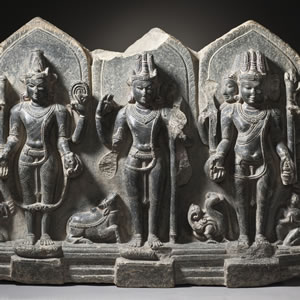 What is Polytheism?
Polytheism is the worship of or belief in multiple deities, usually as a pantheon of gods and goddesses. In most religions which accept polytheism, the different gods and goddesses are representations of forces of nature or ancestral principles, and can be viewed either as autonomous or as aspects or emanations of a creator deity or transcendental absolute principle (monistic theologies), which manifests immanently in nature (panentheistic and pantheistic theologies). Most of the polytheistic deities of ancient religions, with the notable exceptions of the Ancient Egyptian and Hindu deities, were conceived as having physical bodies. Polytheism is a type of theism. Within theism, it contrasts with monotheism, the belief in a singular God, in most cases transcendent. Important polytheistic religions practiced today include Chinese traditional religion, Hinduism, Japanese Shinto, and various neopagan faiths.
 What is the Torah?
Torah, "Instruction", "Teaching" or "Law" has a range of meanings. Common to all these meanings, Torah consists of the origin of Jewish peoplehood: their call into being by God, their trials and tribulations, and their covenant with their God, which involves following a way of life embodied in a set of moral and religious obligations and civil laws. In rabbinic literature the word Torah denotes both the five books "Torah that is written" and the Oral Torah "Torah that is spoken". The Oral Torah consists of interpretations and amplifications which according to rabbinic tradition have been handed down from generation to generation and are now embodied in the Talmud and Midrash. According to rabbinic tradition, all of the teachings found in the Torah, both written and oral, were given by God through the prophet Moses, some at Mount Sinai and others at the Tabernacle, and all the teachings were written down by Moses, which resulted in the Torah that exists today. The majority of Biblical scholars believe the written books were a product of the Babylonian captivity (c. 600 BCE), based on earlier written and oral traditions, which could only have arisen from separate communities within ancient Israel, and that it was completed by the period of Achaemenid rule (c. 400 BCE).
 Who is GOD?
In monotheism and henotheism, God is conceived as the Supreme Being and principal object of faith. The concept of God as described by theologians commonly includes the attributes of omniscience (infinite knowledge), omnipotence (unlimited power), omnipresence (present everywhere), omnibenevolence (perfect goodness), divine simplicity, and eternal and necessary existence. In theism, God is the creator and sustainer of the universe In deism, God is the creator, but not the sustainer, of the universe Monotheism is the belief in the existence of one God or in the oneness of God In pantheism, God is the universe itself In atheism, God is purported not to exist, while deemed unknown or unknowable within the context of agnosticism.