Israeli Minister: The Bible says West Bank is ours - Mehdi Hasan (Al-Jazeera)
16:07
656 views
·
Last viewed: 3 hrs ago Uploaded:
23 Feb 2017 (9 years ago)
·
Shared: 21 May 2019
Video Description (from Youtube)
Last week, in a joint press conference with Israeli Prime Minister Benjamin Netanyahu, US President Donald Trump surprised the world by appearing to dismiss a long-standing US commitment to a
two-state solution to the Israeli-Palestinian conflict.
Prominent hard-right Israeli Education Minister, Naftali Bennett, welcomed the statement saying: 'The era of a Palestinian state is over.'
'There already exists two states for the Palestinians: one in Gaza, a full blown state run by Hamas, and the other is Jordan, where 70 percent of the citizens are, indeed, Palestinians,' Bennett told UpFront. 'So the discussion is whether we need a third Palestinian state smack in the heart of Israel, and the answer is no.'
When asked about the Israeli Supreme Court's 2005 ruling describing the West Bank as under 'belligerent occupation', Bennett called it a 'political decision' and cited the Bible as proof of Israel's right to the West Bank.
'If you want to say that our land does not belong to us, I suggest you go change the Bible first,' says Bennett.
In this week's Headliner, we challenge the Israeli education minister and prominent right-wing leader Naftali Bennett.
DISCLAIMER
All videos are shared for educational and information purposes only. All videos are hosted and viewable on Youtube servers. Video titles are generated using the original video title; overall content theme including actual dialogue and speech (Transcript); and A.I-based recommendations with a focus on SEO, keyword density, and internal search functions. The video title does not represent the views held by the Youtube video uploader, or any individual, organisation or business.
Mehdi Raza Hasan (born 1979) is a British political journalist, broadcaster and author. In 2013, Hassan took part in a debate at the Oxford Union to
consider whether Islam is a peaceful religion. Hassan vouched for Islam as a religion of peace, citing political and cultural reasons for violence in Muslim majority countries, as opposed to holding the religion of Islam responsible. In the vote on the motion, the house affirmed with Hassan and the other proposers that Islam is a religion of peace with 286 votes in favor and 168 votes against.
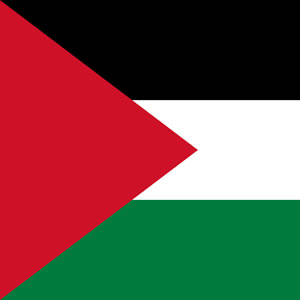
Palestine is a geographic region in Western Asia. It is usually considered to include the Gaza Strip, the West Bank, Israel, and in some definitions
some parts of western Jordan. The name was used by ancient Greek writers, and it was later used for the Roman province Syria Palaestina, the Byzantine Palaestina Prima, and the Islamic provincial district of Jund Filastin. The region comprises most of the territory claimed for the biblical regions known as the Land of Israel, the Holy Land or Promised Land. Historically, it has been known as the southern portion of wider regional designations such as Canaan, Syria, ash-Sham, and the Levant. Situated at a strategic location between Egypt, Syria and Arabia, and the birthplace of Judaism and Christianity, the region has a long and tumultuous history as a crossroads for religion, culture, commerce, and politics.

The Bible is a canonical collection of texts sacred in Judaism and Christianity. There is no single "Bible" and many Bibles with varying contents
exist. The term Bible is shared between Judaism and Christianity, although the contents of each of their collections of canonical texts is not the same.
<br><br>
Different religious groups include different books within their Biblical canons, in different orders, and sometimes divide or combine books, or incorporate additional material into canonical books.
<br><br>
The Hebrew Bible, or Tanakh, contains 24 books. Christian Bibles range from the 66 books of the Protestant canon to the 81 books of the Ethiopian Orthodox Church canon.
<br><br>
The first part of Christian Bibles is the Old Testament, which contains, at minimum, the 24 books of the Hebrew Bible divided into 39 books and ordered differently from the Hebrew Bible. The Catholic Church and Eastern Christian churches also hold certain deuterocanonical books and passages to be part of the Old Testament canon.
<br><br>
The second part is the New Testament, containing 27 books: the 4 Canonical gospels, Acts of the Apostles, 21 Epistles or didactic letters, and the Book of Revelation.
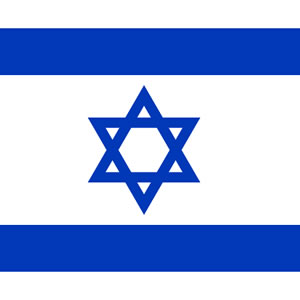
Israel, officially the State of Israel, is a country in the Middle East. Located on the southeastern shore of the Mediterranean Sea and the northern
shore of the Red Sea. It has land borders with Lebanon to the north, Syria to the northeast, Jordan on the east, the Palestinian territories of the West Bank and Gaza Strip to the east and west, respectively, and Egypt to the southwest.
Muslims believe that God originally revealed the Gospel to Jesus as a source of guidance, light, and instruction.
And We sent, following in their footsteps, Jesus, the son of Mary, confirming that which came before him in the Torah; and We gave him the Gospel, in which was guidance and light and confirming that which preceded it of the Torah as guidance and instruction for the righteous. [Quran 5:46]
The words 'Begotten' and 'Son' are not factually accurate when describing Jesus's relationship to the divine Creator. To support this point, it contrasts the Biblical text with the Quran, specifically quoting Chapter 19, Verses 88-92, which strongly condemns the claim that God has begotten a son, describing the assertion as a monstrous falsehood that contradicts the absolute majesty of the Creator.
Mainstream biblical scholarship notes that the four New Testament gospels were originally written anonymously and did not carry their authors' signatures inside the early texts. Christian tradition later attributed them to Matthew, Mark, Luke, and John based on early church history and theological consensus.
Historically, the Bible has been used by some to enslave, subjugate and dominate over a people.
The 'Curse of Ham' Myth: Pro-slavery advocates twisted Genesis 9 to claim that people of African descent were divinely cursed to be eternal servants.
Old Testament Legal Protection: Slaveholders cited Leviticus 25 to argue that purchasing foreign bondmen and passing them down as inherited property was biblically sanctioned.
Weaponising Obedience Verses: Plantation owners frequently read verses like Ephesians 6:5 ('Slaves, obey your masters') to religiously brainwash enslaved people against rebelling.
The Redacted 'Slave Bible': British and American authorities physically censored the scriptures, deleting the entire Book of Exodus to hide the narrative of freedom from bondage.
Enforcing Fugitive Slave Laws: Pro-slavery preachers used Paul's letter to Philemon to argue that runaway slaves were legally and spiritually obligated to return to their masters.
Mainstream Christian and Jewish biblical scholars state that Muhammad is not mentioned anywhere in the Hebrew Bible or New Testament, as these texts predate Islam by centuries. However, Islamic theology interprets specific biblical passages as prophecies of his coming, most notably Deuteronomy 18:18 (a prophet 'from among their brothers') and the promised 'Comforter' (Paracletos) in John 14-16, which Muslims believe refers to Muhammad rather than the Holy Spirit.
Mainstream biblical scholars and historians state that the doctrine of the Trinity is never explicitly laid out as a formal dogma anywhere in the text of the Old or New Testaments. While the New Testament contains early triadic formulas (such as the baptismal command in Matthew 28:19 and apostolic blessings in 2 Corinthians 13:14), the actual systemic theology of a three-in-one God was developed later by early church fathers over centuries. Christian theologians argue that the doctrine is implicitly woven throughout the scriptures, while critics and Islamic scholars point to the lack of clear, direct scriptural definitions to argue it was a later modification of strict biblical monotheism.
No, historical-critical analysis shows that the Bible is a vast anthology containing highly diverse themes, including both messages of profound peace and accounts of severe warfare. While the New Testament emphasizes love, grace, and forgiveness through Jesus, the Old Testament contains complex legal codes, civil laws, and narratives where God commands total military warfare and strict retributive punishments against rival nations to protect the monotheistic identity of ancient Israel.
In the legal codes of the Old Testament, most notably Deuteronomy 13:6-11, the prescribed statutory punishment for an Israelite who entices others to worship foreign gods is death by public stoning. While historical narratives like Exodus 32 document severe executions for national apostasy (such as the incident with the Golden Calf), biblical scholars note that this capital penalty was legally designed to protect the monotheistic identity of ancient Israel.
No, historical-critical analysis proves the Bible contains highly diverse themes, including intense descriptions of ancient warfare and divine judgments. In the Old Testament, there are several instances where God commands total military destruction such as Moses ordering the execution of Midianite captives in Numbers 31 or Joshua's campaigns in Canaan to legally protect Israel's monotheistic identity from neighboring polytheistic influences.
It is of enormous importance in establishing the biblical text. There are three earliest manuscripts of the Bible New Testament:
1. Codex Alexandrinus is one of the earliest and most important manuscripts of the entire Bible in Greek
2. Codex Sinaiticus is one of the most important books in the world and is kept in the British Library. Handwritten well over 1600 years ago, the manuscript contains the Christian Bible in Greek, including the oldest complete copy of the New Testament.
No, the specific title 'Holy Bible' is not found within the biblical text itself, as the underlying Greek word biblos or biblia was simply a standard, generic term used in antiquity to describe a collection of any books or scrolls. For example, in Acts 19:19, when the text mentions that people compiled and burned their biblos, it refers to their local books of magic arts rather than sacred scripture.
Historically, the term 'God' was applied to powerful figures, such as leaders and magistrates, who served as representatives on Earth. Emperor Constantine referenced this, citing Psalm 82:6 to remind bishops of their high, albeit human, office.
Emperor Constantine at the opening of the Council of Nicaea (325 AD) quoted Psalm 82:6 to remind the bishops that their high office should raise them above jealousy and party feeling.
The term 'God' was applied to people of power, authority and rule who were considered to have greater nearness to God than others - an appellation which implies that you are God's representatives on earth, and that your decision is, in an important sense, to be regarded as his.
Saint Jerome (342-420) was commissioned to translate the gospels from Greek into Latin. This key Catholic Biblical scholar was highly regarded and often represented with the figure of a lion.
In 1909, Pope Pius X first encouraged Bible study. For the first time, Catholics could now study the Bible for themselves and Catholicism returned to being a 'religion of the book' for the people
In the Gospel of John, Lazarus was a close friend of Jesus Christ and the brother of Mary and Martha. They lived in the village of Bethany near Jerusalem.
Lazarus fell ill and died. According to the text, Jesus arrived four days after Lazarus was buried in a tomb, ordered the stone to be rolled away, and commanded, 'Lazarus, come out!' The Raising of Lazarus is considered one of Jesus' most significant and dramatic miracles, directly setting off the events leading to the Crucifixion because it drew massive public attention.