The Lust for Libya: How a Nation was Torn Apart (Gaddafi) - Al-Jazeera

708 views  ·  Last viewed: 2 days ago
Uploaded: 17 Oct 2018   (8 years ago)  ·  Shared: 27 Oct 2018

Video Description (from Youtube)

Libya has been broken apart. Torn asunder by competing local, regional and international forces, its survival as a singular nation-state is under threat. Once Africa's wealthiest country with the

continent's largest oil reserves and highest standard of living, Libya, liberated from a dictator's grip, is mired in a violent, internecine conflict that has left many of its people struggling for food, fuel and security.

So how did it come to this?
Libya is split between rival governments and conflicting centres of power – one in the east of the country and one in the west - each backed by militias fighting for their own share of Libya’s loot seven years on from the violent ouster of the Gaddafi regime.
'Divisions in Libya are not based on ethnic, or religious, or sectarian factors. The divisions are purely political, purely based on disagreement and how to share power and wealth,' says Libyan academic and politician Guma el Gamaty.
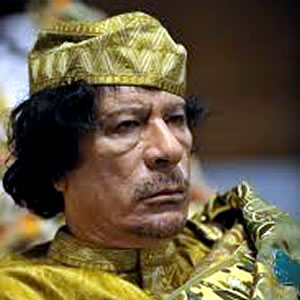
Colonel Muammar Gaddafi had held a nation together for more than four decades, strategically doling out cash incentives, nurturing division and combining political brokering with ruthless state repression.
In October 2011, the dictator who claimed to have brought participatory democracy to the Libyan people was killed by fellow Libyans. The one-time revolutionary’s life and often brutal rule brought to a grisly end by those also calling themselves revolutionaries. These self-declared revolutionaries were supported by regional players such as the UAE and Qatar as well as Western powers that included the US, the UK and France who painted Gaddafi as sometimes friend and oftentimes foe according to their own interests.
'Libyans never thought that Gaddafi would be gone, so they're willing to sacrifice their lives to be able to be liberated from Gaddafi and what he has done to them,' says Libyan politician Mustafa Abushagur.
'The West did not do anything during the Tunisian revolution. They did not do anything during the Egyptian revolution. Clearly they are fed up with Gaddafi and here is an opportunity for Gaddafi to be removed ...
It was an opportunity for the world to get rid of a menace, it's called Gaddafi.
The Big Picture - The Lust for Libya charts the 42-year rule of Muammar Gaddafi, uncovering the seeds of discontent – both at home and in his relations internationally – sewn across his turbulent reign. We dissect the geopolitical self-interest of Western and Middle Eastern nations, culminating in the NATO-led intervention of 2011 that deposed Gaddafi, as well as attempting to understand the chaos left in its wake. The Lust for Libya examines ancient schisms mapped anew on a contested landscape offering oil riches as well as strategic control, tracing the timeline of events - reaching back before the construction of Libya itself - that have left Africa's erstwhile richest nation in ruins.
'The Libya that we knew before is gone. It's gone,' says Mohamed Buisier, Libyan political adviser. 'All what we see in front of us, the scene now it's at the end, it's taking us to disintegration. Nothing is bringing the country back to unity, and everyday we are closer to this final scene.'

- Subscribe to our channel: http://aje.io/AJSubscribe
- Follow us on Twitter: https://twitter.com/AJEnglish
- Find us on Facebook: https://www.facebook.com/aljazeera
- Check our website: https://www.aljazeera.com/

Explore More

Who is Gaddafi?
Muammar Gaddafi (1942-20 October 2011) was a Libyan revolutionary, politician, and political theorist. He governed Libya as Revolutionary Chairman of the Libyan Arab Republic from 1969 to 1977, and then as the "Brotherly Leader" of the Great

Socialist People's Libyan Arab Jamahiriya from 1977 to 2011. He was initially ideologically committed to Arab nationalism and Arab socialism but later came to rule under his own Third International Theory. A highly divisive figure, Gaddafi dominated Libya's politics for four decades and was the subject of a pervasive cult of personality. He was decorated with various awards and praised for his anti-imperialist stance, support for Arab, and then African, unity and for significant improvements that his government brought to the Libyan people's quality of life.
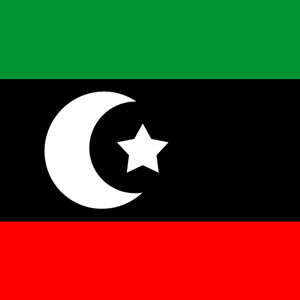
What is Libya?
Libya is a sovereign state in North Africa, bordered by the Mediterranean Sea to the north, Egypt to the east, Sudan to the southeast, Chad and Niger to the south and Algeria and Tunisia to the west. The country is made of three historical regions:

Tripolitania, Fezzan and Cyrenaica. With an area of almost 1.8 million square kilometres (700,000 sq mi), Libya is the fourth largest country in Africa, and is the 16th largest country in the world. Libya has the 10th-largest proven oil reserves of any country in the world.
SUBSCRIBE

Receive the latest news and updates by email - Subscribe Now!
About  |  Q&A  |  Contact Us    •    Terms  |  Privacy  |  Disclaimer  |  Sitemap
Connect:      Facebook  |    Twitter  |    Youtube
MuslimProphets.com is an educational website on the Prophets of God: David, Noah, Abraham, Moses, Jesus and Muhammad, who established the Abrahamic faiths of Judaism, Christianity and Islam.

MuslimProphets.com explores contemporary social themes through Scripture, Evidences, Photo, Video, Maps, Current Affairs, Debate and 'alternative' Views held by Theologians, Apologists, Scholars and Street Preachers.

In accordance with Islamic etiquette, all prophet names should be followed with 'Peace Be Upon Him (PBUH)'. This is omitted to minimise text.

DISCLAIMER
The historical information provided on this website is for educational and informational purposes only.
History is an ongoing interpretation of past events. Historical accounts are shaped by the perspectives, biases, and cultural influences of their time; therefore, no content on this website should be taken as absolute, 100% factual truth. We encourage readers to approach historical narratives with a critical mind.

All website content is available in the public domain. While all information is gathered from sources believed to be reliable, its absolute accuracy cannot be guaranteed.

EXTERNAL LINKS & SEO
External links are provided as a convenience and for informational purposes only. They do not constitute an endorsement or approval of any products, services, or opinions of any organization or individual. Title and text links may be edited for external SEO, internal site structure, and keyword search purposes. We bear no responsibility for the accuracy, legality, or content found on any external website or its subsequent links.

MEDIA & SOURCE ATTRIBUTIONS
Unless otherwise indicated, all images and content are licensed under a Creative Commons Attribution License distributed by Wikipedia, Wikimedia Commons, Pixabay, Unsplash, and similar platforms. While every effort is made to accurately source all media, contact us if you believe your copyright has been infringed so we can address and resolve the matter promptly.

All videos are hosted on and viewable via YouTube servers. Video titles are generated based on the original video title, the overall content theme (including actual dialogue and transcripts), and AI-based recommendations optimized for SEO, keyword density, and internal search functions. Video titles do not represent the views held by the YouTube video uploader, or any associated individual, organisation, or business.

All Torah, Psalms, and Old/New Testament Bible quotes are from the King James Version (KJV) Holy Bible, which is in the public domain.
All Quran quotes are from the Taqi-ud-Din al-Hilali / Muhsin Khan English Quran translation.

CORRECTIONS
If you spot a mistake, error, or omission of information, please contact us so we can review and correct it.