140 views
·
Last viewed: 10 hrs ago
Uploaded: 25 May 2026 (4 months ago) · Shared: 04 Jul 2026
Duration: 8:43
Uploaded: 25 May 2026 (4 months ago) · Shared: 04 Jul 2026
Duration: 8:43
Youtube Description:
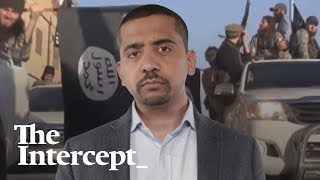
Kenya is the tech hub of East Africa and has built a thriving digital economy. But alongside that growth has come an expanding surveillance apparatus. After antigovernment protests in 2024, President William Ruto’s administration is accused of intensifying its monitoring of civilians.
Critics say the government is trying to quell online dissent before it reaches the streets.
Nicholas Muirhead reports on how surveillance tools designed to combat “terrorism” are being turned on Kenya’s citizens.
Featuring:
Victor Ndede – Amnesty International
Nanjala Nyabola – author, Digital Democracy
Thomas Mukhwana – investigative journalist, Africa Uncensored
Subscribe to our Newsletter:
#kenya #surveillance #williamruto #bigtech #africa #africanews
Kenya is the tech hub of East Africa and has built a thriving digital economy. But alongside that growth has come an expanding surveillance apparatus. After antigovernment protests in 2024, President William Ruto’s administration is accused of intensifying its monitoring of civilians.
Critics say the government is trying to quell online dissent before it reaches the streets.
Nicholas Muirhead reports on how surveillance tools designed to combat “terrorism” are being turned on Kenya’s citizens.
Featuring:
Victor Ndede – Amnesty International
Nanjala Nyabola – author, Digital Democracy
Thomas Mukhwana – investigative journalist, Africa Uncensored
Subscribe to our Newsletter:
#kenya #surveillance #williamruto #bigtech #africa #africanews
Explore More
Search Google Search Explore Topics Surveillance Free Speech Censorship Sin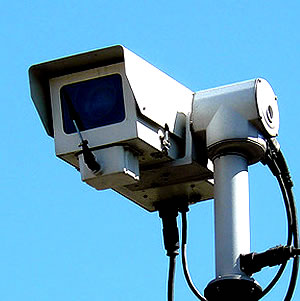 What is Surveillance?
Surveillance is the monitoring of behavior, activities, or information for the purpose of influencing, managing or directing. This can include observation from a distance by means of electronic equipment, such as closed-circuit television (CCTV), or interception of electronically transmitted information, such as Internet traffic. Surveillance is used by governments for intelligence gathering, prevention of crime, the protection of a process, person, group or object, or the investigation of crime. Surveillance can be viewed as a violation of privacy, and as such is often opposed by civil liberties activists.
 What is Free Speech?
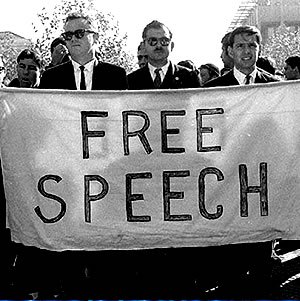
Freedom of speech is a principle that supports the freedom of an individual or a community to articulate their opinions and ideas without fear of retaliation, censorship, or legal sanction. The term "freedom of expression" is sometimes used synonymously but includes any act of seeking, receiving, and imparting information or ideas, regardless of the medium used. Freedom of expression is recognized as a human right under article 19 of the Universal Declaration of Human Rights (UDHR) and recognized in international human rights law in the International Covenant on Civil and Political Rights (ICCPR). Article 19 of the UDHR states that "everyone shall have the right to hold opinions without interference" and "everyone shall have the right to freedom of expression; this right shall include freedom to seek, receive and impart information and ideas of all kinds, regardless of frontiers, either orally, in writing or in print, in the form of art, or through any other media of his choice".
 What is Censorship?
Censorship is the suppression of speech, public communication, or other information, on the basis that such material is considered objectionable, harmful, sensitive, or "inconvenient." Censorship can be conducted by governments, private institutions, and other controlling bodies. Governments and private organizations may engage in censorship. Other groups or institutions may propose and petition for censorship. When an individual such as an author or other creator engages in censorship of their own works or speech, it is referred to as self-censorship. General censorship occurs in a variety of different media, including speech, books, music, films, and other arts, the press, radio, television, and the Internet for a variety of claimed reasons including national security, to control obscenity, child pornography, and hate speech, to protect children or other vulnerable groups, to promote or restrict political or religious views, and to prevent slander and libel.
 What is Sin?
In Abrahamic contexts, sin is the act of violating God's will. Sin can also be viewed as anything that violates the ideal relationship between an individual and God; or as any diversion from the ideal order for human living. To sin has been defined as "to miss the mark". Sins fall in a spectrum from minor errors to deadly misdeeds. Catholicism regards the least corrupt sins as venial sins which are part of human living and carry immediate consequences on earth, and, if unrepented for, more painful purgation, assuming the person is destined to heaven, as it is written in the formation letter "Purgatory", "most of the early Fathers of the Church speak of a cleansing fire, though we cannot tell whether this means actual or spiritual fire." Conversely, sins of great evil are mortal sins which bring the consequence of hell if they are not addressed either through an act of perfect contrition or going to confession about them.