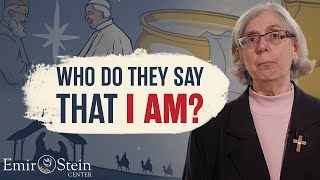
In Jewish Law, a Jew can never commit idolatory, worship idol or statue, even if their life is threatened - Aaron Youtube

525 views  ·  Last viewed: 2 weeks ago
Uploaded: 17 Aug 2017   (9 years ago)  ·  Shared: 24 Jan 2018
Duration: 11:07

Youtube Description

A Jew explains the three exceptions to the rule.

Explore More

  Aaron Youtube   Jewish Law   Idolatory   Judaism
  Search   Google Search   Explore Topics

Who is Aaron Youtube?
Blessed is HaShem, the G-d of Israel. This is a YouTube channel focused on Jewish religious content, Torah teachings, and interfaith/comparative religious reflections.
What is Jewish Law?
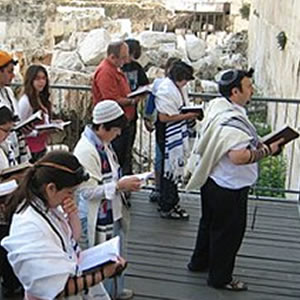
Jewish Law (Halakha) is the collective body of Jewish religious laws derived from the written and Oral Torah. Halakha is based on biblical commandments (mitzvot), subsequent Talmudic and rabbinic law, and the customs and traditions compiled in the many books such as the Shulchan Aruch. Halakha is often translated as "Jewish law", although a more literal translation might be "the way to behave" or "the way of walking". The word derives from the root that means "to behave" (also "to go" or "to walk"). Halakha guides not only religious practices and beliefs, but also numerous aspects of day-to-day life.
What is Idolatory?
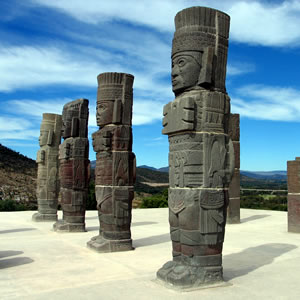
Idolatry literally means the worship of an "idol" such as a statue or icon. In Abrahamic religions, namely Christianity, Islam and Judaism, idolatry connotes the worship of something or someone other than God as if it were God. In these and several other monotheistic religions, idolatry has been considered as the "worship of false gods" and is forbidden. In the traditional religions of ancient Egypt, Greece, Rome, Africa, Asia, the Americas and elsewhere, the reverence of an image or statue has been a common practice, and cult images have carried different meanings and significance. The definition of idolatry has been a contested topic within Abrahamic religions, with some Muslims considering the worship of Jesus Christ; the Christian use of the cross as a symbol of Christ; and of Madonna (Mary) in some churches, as forms of idolatry.
What is Judaism?
Judaism encompasses the religion, philosophy, culture and way of life of the Jewish people. Judaism is a monotheistic religion, with the Torah as its foundational text (part of the larger text known as the Tanakh or Hebrew Bible), and supplemental oral tradition represented by later texts such as the Midrash and the Talmud. Judaism is considered by religious Jews to be the expression of the covenantal relationship that God established with the Children of Israel. Judaism includes a wide corpus of texts, practices, theological positions, and forms of organization. Within Judaism there are a variety of movements, most of which emerged from Rabbinic Judaism, which holds that God revealed his laws and commandments to Moses on Mount Sinai in the form of both the Written and Oral Torah. The Jews are an ethnoreligious group and include those born Jewish and converts to Judaism. In 2012, the world Jewish population was estimated at about 14 million, or roughly 0.2% of the total world population. About 42% of all Jews reside in Israel and about 42% reside in the United States and Canada, with most of the remainder living in Europe.

About  |  Q&A  |  Contact Us    •    Terms  |  Privacy  |  Disclaimer  |  Sitemap
Connect:      Facebook  |    Twitter  |    Youtube
MuslimProphets.com is an educational website on the Prophets of God: David, Noah, Abraham, Moses, Jesus and Muhammad, who established the Abrahamic faiths of Judaism, Christianity and Islam.

MuslimProphets.com explores contemporary social themes through Scripture, Evidences, Photo, Video, Maps, Current Affairs, Debate and 'alternative' Views held by Theologians, Apologists, Scholars and Street Preachers.

In accordance with Islamic etiquette, all prophet names should be followed with 'Peace Be Upon Him (PBUH)'. This is omitted to minimise text.

DISCLAIMER
The historical information provided on this website is for educational and informational purposes only.
History is an ongoing interpretation of past events. Historical accounts are shaped by the perspectives, biases, and cultural influences of their time; therefore, no content on this website should be taken as absolute, 100% factual truth. We encourage readers to approach historical narratives with a critical mind.

All website content is available in the public domain. While all information is gathered from sources believed to be reliable, its absolute accuracy cannot be guaranteed.

EXTERNAL LINKS & SEO
External links are provided as a convenience and for informational purposes only. They do not constitute an endorsement or approval of any products, services, or opinions of any organization or individual. Title and text links may be edited for external SEO, internal site structure, and keyword search purposes. We bear no responsibility for the accuracy, legality, or content found on any external website or its subsequent links.

MEDIA & SOURCE ATTRIBUTIONS
Unless otherwise indicated, all images and content are licensed under a Creative Commons Attribution License distributed by Wikipedia, Wikimedia Commons, Pixabay, Unsplash, and similar platforms. While every effort is made to accurately source all media, contact us if you believe your copyright has been infringed so we can address and resolve the matter promptly.

All videos are hosted on and viewable via YouTube servers. Video titles are generated based on the original video title, the overall content theme (including actual dialogue and transcripts), and AI-based recommendations optimized for SEO, keyword density, and internal search functions. Video titles do not represent the views held by the YouTube video uploader, or any associated individual, organisation, or business.

All Torah, Psalms, and Old/New Testament Bible quotes are from the King James Version (KJV) Holy Bible, which is in the public domain.
All Quran quotes are from the Taqi-ud-Din al-Hilali / Muhsin Khan English Quran translation.

CORRECTIONS
If you spot a mistake, error, or omission of information, please contact us so we can review and correct it.