Youtube Description:
16-03-12 The Warburg Institute
Launch Conference for the Centre for the History of Arabic Studies in Europe: Translating The Qur'an - The Qur'an - a European Text. Taking Historical, Literary and Theological Entanglements Seriously
Speaker: Angelika Neuwirth (Berlin)
The Centre for the History of Arabic Studies in Europe (CHASE) is dedicated to the study of the reception and understanding of Arabic and Islamic culture, science and religion in Europe from the Middle Ages to the modern period. This one-day conference, Translating the Qur'an, is devoted to the European reception and understanding of the Qur'an, the sacred text of Islam.
16-03-12 The Warburg Institute
Launch Conference for the Centre for the History of Arabic Studies in Europe: Translating The Qur'an - The Qur'an - a European Text. Taking Historical, Literary and Theological Entanglements Seriously
Speaker: Angelika Neuwirth (Berlin)
The Centre for the History of Arabic Studies in Europe (CHASE) is dedicated to the study of the reception and understanding of Arabic and Islamic culture, science and religion in Europe from the Middle Ages to the modern period. This one-day conference, Translating the Qur'an, is devoted to the European reception and understanding of the Qur'an, the sacred text of Islam.
Explore More
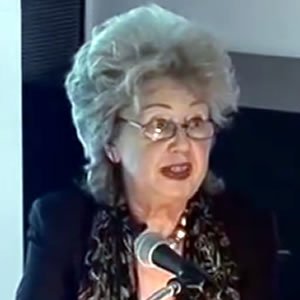 Who is Angelika Neuwirth?
Angelika Neuwirth (born 1943) is a professor of Quranic studies from Freie University, Berlin, Germany. She studied islamic studies, semitic studies and classical philology at the Universities of Berlin, Tehran, Gottingen, Jerusalem, and Munich
Between 1994 and 1999 she was the director of the German Institute of Oriental Studies in Beirut and Istanbul. Neuwirth works as a professor in Freie University in Berlin and as a visiting professor at the University of Jordan in Amman, and her research focuses on the Quran, its interpretations, and modern Arabic literature in the Eastern Mediterranean, especially Palestinian poetry and prose related to the Arab-Israeli conflict.
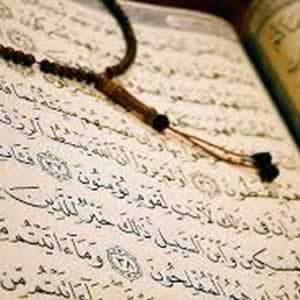 What is The Quran?
Quran, literally meaning "the recitation" is the central religious text of Islam, which Muslims believe to be a revelation from God (Allah). It is widely regarded as the finest work in classical Arabic literature. The Quran is divided into chapters
(surah in Arabic), which are then divided into verses (ayah). Muslims believe that the Quran was verbally revealed by God to Muhammad through the angel Gabriel (Jibril), gradually over a period of approximately 23 years, beginning on 22 December 609 CE, when Muhammad was 40, and concluding in 632, the year of his death. Muslims regard the Quran as the most important miracle of Muhammad, a proof of his prophethood, and the culmination of a series of divine messages that started with the messages revealed to Adam and ended with Muhammad.