Youtube Description:
Please support us by donating towards the dawah. Jazak'Allahu Khairan to you all
Some Useful Websites
EFDAWAH sponsored by
Help Support the Dawah by Switching your Energy Supplier via the above link.
Please support us by donating towards the dawah. Jazak'Allahu Khairan to you all
Some Useful Websites
EFDAWAH sponsored by
Help Support the Dawah by Switching your Energy Supplier via the above link.
Explore More
 Who is Hamza Myatt?
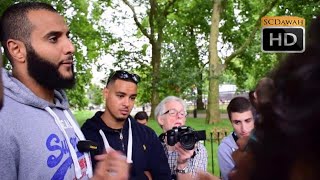
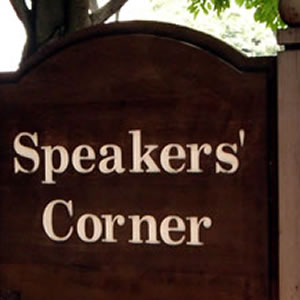
A Speakers' Corner is an area where open-air public speaking, debate, and discussion are allowed. The original and most noted is in the north-east corner of Hyde Park in London, England. Speakers here may talk on any subject, as long as the police
consider their speeches lawful, although this right is not restricted to Speakers' Corner only. Contrary to popular belief, there is no immunity from the law, nor are any subjects proscribed, but in practice the police intervene only when they receive a complaint. Speakers' Corner is often held up to demonstrate freedom of speech, as anyone can turn up unannounced and talk on almost any subject, although always at the risk of being heckled by regulars.
 What is Gnostic?
Gnosticism (from Ancient Greek: gnostikos, "having knowledge") is a modern name for a variety of ancient religious ideas and systems. Originating in Jewish-Christian milieus in the first and second century AD. These systems believed that the material
world is created by an emanation of the highest God, trapping the divine spark within the human body.Gnosticism is also defined as the belief in, dualism of good and bad and special knowledge for salvation.
 What is a Prophet?
In religion, a prophet is an individual who is regarded as being in contact with a divine being and is said to speak on that entity's behalf. They claim to be serving as an intermediary with humanity by delivering messages or teachings from the
supernatural source to other people. The message that the prophet conveys is called a prophecy. In Islam, all prophetic messengers are prophets (such as Adam, Noah, Abraham, Moses, Jesus, and Muhammad) though not all prophets are prophetic messengers. The primary distinction is that a prophet is required to demonstrate God's law through his actions, character, and behavior without necessarily calling people to follow him, while a prophetic messenger is required to pronounce God's law (i.e. revelation) and call his people to submit and follow him.