18:36
982 views
·
Last viewed: 2 days ago
Uploaded: 16 Sep 2015 (11 years ago) · Shared: 04 May 2017
Video Description (from Youtube)
Source: http://www.simonsebagmontefiore.com/jerusalemthebiography.aspx First Jewish Revolt, (ad 66–70), Jewish rebellion against Roman rule in Judaea. The First Jewish Revolt was the result of a longseries of clashes in which small groups of Jews offered sporadic resistance to the Romans, who in turn responded with severe countermeasures. In the fall of ad 66 the Jews combined in revolt, expelled the Romans from Jerusalem, and overwhelmed in the pass of Beth-Horon a Roman punitive force under Gallus, the imperial legate in Syria. A revolutionary government was then set up and extended its influence throughout the whole country. Vespasian was dispatched by the Roman emperor Nero to crush the rebellion. He was joined by Titus, and together the Roman armies entered Galilee, where the historian Josephus headed the Jewish forces. Josephus’ army was confronted by that of Vespasian and fled. After the fall of the fortress of Jatapata, Josephus gave himself up, and the Roman forces swept the country. On the 9th of the month of Av (August 29) in ad 70, Jerusalem fell; the Temple was burned, and the Jewish state collapsed, although the fortress of Masada was not conquered by the Roman general Flavius Silva until April 73.
The Zealots and Sicarii overran the Roman military garrison from Jerusalem. This was a heartening victory for the Jewish people as support for the Zealots in the city grew. This sense of Jewish dominance over the Romans was short lived.
By the year 67 CE, the Romans under Vespasian and Titus had taken back all of Judea and killed the Jewish rebels that were left. The Jewish strongholds of Jodapatha, after a 47 day siege, was now under Roman control. The Romans were on the march to Jerusalem.
The perspective of the Jewish leaders in Jerusalem, mainly Sadducee Jerusalemites, had shifted dramatically from elation to panic. They knew that the revolt would not be a success for long, and they implored the Zealots to surrender peacefully in order to save as many Jewish lives as possible. The Zealots refused.
They anticipated the insurrection that would have doubtless come if the more moderate Jewish leaders were listened to by the common person. As a result, the Zealots and the fanatical Sicarii publicly executed them and hung their dead bodies so that everyone could see the repercussions of preaching insurgent messages of peace. The moderate leaders in Jerusalem at the start of the revolution in 66 CE had all been killed by 68 CE, and not one by the hands of the Roman aggressors.The Zealots and the Sicarii retreated to the Temple. The Roman legion, after several attempts at breaching the walls, set fire to the Holy Temple. The site that once gave thousands of Jewish people hope was destroyed. God, it seemed, was no longer in the city. This was the most devastating Roman blow to Judaea. The rest of the city was plundered and burned to the ground soon after the Temple fell. The Romans crushed the remaining, beleaguered Jewish resistance. Jerusalem was under complete control of the Romans by September 70 CE.
Christianity was birthed from this clash of civilizations<HR>
IMPORTANT NOTE: In 70 AD, Roman Emperor Titus invaded Jerusalem and the 'Seige of Jerusalem' resulted in the death of 1,100,000 Jews.
<br><br>
<strong>
The Gospel Of Jesus, if such a Text ever existed, may have been destroyed at the 'Seige of Jerusalem', along with other invaluable manuscripts and writings.
</strong>
DISCLAIMER
All videos are shared for educational and information purposes only. All videos are hosted and viewable on Youtube servers. Video titles are generated using the original video title; overall content theme including actual dialogue and speech (Transcript); and A.I-based recommendations with a focus on SEO, keyword density, and internal search functions. The video title does not represent the views held by the Youtube video uploader, or any individual, organisation or business.
If you spot any mistake, omission or give feedback, kindly Contact Us with details
EXPLORE TOPICS :
JERUSALEM |
94
JEWISH TEMPLE |
9
GOSPEL |
221
USA |
184
UNITED STATES |
9
AMERICA |
152
JEWISH |
224
JEWS |
140
JUDAISM |
74
 JESUS
JESUS
JESUS
Overview & Key Concepts
What is Jewish Temple?
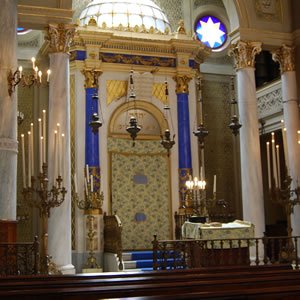 The Second Temple was the Jewish holy temple which stood on the Temple Mount in Jerusalem during the Second Temple period, between 516 BCE and 70 CE
According to Jewish tradition, it replaced Solomon's Temple (the First Temple), which was destroyed by the Neo-Babylonian Empire in 586 BCE, when Jerusalem was conquered and part of the population of the Kingdom of Judah was taken into exile to Babylon. Much like the Babylonians destroyed the First Temple, the Romans destroyed the Second Temple and Jerusalem in 70 CE as retaliation for an ongoing Jewish revolt. Jewish eschatology includes a belief that the Second Temple will be replaced by a future Third Temple.
Where is Jerusalem?
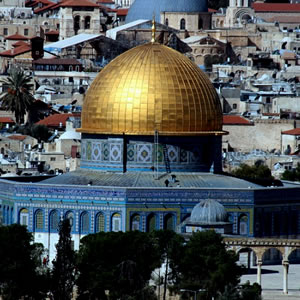 Jerusalem is a city in the Middle East. It is located on a plateau in the Judaean Mountains between the Mediterranean and the Dead Sea. It is one of
the oldest cities in the world, and is considered holy to the three major Abrahamic religions: Judaism, Christianity, and Islam. Both Israel and the Palestinian Authority claim Jerusalem as their capital, as Israel maintains its primary governmental institutions there and the State of Palestine ultimately foresees it as its seat of power; however, neither claim is widely recognized internationally.
What is Gospel?
 Gospel is the Old English translation of Greek evangelion, meaning "good news". It originally meant the Christian message itself, but in the 2nd
century it came to be used for the books in which the message was set out. The four gospels of the New Testament: Matthew, Mark, Luke and John are the main source of information on the life of Jesus.
Frequently Asked Questions
1.How did James, leader of the Jerusalem Church, view Apostle Paul?
Paul's new doctrine met with disapproval from the Jewish-Christians of the Jerusalem Church led by James, who regarded the substitution of Jesus' atoning death for the observance of the Torah as a lapse into paganism.
Paul was duly summoned to Jerusalem by the leaders James, Peter and John to explain his doctrine in 50 AD.
2.What do Synoptic Gospels say about Jesus?
The Synoptic Gospels strictly portray Jesus through a human lens as an honorable prophet, a moral hero, and a devoted martyr. They do not present him as a literal God who assumed human flesh, nor do they frame his life as a cosmic sacrifice intended to die and rise again for the spiritual salvation of mankind.
3.What did Apostle Paul think of his fellow Gospel writers?
Paul was deeply unyielding toward alternative views of the faith, explicitly writing in Galatians 1:9 that if any person preached a gospel different from the one his followers had received, that individual should be completely accursed. This indicates he aggressively dismissed the legalistic, Jewish-Christian perspectives held by original disciples like James and Peter.
4.How did Matthew (Gospel) support Apostle Pauline Christian doctrine?
The Gospel of Matthew, aimed at law-abiding Jewish-Christians, did not support Pauline doctrine and actually stood in direct opposition to it.
5.When were the Gospels written?
The canonical gospels were composed during the second half of the 1st century, with Mark widely dated around 65-70 CE, followed by Matthew and Luke between 80-90 CE, and John close to 90-100 CE. These dates mean the texts were compiled decades after Jesus' earthly ministry, drawing on reliable oral traditions and early eyewitness testimonies.
6.What did Apostle Paul say about the other gospels?
In Galatians 1:6-9, Paul strongly condemned anyone preaching a different gospel, reflecting a significant conflict in the early church between his Gentile-inclusive mission and strict adherence to the Law.
7.Who wrote John's gospel?
The author of the fourth gospel is believed to be a Greek convert with limited knowledge of traditional Judaism, who frequently uses 'the Jews' as an antagonistic term over 60 times in the Gospel of John alone.
8.What were the Apocryphal Gospels?
Apocrypha are works, usually written works, that are of unknown authorship, or of doubtful authenticity, or spurious, or not considered to be within a particular canon.
The Apocrypha (Greek for 'hidden away') are revered Biblical text which were excluded from the canon Bible. They were literally hidden away from the early Christians, and tell a very different story of Jesus.
Gospel of Nazoreans
Gospel of Ebionites
Gospel of Egyptians
Gospel of Peter
Gospel of Thomas
Gospel of Hebrews
9.What is the significance of the Gospel of Thomas?
Thomas is the most important non-canonical Gospel recently discovered in the last century. It positively features in current studies of Christian origins and the historical Jesus.
Gospel of Thomas with sayings of Jesus is thought to be earliest written record of his life produced within ten years of his death.
10.How was the Gospel of John viewed?
In the 2nd century, some Christians felt John gospel was so different in tone and approach in comparison to the other three synoptic gospels (Mark, Matthew, Luke); it should have been excluded from the cannon.
11.In 325 AD, did Emperor Constantine burn gospels, writings and religious text?
The books of Arius and his followers, after the first Council of Nicaea (325 C.E.), were burned for heresy by the Roman emperors Constantine, Honorius, and Theodosius I, who published a decree commanding that, 'the doctrine of the Trinity should be embraced by those who would be called catholics; that all others should bear the infamous name of heretics'.
12.How did the Early Jewish-Christians practise their religion?
The earliest Jewish-Christians strictly followed traditional Hebrew practices, including daily prayers, circumcision, rituals for purity, fasting, dietary laws, and temple, according to the source material.
13.Did Jesus claim to be 'King of the Jews'?
A political placard accusing Jesus of making this claim was nailed to his cross, and this historical artifact can be found today at the Church of Santa Croce in Rome.
14.How was Jesus Jewish?
Jesus fully observed the laws of the Torah, maintained kosher dietary regulations, and never asked his followers to abandon Judaism, as they continued to meet at the Temple and practice circumcision rather than establishing a separate religion or attending a church.
15.What did early Jewish-Christians think of Apostle Paul?
Between 55 and 66 CE, early Jewish-Christian leaders in Jerusalem rejected Paul's teachings and challenged his authority, leading to a significant decline in his popularity.
16.Were the early Christians Jews?
Yes, Jesus and early followers were entirely Jewish, strictly observing traditional laws and customs.
17.Did Saul kill the early Jewish-Christians?
Before his conversion, Saul actively sought to imprison and execute early Jewish-Christians. Saul believed that he was serving God by finding Christians, throwing them into prison, and even executing them.
1 And Saul was consenting unto his death. And at that time there was a great persecution against the church which was at Jerusalem; and they were all scattered abroad throughout the regions of Judaea and Samaria, except the apostles.
2 And devout men carried Stephen to his burial, and made great lamentation over him.
3 As for Saul, he made havock of the church, entering into every house, and haling men and women committed them to prison.
[Acts 8:1-3]
2 And devout men carried Stephen to his burial, and made great lamentation over him.
3 As for Saul, he made havock of the church, entering into every house, and haling men and women committed them to prison.
[Acts 8:1-3]
18.How did the Jews view Apostle Paul?
Faithful Jews viewed Paul's salvation theory as blatant blasphemy because his theological teachings explicitly ridiculed all previous revelations from God, including the sacred Torah, while teaching a doctrine that went against the absolute oneness of God.
19.According to Apostle Paul, why did God give Jews the Torah?
Paul viewed the Torah as a temporary guide, claiming it was given to the Jews until they could be saved through faith in Jesus Christ.
20.How did Apostle Paul differ with the Jewish Rabbis?
The Jewish Rabbis preached a person was saved so long as their intention was to remain within the covenant, and one truly repented and seek forgiveness for their sins.
Paul preached that every person was 'damned' until they was offered salvation. Mans problem was that he was 'in the flesh' in bondage to the Law, sold under Sin, enslaved by the fundamental spirits of the universe (ie. dead).
Paul preached the only cure was liberation from slavery and death by union with Christ, who had conquered death and sin.
21.How did the early Jewish-Christians view Jesus' resurrection?
The earliest Jewish-Christians did not believe that the resurrection meant Jesus was God, but rather that he was a righteous man approved by God through miracles, wonders, and signs. Based on texts like Acts 2:22-24, they maintained the theological view that Jesus had been raised by God, not that he was the Creator himself.
22.Who seperated Christianity from Judaism?
It was Apostle Paul's dramatic conversion and subsequent teachings that directly resulted in the permanent theological separation of Christianity from Judaism. Within mere months of Jesus' departure, the original human-centric and law-abiding message was fundamentally altered into an independent religious system.
23.Why Jews do not accept Jesus as the Messiah?
The Bible claims the Messiah will accomplish certain signs:
1. Build the Third Temple (Ezekiel 37:26-28).
2. Gather all Jews back to the Land of Israel (Isaiah 43:5-6).
3. Usher in an era of world peace, and end all hatred, oppression, suffering and disease. As it says: 'Nation shall not lift up sword against nation, neither shall man learn war anymore.' (Isaiah 2:4)
4. Spread universal knowledge of the God of Israel, which will unite humanity as one. As it says: 'God will be King over all the world—on that day, God will be One and His Name will be One' (Zechariah 14:9).
The historical fact is that Jesus fulfilled none of these messianic prophecies.
Christians counter that Jesus will fulfill these in the Second Coming, but Jewish sources show that the Messiah will fulfill the prophecies outright, and no concept of a second coming exists.
24.What does the Quran say about Jews and Christians?
The Quran recognizes Jews and Christians as 'People of the Book' (Ahl al-Kitab), acknowledging that they were given previous divine revelations through prophets like Moses and Jesus. While it praises the righteous among them, it also critiques their theological developments, specifically rejecting the Christian doctrine of the Trinity and the divine sonship of Jesus.
25.How was Apostle Paul viewed by the Jews?
Paul was widely viewed by mainstream Jewish communities as a radical apostate and religious heretic because he preached that observance of the Mosaic Torah was no longer required for salvation. This fierce theological conflict frequently resulted in severe public opposition, legal charges before Roman authorities, and physical riots during his travel throughout ancient Mediterranean cities.
26.Does the Quran tell Jews and Christians to refer to their Scriptures (Torah and Bible)?
Yes, the Quran references previous scriptures in passages like Surah Al-Ma'idah (5:47), which tells the followers of the Gospel to judge by what God has revealed in it. From an academic perspective, this reflects the historical context of 7th-century Medina, where Jews and Christians were recognized as 'People of the Book' who possessed divine laws. While Islamic theology holds that modern biblical texts have suffered from textual corruption (tahrif), the Quran historically appeals to the core monotheistic truths remaining in those scriptures to validate Muhammad's message.
27.In the time of Jesus, what qualities would identify the Messiah, to the Jews?
First-century Jewish expectations, as discussed in this analysis of Trinity dogma, centered on a human leader, such as a prophet or king from David's line, rather than a divine figure.
A human empowered by God. Not a God-man, a person of the Godhead or part of a Triune God (Trinity)
From the lineage of Abraham (Gen. 22:18)
From the tribe of Judah (Gen. 49:10)
A descendant of David (2 Sam. 7:12)
A Lord under Yahweh, the God of Israel (Ps. 110:1)
From amongst their own people (Jer. 30:21)
28.How did the 1st century Jews view the Holy Spirit?
The Holy Spirit was understood as God's active, divine power, rather than a distinct, third person of a Trinity.
First century Jews believed the Holy Spirit was another name for God, similar to Yahweh, Elohim or El Shaddai - not a separate Person in the Trinity!
There is no record of Jesus ever trying to correct the Jews and prove the Holy Spirit was a third Person in the Trinity.
29.Jesus claimed to be God. The Jews must have understood this, as they accused him of blasphemy and were ready to stone him?
The platform asserts that Jesus did not claim divinity in this instance, and that his mention of Psalm 82:6 in John 10:34 was a defense noting that human judges are called 'gods' in scripture, thus challenging the accusation of blasphemy.
30.Why do Jews let the hair grow on the sides of there head?
In the text of the Torah (Leviticus 19:27), God explicitly forbids cutting or rounding off the corners of the hair on the sides of the head and marring the edges of the beard.
31.How did Jews view the Greek Bible (Septuagint)?
The Jewish community regarded the Septuagint only as a translation of the original Hebrew, never as an independent or authoritative scripture.
32.In the time of Jesus, how were the Jews viewed by the Greeks?
The text suggests that the Greeks perceived Judaism as an insular tradition, weakened by long-term Roman occupation, economic decline, and emigration.
Videos on Jerusalem (71)
 7:36
7:36
433
1441324800
1787144739
King David's palace and King Solomon's wall in Jerusalem excavated
000456
1
 11:20
11:20
607
1482796800
1787152220
Where Jesus wept for Jerusalem (Triumphal Entry, Dominus Flevit) - HolyLandSite
000680
2
 16:58
16:58
659
1482796800
1787134499
Jerusalem - God's Chosen City - HolyLandSite
001018
3

431 views
15:01
431
1482796800
1787143926
Jesus' Jerusalem - Lost Worlds
000901
4

510 views
2:02:11
510
1482796800
1787145515
The Gates of Jerusalem - Richard Kiley
007331
5
 3:07
3:07
516
1482796800
1787130548
Jesus will return to the Golden Gate, Jerusalem
000187
6
 1:18:49
574
1490659200
1787132117
Did Muhammad go to Jerusalem in a night journey? - Ali Ataie
004729
7
 47:55
47:55
696
1493856000
1787143066
The Crusades: Saladin and the Fall of Jerusalem - Al-Jazeera 3/4
002875
8
 18:36
18:36
982
1493856000
1786987638
Siege of Jerusalem and destruction of the Jewish Temple and Jesus' Gospel (70 AD)
001116
9
 14:05
14:05
725
1493856000
1787135294
Romans at the Gates - Siege of Jerusalem (70 AD) 1/3
000845
10
 9:57
9:57
472
1493856000
1787133003
The Fight for the Walls - Siege of Jerusalem (70 AD) 2/3
000597
11
 16:41
16:41
521
1493856000
1786751073
Last Stand of the Great Jewish Revolt - Siege of Jerusalem/Masada (73 AD) 3/3
001001
12
 10:54
10:54
711
1501545600
1787143613
In Luke 21:20, Jesus predicted Titus Flavius, Arch of Titus and Siege of Jerusalem
000654
13
 25:54
25:54
839
1501545600
1787125391
Seige of Jerusalem: Rome destroys the Jewish Temple (66-70 AD) - HistoryTV
001554
14
 27:33
27:33
931
1501545600
1787135727
Siege of Jerusalem and Roman-Jewish Wars - Henry Abramson
001653
15
 2:25
2:25
1039
1512437641
1787125777
Jesus' infancy is difficult to reconcile in the Gospels (his birthplace, Bethlehem, Jerusalem, Nazareth, Egypt, 3 Kings etc.) - Mike Licona
000145
16
 28:26
28:26
555
1513217326
1787130890
Will a Temple be built over Al-Aqsa Mosque in Jerusalem? - BeyondTV
001706
17
 5:03
5:03
537
1513217328
1787123349
What events will happen before the Temple is built over the Al-Aqsa Mosque in Jerusalem? - Jimmy DeYoung - Ankerberg Show
000303
18
 3:15
3:15
911
1514642023
1787131534
Jerusalem is Palestinian (Palestine) longer than London is English - Salman Abu Sitta (Al-Jazeera)
000195
19
 7:11
7:11
871
1515018789
1787142074
Jerusalem is a Holy city to the Jews, and a political Capital city to the Zionists, who assault Judaism with their claims - Yaakov Shapiro
000431
20

1368 views
2:21
1368
1515018795
1787131366
In Judaism, Jerusalem is a holy city. In Zionism, Jerusalem is the capital of Israel - True Torah
000141
21
 6:17
6:17
1030
1515887553
1787148162
In Luke 13:33, no Prophet will die outside Jerusalem. Yet, Jesus did? - Zakir Hussain vs James White
000377
22
 21:21
21:21
570
1520082428
1787152334
Holding The Key: Jerusalem's Church of the Holy Sepulchre - Al-Jazeera
001281
23
 8:01
8:01
1744
1522431761
1787136863
In 70 AD, Rome destroyed Jerusalem and Jewish Temple. Christianity was born and Jesus invented to fulfill ancient prophecy - Paul George
000481
24
 1:20
1:20
886
1528567045
1787141487
Apostle Paul disrespects Jesus' disciples, Jesus' family and Jerusalem Church - David Fitzgerald
000080
25
 7:18
7:18
1328
1529453913
1787154807
Paul was 'Apostle to Gentiles' and claimed superiority over Jewish-Christians in Jerusalem Church - Tovia Singer
000438
26

891 views
1:09
891
1530742209
1787145779
Mark's Gospel was not based on Peter's Testimony or any other Jerusalem eyewitness - Bart Ehrman
000069
27
 13:09
13:09
976
1546743127
1786752172
You are in Jerusalem, Israel. Stop preaching about Yeshua, you Idolator!
000789
28
 42:14
42:14
1029
1567388001
1787131026
Council of Jerusalem (50 AD) charged Apostle Paul of taking Jews away from established Dietary and Circumcision laws - Abbas London vs Man
002534
29

648 views
3:53
648
1570625288
1787144513
Western 'Wailing' Wall in Jerusalem is a Herodian Temple wall built by Roman Emperor Herod - Robert Eisenman
000233
30
 5:23
5:23
1295
1574294142
1787133072
In 70 AD, Rome destroyed the Jerusalem Church, establishing 'Pagan' Trinitarian Christianity - Hamza Saudi
000323
31
 10:56
10:56
694
1581092974
1787132664
Respect the Jewish Right to not worship a Man as God - Tovia Singer vs Jerusalem Church
000656
32
 29:39
29:39
612
1592780437
1787142868
Jesus on the Road from Jericho to Jerusalem - HolyLandSite
001779
33
 0:42
0:42
569
1614712783
1787134636
Tour of Solomon's Dome, Jerusalem - LoveAqsa
000042
34
 0:43
0:43
636
1614712757
1787145638
Tour of Moses' Dome, Jerusalem - LoveAqsa
000043
35
 0:42
0:42
598
1614712762
1787145718
Tour of Joseph's Dome, Jerusalem - LoveAqsa
000042
36
 0:49
0:49
541
1614712771
1787133686
Tour of Muhammad's Dome, Jerusalem - LoveAqsa
000049
37
 0:48
0:48
577
1614712750
1787148956
Tour of Al-Aqsa Mosque layers, Jerusalem - LoveAqsa
000048
38
 0:48
0:48
562
1614712744
1786751011
Tour of Al-Aqsa Mosque site, Jerusalem - LoveAqsa
000048
39
 0:59
0:59
461
1614712722
1787134909
Tour of Gate Of Mercy, Muhammad's companions grave site, Jerusalem - LoveAqsa
000059
40
 1:11
1:11
414
1614710357
1787135238
Tour of Al-Aqsa Mosque interior, Jerusalem - LoveAqsa
000071
41
 13:54
13:54
746
1629301571
1787148899
Importance of Jerusalem in the Quran - PfanderFilms
000834
42

936 views
7:56
936
1747324179
1787160319
Tour of Garden of Gethsemane on Mount of Olives, Jerusalem where Jesus was Crucified | Robert Breaker
000476
43
 5:45
5:45
892
1747326035
1787154664
Tour of First Church, Jerusalem visited by Jesus Apostles | Robert Breaker
000345
44
 7:51
7:51
624
1747326221
1787129663
Tour of King David's Tomb in the City of David, Jerusalem | Robert Breaker
000471
45
 10:50
10:50
820
1756991627
1787146315
In 70 AD, 1,000,000 'Jewish' Black Men fled from Jerusalem to Africa | ISUPK
000650
46
 1:56:10
309
1770775749
1787130208
Walking Tour of Jerusalem, Israel | HolyLandSite
006970
47
 1:27:37
332
1770947296
1786752091
The 'slow death' of Christianity in Jerusalem | Tucker Carlson
005257
48
 4:54
4:54
684
1771421140
1787019034
Israeli Zionists ethnically cleanse Christians from Jerusalem | Jason Jones | John-Henry Westen
000294
49
 15:52
15:52
354
1771431189
1787171194
Armenian Christians Under Attack in Jerusalem, Israel | Oborne Unscripted | Middle East Eye
000952
50
 16:27
16:27
372
1771958540
1787051460
'God gave us Israel. All of Jerusalem is Jewish' | The Guardian AGL 1/3
000987
51

382 views
14:25
382
1776114198
1786954235
Israel blocks Christians from Holy Sepulchre, Jerusalem | Oborne Unscripted | Middle East Eye
000865
52
 11:13
11:13
317
1776113839
1787126936
Christians face 'spitting and physical attacks' from Jews in Jerusalem, Israel | Oborne Unscripted
000673
53
 4:29
4:29
321
1776118214
1786973140
Israel blocks Catholic Christians from Holy Sepulchre Church, Jerusalem | New York Post
000269
54
 19:56
19:56
273
1777510283
1787089993
Tombs of Prophets Haggai, Zechariah, & Malachi in Jerusalem, Israel | HolyLandSite
001196
55
 12:29
12:29
206
1777508955
1787141814
Why are Christians leaving Jerusalem, Jesus' birthplace | Al-Jazeera
000749
56
 1:38:09
180
1778090250
1787089854
Tour around the Old City Jerusalem, Israel | HolyLandSite
005889
57
 34:14
34:14
180
1778083262
1786905069
Muhammad's Night Journey and Early Islam's Jerusalem connection | Gabriel Reynolds
002054
58
 48:30
48:30
257
1778170168
1787155780
Jerusalem, City of Islam | Paul Ellis | MythVision 1/2
002910
59
 44:44
44:44
262
1778169296
1787117121
Jerusalem, City of Islam | Paul Ellis | MythVision 2/2
002684
60
 6:50
6:50
210
1778515278
1786943604
Significance of Qibla (prayer direction) changing from Jerusalem to Mecca | James Howard-Johnston | Skepsislamica
000410
61
 37:12
37:12
156
1782165795
1786751258
Walking the Streets of Jerusalem and Bethlehem | Harry Jaggard
002232
62
 3:03
3:03
137
1782167611
1787050657
How Israel denies Jerusalem's Palestinians building permits, forcing them out | TRT World
000183
63
 2:38
2:38
152
1783077887
1787153446
Israel seize land around Prophet Samuel's historic mosque, Jerusalem | TRT World
000158
64

212 views
5:17
212
1783208213
1787028310
Christian population in East Jerusalem reduced to 2% from 10% due to Israeli settler violence | TRT World
000317
65
 2:51
2:51
297
1783206971
1786914211
Armenian Christians in East Jerusalem targeted by Israeli settlers | TRT World
000171
66
 6:47
6:47
140
1783207943
1786841842
'Leave or We will kill you': Extremist Israeli Settlers warn Palestinians in Old City, Jerusalem | ABC News
000407
67
 9:10
9:10
232
1783323634
1786750712
Israeli Settlers chant 'DEATH TO ARABS' on Jerusalem Day | Wally Rashid
000550
68
 17:34
17:34
82
1785547064
1787094702
UNDER ATTACK - 2000 years of Christianity in Jerusalem, Israel | CNN
001054
69
 55:42
55:42
40
1785632171
1787162030
Tour Sisters of Zion, Via Dolorosa, Antonia Fortress, Jerusalem. Was Jesus here? | HolyLandSite
003342
70
 14:20
14:20
35
1785771668
1787155261
Nehemiah - Fixing the Walls of Jerusalem to God's Plan | Red Lamb Stories
000860
71
EXPLORE TOPICS :
JERUSALEM |
94
JEWISH TEMPLE |
9
GOSPEL |
221
USA |
184
UNITED STATES |
9
AMERICA |
152
JEWISH |
224
JEWS |
140
JUDAISM |
74
JESUS
JESUS