431 views
·
Last viewed: 5 hrs ago
Uploaded: 06 Jan 2016 (11 years ago) · Shared: 04 Feb 2019
Qureshi:
http://thefactsaboutislam.blogspot.co.uk/search/label/Nabeel%20Qureshi
Clip of Sean from: Elohim Explained - Hebrew Word for God - Sean Finnegan & J. Dan Gill
All clips used in accordance with Fair Use. No Copyright infringement. No commercial intent.
Contact email address: yahyasnow@yahoo.co.uk
Uploaded: 06 Jan 2016 (11 years ago) · Shared: 04 Feb 2019
Video Description (from Youtube)
RZIM's Nabeel Qureshi makes a misleading argument for the trinity dea based on the word 'Elohim'. Sean Finnegan tells us what Nabeel Qureshi did not. For more responses to NabeelQureshi:
http://thefactsaboutislam.blogspot.co.uk/search/label/Nabeel%20Qureshi
Clip of Sean from: Elohim Explained - Hebrew Word for God - Sean Finnegan & J. Dan Gill
All clips used in accordance with Fair Use. No Copyright infringement. No commercial intent.
Contact email address: yahyasnow@yahoo.co.uk
Search Results on 'In Genesis 1:1, Elohim ('God') is singular when applied to Yahweh - Sean Finnegan'
SCROLL TO :TOPICS | 3NEWS | 0ARTICLES | 2FAQ | 1VIDEO | 53LINKS | 0TOPICS #YAHWEH ELOHIM
Topics include Yahweh, Elohim (3)
Who are Yahweh Ministry? Yahweh's Restoration Ministry (YRM) are devoted to exposing pagan church traditions and false doctrine. We also cover end-times prophecy, armageddon and prophetic events. The Hebrew roots of the Christian faith is an important element to unlocking Bible truth. Discover amazing facts that your church
doesn't want you to know! Facts like the Sabbath and Feast Days, the name of god Yahweh, common Bible misnomers, false doctrine, paganism, and amazing Bible facts are all covered. |
Who is Yahweh? Yahweh was the national god of the Iron Age kingdoms of Israel (Samaria) and Judah. His exact origins are disputed, although they reach back to the early Iron Age and even the Late Bronze: his name may have begun as an epithet of El, head of the Bronze Age Canaanite pantheon, but the earliest
plausible mentions of Yahweh are in Egyptian texts that refer to a similar-sounding place name associated with the Shasu nomads of the southern Transjordan. In the oldest biblical literature, Yahweh is a typical ancient Near Eastern "divine warrior", who leads the heavenly army against Israel's enemies; he later became the main god of the Kingdom of Israel (Samaria) and of Judah, and over time the royal court and temple promoted Yahweh as the god of the entire cosmos, possessing all the positive qualities previously attributed to the other gods and goddesses. |
Who is Elohim? Elohim in the Hebrew Bible refers to deities, and is one of the many names or titles for God in the Hebrew Bible. The word is identical to the plural of el, meaning gods or magistrates, and is used for the pantheon of Canaanite gods, the children of El, and conventionally vocalized as "Elohim". The
notion of divinity underwent radical changes in the early period of Israelite identity and development of Ancient Hebrew religion. The ambiguity of the term elohim is the result of such changes, cast in terms of "vertical translatability", i.e. the re-interpretation of the gods from 7th century BC, Judah to the emergence of monotheist Rabbinical Judaism in the 2 AD. |
Articles on Yahweh, Elohim (2)
| Bible - 27 Verses on Yahweh, Elohim(s) and The Gods
30,683 views
|
Paul made Jesus into Yahweh

1,495 views
|
FAQ on Yahweh, Elohim (1)
| 1.Where did the name Yahweh come from? |
Youtube Videos on Yahweh, Elohim (53)
 In 200 years, Christianity lost Jesus' Jewish teachings; adopting Greek and Roman Paganism -
  Trinity is from Paganism; not found in New Testament -
  Interesting Facts About Jesus -
  False Church doctrine and False Christian teachings -
  Yeshua The Real Messiah -
  Pagan Origins of Christmas Exposed -
  Pagan Origins of New Years Day Exposed -
  Pagan Origins of Easter Exposed -
  Sabbath: Was it Saturday or Sunday? -
  Bible Secrets Unveiled -
  In Exodus 7:1, Moses was made a God (
 In Exodus 3:14 and Exodus 3:15, I Am is a name of
  Pagan Origins of Judaism: Evidence for Israelite Gods, El, Asherah, Adonai, Baal,
  Did You Know Christmas is Pagan? -
  Jesus called the Father: Allah, Ellah or
  Archaeologists discover
  Father, Jesus, Holy Spirit. They are all
  In Genesis 19:24 and Zecheriah 2:11, there is only one
  In Genesis 19:24, the LORD is mentioned twice. Is there two
  In the Old Testament,
  In Genesis 1:1,
  Jesus is not
  In John 10:33, did Jesus commit blasphemy by claiming to be gOD ('
 In John 10:33, did Jesus commit blasphemy by claiming to be gOD ('
 In John 10:33, did Jesus commit blasphemy by claiming to be gOD ('
 James Dunn: Jesus is not
 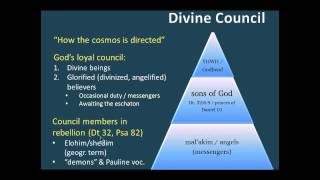 Many Biblical Gods (
 In Genesis 1:1 and Genesis 1:26, Gods (
 Father, Son and Holy Spirit is
  God shares His Authority with other Gods (
 In Psalm 89:6,
  How did Yeshua ('
 How did Yeshua ('
 Did Jesus speak of His Own or in name of
  In Genesis 1:26, Was Humanity Created by Gods (
 In Leviticus 3:9, Animal Sacrifices are food of
  In Genesis 16:7, did Hagar speak to
  Jesus instructed Jews to worship
  Valentinus (100-160 AD, Gnostic Christian) wrote of Monad, the highest, mysterious, unknowable God; rival to Demiurge (
 Jesus prayed to Al (The) + Elaha (God/
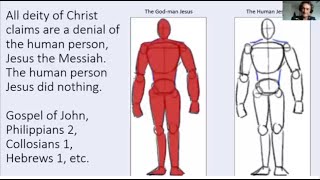 Historical development of Christian Trinity, Jesus-Man & Jesus-God-
 Father generated Jesus-Son. Can Jesus generate The Father-
 Origins of
  Polytheism to
 Origins of
  Goddess Asherah, the Secret Wife of God
 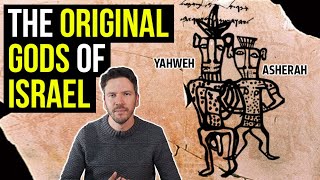 The Gods of Israel (El, Baal,
  Who Was Baal and
  Early Judaism was Polytheism: GOD
  The Evolution of God from
  Did
Did  Did Ancient Israelites Sacrifice Children to
DISCLAIMER
All videos are shared for educational and information purposes only. All videos are hosted and viewable on Youtube servers. Video titles are generated using the original video title; overall content theme including actual dialogue and speech (Transcript); and A.I-based recommendations with a focus on SEO, keyword density, and internal search functions. The video title does not represent the views held by the Youtube video uploader, or any individual, organisation or business.
If you spot any mistake, omission or give feedback, kindly contact us with details
All videos are shared for educational and information purposes only. All videos are hosted and viewable on Youtube servers. Video titles are generated using the original video title; overall content theme including actual dialogue and speech (Transcript); and A.I-based recommendations with a focus on SEO, keyword density, and internal search functions. The video title does not represent the views held by the Youtube video uploader, or any individual, organisation or business.
If you spot any mistake, omission or give feedback, kindly contact us with details