409 views
·
Last viewed: 18 hrs ago
Uploaded: 28 Sep 2015 (11 years ago) · Shared: 16 Nov 2017
Duration: 6:34
Uploaded: 28 Sep 2015 (11 years ago) · Shared: 16 Nov 2017
Duration: 6:34
Youtube Description
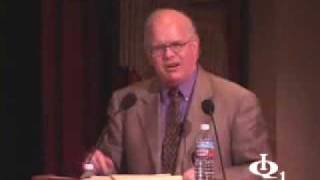
Why does the New Testament scholar Dale Martin claim that we don't know what happened at the trial of Jesus, or if there was a trial at all? Did Jesusnot appear before Pontius Pilate?
Looking at the Gospel of Mark and John, they are very different in how to present the trial before Pilate. In Mark, jesus hardly speaks at all, while in John he speaks a lot. This is a problem, either he is silent or he speaks a lot, it can't be both. The second problem is the fact that none of the disciples could have been present at the trial.
So Jesus' trial before Pilate may have been invented later by Christians who thought there must have been a trial.
Dale Martin Clip – The clip used is by Dale Martin, Introduction to the New Testament (Yale University: Open Yale Courses), http://oyc.yale.edu (Accessed September 28, 2015). License: Creative Commons BY-NC-SA, under Creative Commons Attribution-Noncommercial-Share Alike 3.0 license ( http://creativecommons.org/licenses/by-nc-sa/3.0/us/ ) It is used non-commercially.
Explore More
Christine Hayes Pontius Pilate Dale Martin JESUS
JESUS
Search Google Search Explore Topics
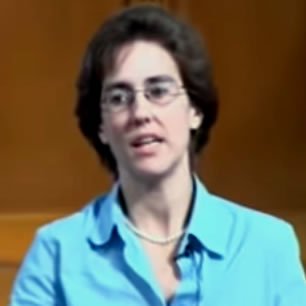 Who is Christine Hayes? (MEMBER OF Yale University)
Christine Hayes is the Robert F and Patricia Ross Weis Professor of Religious Studies at Yale University. She is former Chair of the Department of Religious Studies, and one of the foremost American academics focusing on talmudic-midrashic studies and Classical Judaica. Hayes received her B.A. summa cum laude in The Study of Religion from Harvard University in 1984. She subsequently received an M.A. with distinction from the University of California, Berkeley in 1988 which included a year of graduate work at the Hebrew University of Jerusalem. She received her PhD. in Talmudic and Judaic Studies (Department of Near Eastern Studies) from the University of California, Berkeley in 1993.
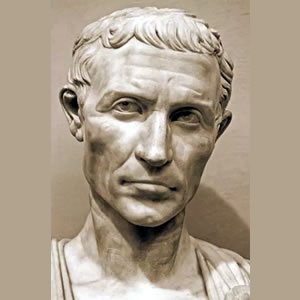 Who was Pontius Pilate?
Pontius Pilate was the fifth prefect of the Roman province of Judaea, serving under Emperor Tiberius from 26-37 AD. He is best known today for adjudicating on the trial and crucifixion of Jesus. In all four gospel accounts, Pilate lobbies for Jesus to be spared his eventual fate of execution, and acquiesces only when the crowd refuses to relent. He thus seeks to avoid personal responsibility for the death of Jesus. In the Gospel of Matthew, Pilate washes his hands to show that he is not responsible for the execution of Jesus and reluctantly sends him to his death. The Gospel of Mark, depicting Jesus as innocent of plotting against the Roman Empire, portrays Pilate as reluctant to execute him. In the Gospel of Luke, Pilate not only agrees that Jesus did not conspire against Rome, but Herod Antipas, the tetrarch of Galilee, also finds nothing treasonable in Jesus' actions. In the Gospel of John, Pilate states "I find no guilt in Him [Jesus]," and he asks the Jews if Jesus should be released from custody.
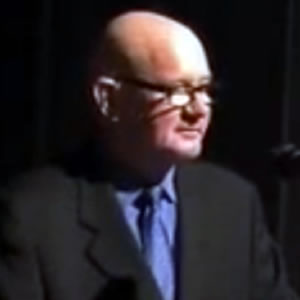 Who is Dale Martin? (MEMBER OF Yale University)
Dale Martin (born 1954) is an American New Testament scholar. He is Woolsey Professor of Religious Studies at Yale University. He has degrees from Abilene Christian University, Princeton Theological Seminary, and Yale. Martin previously taught at Rhodes College and Duke University. Martin was elected a Fellow of the American Academy of Arts and Sciences in 2009.