2:28
643 views
·
Last viewed: 13 mins ago
Uploaded: 22 Jul 2012 (14 years ago) · Shared: 02 Oct 2019
Video Description (from Youtube)
Final vid in the examination of the secular references to Jesus/Christianity.DISCLAIMER
All videos are shared for educational and information purposes only. All videos are hosted and viewable on Youtube servers. Video titles are generated using the original video title; overall content theme including actual dialogue and speech (Transcript); and A.I-based recommendations with a focus on SEO, keyword density, and internal search functions. The video title does not represent the views held by the Youtube video uploader, or any individual, organisation or business.
If you spot any mistake, omission or give feedback, kindly Contact Us with details
Overview & Key Concepts
Who are TruthSurge?
 I am a Youtuber who enjoys making videos on music, religion and other stuff. I am an ex-Christian atheist with many thoughts and ideas to share
concerning Christianity and its origins.
What is Gospel?
 Gospel is the Old English translation of Greek evangelion, meaning "good news". It originally meant the Christian message itself, but in the 2nd
century it came to be used for the books in which the message was set out. The four gospels of the New Testament: Matthew, Mark, Luke and John are the main source of information on the life of Jesus.
Who was Celsus?
 Celsus was a 2nd-century Greek philosopher and opponent of early Christianity. He is known for his literary work, On The True Doctrine (or Discourse
Account), which survives exclusively in quotations from it in Contra Celsum, a refutation written in 248 by Origen of Alexandria. On The True Doctrine is the earliest known comprehensive criticism of Christianity. It was written c. 175 to 177, shortly after the death of Justin Martyr (who was possibly the first Christian apologist), and was probably a response to his work.
Who was Philo?
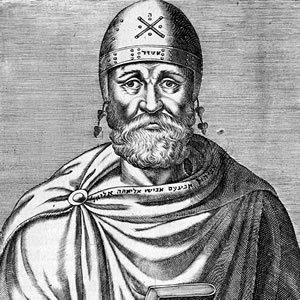 Philo of Alexandria (20 BC-50 AD) was a Hellenistic Jewish philosopher who lived in Alexandria, in the Roman province of Egypt. Philo used
philosophical allegory to harmonize Jewish scripture, mainly the Torah, with Greek philosophy. His method followed the practices of both Jewish exegesis and Stoic philosophy. His allegorical exegesis was important for some Christian Church Fathers, but he had very little reception history within the Rabbinic Judaism. He adopted allegorical instead of literal interpretations of the Hebrew Bible. Some scholars hold that his concept of the Logos as God's creative principle influenced early Christology.
What is Sin?
In Abrahamic contexts, sin is the act of violating God's will. Sin can also be viewed as anything that violates the ideal relationship between an
individual and God; or as any diversion from the ideal order for human living. To sin has been defined as "to miss the mark".
<br><br>
Sins fall in a spectrum from minor errors to deadly misdeeds. Catholicism regards the least corrupt sins as venial sins which are part of human living and carry immediate consequences on earth, and, if unrepented for, more painful purgation, assuming the person is destined to heaven, as it is written in the formation letter "Purgatory", "most of the early Fathers of the Church speak of a cleansing fire, though we cannot tell whether this means actual or spiritual fire."
<br><br>
Conversely, sins of great evil are mortal sins which bring the consequence of hell if they are not addressed either through an act of perfect contrition or going to confession about them.
Frequently Asked Questions
1.What do Synoptic Gospels say about Jesus?
The Synoptic Gospels portray Jesus as a prophet, hero and martyr - not as a God who became a Man, was sacrificed and rose again for the salvation of humanity.
2.What did Apostle Paul think of his fellow Gospel writers?
As we said before, so say I now again, If any man preach any other gospel unto you than that ye have received, let him be accursed.
(Galatians 1:9)
Paul would curse other gospel writers (James, Peter etc.) as if to say their was only one Christianity, one truth and that was his version.
(Galatians 1:9)
3.How did Matthew (Gospel) support Apostle Pauline Christian doctrine?
It did not! Matthew (85 CE) was written for Jewish-Christians who observed the Law and did not wish to break away from Judaism. Matthew is in complete opposition to Pauline doctrine.
4.When were the Gospels written?
Not a single one of the Gospels were written by eyewitnesses.
Not one of the Gospels was written in the lifetime of Jesus, the earliest known Gospel recounting the life of Jesus came 30-35 years after his ministry - this being the Gospel of Mark.
5.What did Apostle Paul say about the other gospels?
Paul rebuked other gospel writers.
6.Who wrote John's gospel?
The writer of John is believed to be a Greek convert and he often shows a lack of knowledge of Judaism and the Torah; and even shows a disrespect for the Jews, as he uses the term "Jews" as a slur over 60 times in the Gospel of John alone.
7.What were the Apocryphal Gospels?
Apocrypha are works, usually written works, that are of unknown authorship, or of doubtful authenticity, or spurious, or not considered to be within a particular canon.
The Apocrypha (Greek for 'hidden away') are revered Biblical text which were excluded from the canon Bible. They were literally hidden away from the early Christians, and tell a very different story of Jesus.
Gospel of Nazoreans
Gospel of Ebionites
Gospel of Egyptians
Gospel of Peter
Gospel of Thomas
Gospel of Hebrews
8.What is the significance of the Gospel of Thomas?
Thomas is the most important non-canonical Gospel recently discovered in the last century. It positively features in current studies of Christian origins and the historical Jesus.
Gospel of Thomas with sayings of Jesus is thought to be earliest written record of his life produced within ten years of his death.
9.How was the Gospel of John viewed?
In the 2nd century, some Christians felt John gospel was so different in tone and approach in comparison to the other three synoptic gospels (Mark, Matthew, Luke); it should have been excluded from the cannon.
10.In 325 AD, did Emperor Constantine burn gospels, writings and religious text?
The books of Arius and his followers, after the first Council of Nicaea (325 C.E.), were burned for heresy by the Roman emperors Constantine, Honorius, and Theodosius I, who published a decree commanding that, "the doctrine of the Trinity should be embraced by those who would be called catholics; that all others should bear the infamous name of heretics".