45:37
562 views
·
Last viewed: 4 hrs ago
Uploaded: 17 May 2024 (2 years ago) · Shared: 07 Apr 2025
Video Description (from Youtube)
In this episode of the Real Talk Podcast, we are thrilled to welcome back to the channel the eminent Mr. James Howard-Johnston to discuss the contents of his recent article “The Qur’an as a HistoricalSource.” A link to which you will find below.
James Howard Johnston is a Lecturer in Byzantine Studies at the University of Oxford, whose seminal book “Witnesses to a World Crisis: Historians and Histories of the Middle East in the Seventh Century“ is a monumental example of in-depth source analysis, examining the formative phase of Islam through the lens of both non-Islamic and Islamic sources.
In this discussion, we focus on why he considers the Qur’an to be such a key historical source and what a chronological reading of the text alongside other sources can reveal about the development of the Prophet’s career as both a spiritual and political leader of a religion that transformed history.
Link to the article:
https://www.degruyter.com/document/doi/10.1515/jiqsa-2024-0006/html
DISCLAIMER
All videos are shared for educational and information purposes only. All videos are hosted and viewable on Youtube servers. Video titles are generated using the original video title; overall content theme including actual dialogue and speech (Transcript); and A.I-based recommendations with a focus on SEO, keyword density, and internal search functions. The video title does not represent the views held by the Youtube video uploader, or any individual, organisation or business.
If you spot any mistake, omission or give feedback, kindly Contact Us with details
EXPLORE TOPICS :
HAJJ |
25
SKEPSISLAMICA |
17
ARABS |
12
ISLAM |
448
EARLY ISLAM |
16
MUSLIM |
305
QURAYSH |
5
JAMES HOWARD-JOHNSTON |
9
 MUHAMMAD
MUHAMMAD
Search Results on 'How Quraysh Arabs influenced Muhammad to accept Hajj Pilgrimage | James Howard-Johnston | Skepsislamica'
SCROLL TO: TOPICS | 5 NEWS | 12 ARTICLES | 1 FAQ | 0 VIDEO | 39 LINKS | 0Topics include Hajj, Skepsislamica, Arabs, Quraysh, James Howard-Johnston (5)
What is Hajj? The Hajj is an annual Islamic pilgrimage to Mecca, Saudi Arabia, the holiest city for Muslims. It is a mandatory religious duty for Muslims that must be carried out at least once in their lifetime by all adult Muslims who are physically and financially capable of undertaking the journey, and can
support their family during their absence. In Islamic terminology, Hajj is a pilgrimage made to Kaaba, the "House of God", in the sacred city of Mecca in Saudi Arabia. The rites of Hajj are performed over 5 or 6 days. It is a demonstration of the solidarity of the Muslim people, and their submission to God (Allah). |
Who are Skepsislamica? We spotlight perspectives in Islamic history that often go unnoticed, keeping you informed on the latest academic research and discussions. Our content is non-sectarian and grounded in rigorous academic approaches to Islamic studies, offering deep and thoughtful analysis.
|
Who are Arabs?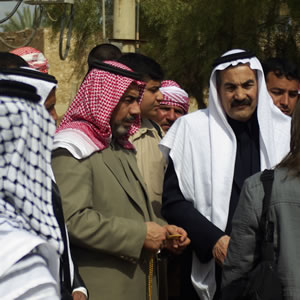 Arabs are an ethnic group mainly inhabiting the Arab world in West Asia and North Africa. A significant Arab diaspora is present in various parts of the world.
Arabs from Morocco to Iraq share a common bond based on ethnicity, language, culture, history, identity, ancestry, nationalism
Arabs are an ethnic group mainly inhabiting the Arab world in West Asia and North Africa. A significant Arab diaspora is present in various parts of the world.
Arabs from Morocco to Iraq share a common bond based on ethnicity, language, culture, history, identity, ancestry, nationalism
geography, unity, and politics which give the region a distinct identity and distinguish it from other parts of the Muslim world. They also have their own customs, literature, music, dance, media, food, clothing, society, sports, architecture, art and, mythology. Arabs have significantly influenced and contributed to human progress in many fields, including science, technology, philosophy, ethics, literature, politics, business, art, music, comedy, theatre, cinema, architecture, food, medicine, and religion. Before Islam, most Arabs followed polytheistic Semitic religion, while some tribes adopted Judaism or Christianity and a few individuals, known as the hanifs, followed a form of monotheism. |
Who were the Quraysh? Quraysh are an Arab tribe who controlled Mecca before the rise of Islam. Their members were divided into ten main clans, most notably the Banu Hashim, into which Islam's founder prophet Muhammad was born. By the 7th century, they had become wealthy merchants, dominating trade between the Indian
Ocean, East Africa, and the Mediterranean. The tribe ran caravans to Gaza and Damascus in summer and to Yemen in winter, while also mining and pursuing other enterprises on these routes. When Muhammad began preaching Islam in Mecca, the Quraysh initially showed little concern. However, their opposition to his activities quickly grew as he increasingly challenged the polytheism prevalent throughout pre-Islamic Arabia. |
Who is James Howard-Johnston?
James Howard-Johnston (born 1942) is an English historian of the Byzantine Empire. He was University Lecturer in Byzantine studies at the University of Oxford. He is an emeritus fellow of Corpus Christi College, Oxford. His approach to Byzantium follows that of Edward Gibbon and concentrates on
comparisons between the Byzantine state and its Western counterparts. Howard-Johnston has also done research on Late Antiquity, especially the Roman-Persian Wars and the early history of Islam. |
News on Hajj, Skepsislamica, Arabs, Quraysh, James Howard-Johnston (12)
Articles on Hajj, Skepsislamica, Arabs, Quraysh, James Howard-Johnston (1)
| 1.Hajj - How Islam purified the Pagan 'Kabah' Ritual in 22 Steps
|
Youtube Videos on Hajj, Skepsislamica, Arabs, Quraysh, James Howard-Johnston (39)
 Abraham, Hagar and
  In Deuteronomy 18:18, either Moses addresses the crowd, or God tells Moses of 'Them'
  In Deuteronomy 18:18, either Moses addresses the crowd, or God tells Moses of 'Them'
  In Deuteronomy 18:18, either Moses addresses the crowd, or God tells Moses of 'Them'
  In Deuteronomy 18:18, either Moses addresses the crowd, or God tells Moses of 'Them'
  Pre-Islam Pagan
  What is the
 Petra, Jordan was home to pre-Islamic Arab Gods: Lat, Uzza, Hubal; influencing the
  Antichrist invites
  Early Islam was influenced by Sabians on Worship, Ramadan and
  How
How  Exploring the Origins of Islam | Aaron Hughes |
 The
The  Allah evolved from Rabb and Ar-Rahman due to
 Muhammad's Hadith in Sahih Bukhari written after 200 years | Joel Hayward |
  Did
Did  Will Israel control the
  Relationship between Islam, Christianity and Judaism using The Quran | Gabriel Reynolds |
  Sasanian and Roman Empires influenced Islamist Expansion | Khodadad Rezakhani |
 Muhammad and The
  The Hidden Costs of
  Development of The Quran's linguistics in Pre-Islam Arabia | Suleyman Dost |
  Quran written in multiple Arabic dialects, not just Hijazi | Marijn Van Putten |
  British Muslims and the Rise of Salafism | Umar Lee |
  Rome-Persia War (602-628 AD) set the context for Early Islam to emerge in Arabia |
  Muhammad's lineage to Ishmael is not from Pre-Islam Arabia | Peter Webb |
  Saudi Arabia's
  Israeli Settlers chant 'DEATH TO
EXPLORE TOPICS :
HAJJ |
25
SKEPSISLAMICA |
17
ARABS |
12
ISLAM |
448
EARLY ISLAM |
16
MUSLIM |
305
QURAYSH |
5
JAMES HOWARD-JOHNSTON |
9
MUHAMMAD
MUHAMMAD