836 views
·
Last viewed: 2 days ago
Uploaded: 13 Apr 2014 (12 years ago) · Shared: 04 May 2017
create a New One World Religion based on Nimrod's Mystery Occult Babylonian Religion but Roman version populary know as MITHRAISM and mixing Judeo-Christian faith, which would give us an idea where Romanism really started. This is an excellent documentary roughly 45 minutes long documentary about Constantine based on archaelogical evidences and ancient writings portraying on how Constantine pretended to be a follower of Jesus of Nazareth. This documentary will take us to the true identity of Constantine, including what really is the spirit behind his fabrication of a New Roman Religion. Historical writings tells us that Constantine and Licinius issued the EDICT of MILAN that legalized Christianity and became the Offical Religion of the Roman Empire, hence Constantine became the First Emperor (First POPE?) of the Roman Catholic Empire and was also given honorary title and office of a bishop. more... http://ow.ly/i/4YjrU
COPYRIGHT BELONGS TO HISTORY CHANNEL. POSTED ON YOUTUBE FOR EDUCATIONAL PURPOSES ONLY.
Uploaded: 13 Apr 2014 (12 years ago) · Shared: 04 May 2017
Video Description (from Youtube)
I have entitled this youtube vid The Deception of Constantine:The beginnings Romanism. I recommend this vid for you to watch to understand how Constantine was used during the early 4th Century tocreate a New One World Religion based on Nimrod's Mystery Occult Babylonian Religion but Roman version populary know as MITHRAISM and mixing Judeo-Christian faith, which would give us an idea where Romanism really started. This is an excellent documentary roughly 45 minutes long documentary about Constantine based on archaelogical evidences and ancient writings portraying on how Constantine pretended to be a follower of Jesus of Nazareth. This documentary will take us to the true identity of Constantine, including what really is the spirit behind his fabrication of a New Roman Religion. Historical writings tells us that Constantine and Licinius issued the EDICT of MILAN that legalized Christianity and became the Offical Religion of the Roman Empire, hence Constantine became the First Emperor (First POPE?) of the Roman Catholic Empire and was also given honorary title and office of a bishop. more... http://ow.ly/i/4YjrU
COPYRIGHT BELONGS TO HISTORY CHANNEL. POSTED ON YOUTUBE FOR EDUCATIONAL PURPOSES ONLY.
Search Results on 'Constantine and Roman Catholicism - Simcha Jacobovici'
SCROLL TO :TOPICS | 4NEWS | 9ARTICLES | 9FAQ | 1VIDEO | 85LINKS | 0TOPICS #CONSTANTINE ROMAN SIMCHA JACOBOVICI Google Search
Topics include Constantine, Roman, Simcha Jacobovici (4)
Who was Constantine?

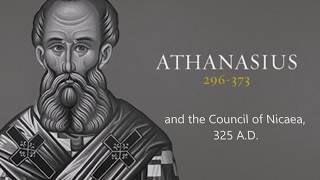
Constantine the Great (27 February 272 AD-22 May 337 AD) was a Roman Emperor who ruled between 306 and 337 AD. Born on the territory now known as Nis, located in Serbia, he was the son of Flavius Valerius Constantius, a Roman Army officer of Illyrian origins. His mother Helena was Greek. His father became Caesar, the deputy emperor in the west, in 293 AD. Constantine was sent east, where he rose through the ranks to become a military tribune under Emperors Diocletian and Galerius. Constantine was the first Roman emperor to convert to Christianity. Although he lived most of his life as a pagan, he joined the Christian faith on his deathbed, being baptised by Eusebius of Nicomedia. He played an influential role in the proclamation of the Edict of Milan in 313, which declared religious tolerance for Christianity in the Roman empire. He called the First Council of Nicaea in 325 AD that produced the statement of Christian belief known as the Nicene Creed. |
What is Roman?

In historiography, ancient Rome is Roman civilization. From the founding of the city of Rome in the 8th century BC to the collapse of the Western Roman Empire in the 5th century AD, encompassing the Roman Kingdom, Roman Republic and Roman Empire until the fall of the western empire. The civilization began as an Italic settlement in the Italian peninsula, dating from the 8th century BC, that grew into the city of Rome and which subsequently gave its name to the empire over which it ruled and to the widespread civilisation the empire developed. The Roman empire expanded to become one of the largest empires in the ancient world, though still ruled from the city, with an estimated 50 to 90 million inhabitants (roughly 20% of the world's population) and covering 5.0 million square kilometres at its height in AD 117. |
Who is Simcha Jacobovici?
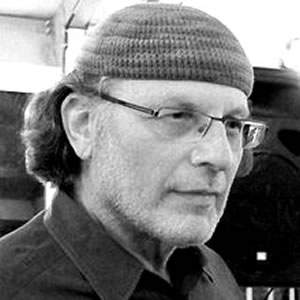
Simcha Jacobovici (born 1953, Petah Tikva, Israel) is an Israeli-Canadian film director, producer, freelance journalist, and writer. He earned a B.A. in Philosophy and Political Science (with honors) from McGill University and an M.A. in International Relations from the University of Toronto Jacobovici is an Adjunct Professor of Religious Studies at Huntington University, an affiliate of Laurentian University in Sudbury, Ontario. Jacobovici has been a guest lecturer at numerous conferences and on various campuses including Yale University, Johns Hopkins University, McGill University, UCLA and York University. |
What is Greco-Roman?

The Greco-Roman world, also Greco-Roman civilization, Greco-Roman culture or Greco-Latin culture is the term used by modern scholars and writers to describe the geographical regions and countries. The regions that were culturally, and so historically, directly and intimately influenced by the language, culture, government, and religion of the ancient Greeks and Romans. The term "classical antiquity" is used for describing the time period when the Greco-Roman culture exerted its greatest influence and dominance on the European continent. Specifically, the term "Mediterranean world" refers to the extensive tracts of land centered on the Mediterranean and Black Sea basins which are considered the "swimming pool and spa" of the Greeks and the Romans. In these regions, the cultural perceptions, ideas, and sensitivities of these peoples became dominant in classical antiquity. |
News on Constantine, Roman, Simcha Jacobovici (9)
Articles on Constantine, Roman, Simcha Jacobovici (9)
Roman Calendar
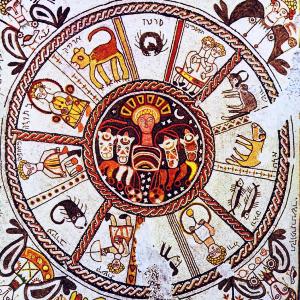
22,609 views
|
Constantine and Christianity

26,133 views
|
| Roman Empire
1,894 views
|
| Roman Christianity
1,922 views
|
| Constantine, Nicaea and History
21,888 views
|
Book Burnings in Roman, Catholic and Protestant society

25,629 views
|
| Timeline of Roman Empire
20,561 views
|
Gods & Roman Emperors

18,969 views
|
Roman Emperors in Bible

18,090 views
|
FAQ on Constantine, Roman, Simcha Jacobovici (1)
| 1.In 325 AD, did Emperor Constantine burn gospels, writings and religious text? |
Youtube Videos on Constantine, Roman, Simcha Jacobovici (85)
 Caesar Messiah:
 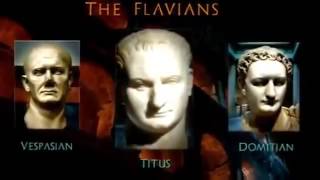 How Christianity Was Invented by Titus Flavius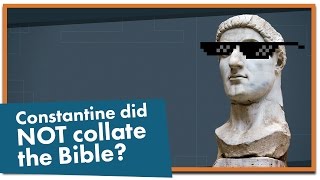
 Rome and
 In 200 years, Christianity lost Jesus' Jewish teachings; adopting Greek and
  The
The  New Testament:
 Christianity from Judaism to
  Flavian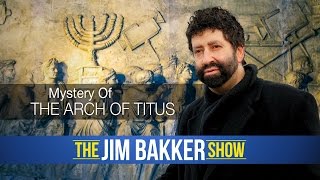
 New Testament Authors by
  New Testament Authors by
  New Testament Authors by
 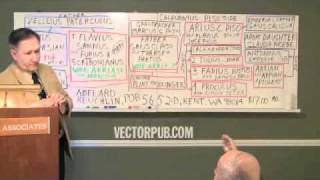 New Testament Authors by
 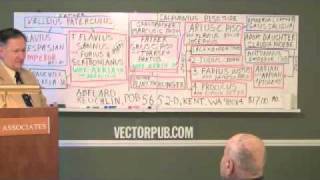 New Testament Authors by
  Crusades:
  Siege of Jerusalem and
  Serapis Christus, Ptolemy and how
  History of Ptolemy, Serapis and
 Christianity Before
 The Christian Story: Sun God, Horus,
  Christianity opposed Rome Imperialism by adopting the titles Son of God, Lord and Savior, previously reserved for
 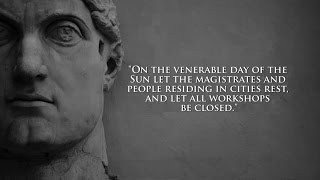 In 321 AD, Emperor
 In 325 AD,
  Rome:
Rome:  Rome: Christian
  Rome: Transformation of the
  Christianity adopted Graeco-
 The Deception of
  Arius, Athanasius &
  In 48 BC,
 Secret Societies - History of the
  Jesus evolved from Mithras, the
  Historical records of Jesus' trial and Crucifixion would have been destroyed/lost in the 66-70 AD Judea-
 Was Christianity influenced by Graeco-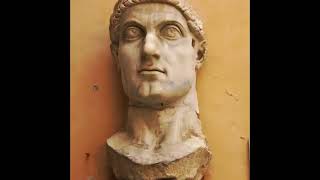
 Emperor
  Emperor
  'Christianity converts to Rome' by adopting
 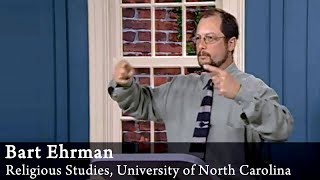 Ancient
 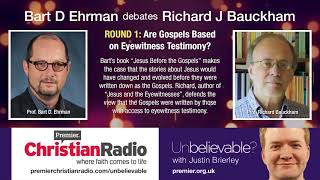 The four Gospels have anonymous authors, as did much Ancient Greek and
  Apostle Paul's foundations are in the Greek Hellenistic, Graeco-
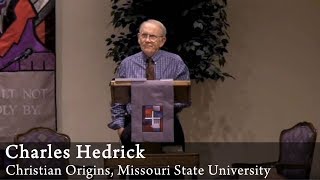 After Nicaea 325 AD,
 Did
Did  From 306 AD,
  In 391 AD,
  Idolatory is praying to Mary or Saints, as
 History of The
  From Proverbs 8:22, Philo of Alexandria applied a 'feminine' Wisdom (Sophia) in support of
  In Council of Ephesus (431 AD),
  Josephus (37-100 AD): Aramaic was language of Jews in
  Emperor
  Christianity is a Graeco-
 Suetonius (69-122 AD): Chrestus (Jesus) encouraged Jews to cause disturbance for
  Virgin Births were common in pagan, Graeco-
 Tour of
  Planets named after Greek Gods by
  Pantheon,
  Jesus Resurrection Written for Greco-
 Protestant Christians rely on
  Was Apostle Paul a secret
  Christianity adopted
  Julius Caesar the
  Sasanian and
  Emperor
  DEBATE: Christianity emerged after the 70 AD Jewish-
 Jesus from a Greco-
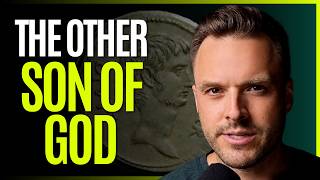 Origins of 'Son Of God' & 'Lord' from Pre-Jesus,
DISCLAIMER
All videos are shared for educational and information purposes only. All videos are hosted and viewable on Youtube servers. Video titles are generated using the original video title; overall content theme including actual dialogue and speech (Transcript); and A.I-based recommendations with a focus on SEO, keyword density, and internal search functions. The video title does not represent the views held by the Youtube video uploader, or any individual, organisation or business.
If you spot any mistake, omission or give feedback, kindly contact us with details
All videos are shared for educational and information purposes only. All videos are hosted and viewable on Youtube servers. Video titles are generated using the original video title; overall content theme including actual dialogue and speech (Transcript); and A.I-based recommendations with a focus on SEO, keyword density, and internal search functions. The video title does not represent the views held by the Youtube video uploader, or any individual, organisation or business.
If you spot any mistake, omission or give feedback, kindly contact us with details