Youtube Description:
Rome conquered Judea in 63 BCE
Wars between the Jews and Romans: the War of 66-70 CE
The Roman commanders now knew that their enemies would fight for every inch of their city, and understood that the siege of Jerusalem would take a long time. Therefore, Titus changed his plans.There were signs that the supplies of Jerusalem were giving out: some Jews had left the city, hoping to find food in the valleys in front of the walls. Many of them had been caught and crucified - some five hundred every day. (The soldiers had amused themselves by nailing their victims in different postures.) The Romans decided to starve the enemies into surrender. In three days, Jerusalem was surrounded with an eight kilometer long palisade. All trees within fifteen kilometres of the city were cut down. The camps of the legions V Macedonica, XII Fulminata and XV Apollinaris were demolished; these troops were billeted on Bezetha.
The death rate among the besieged increased. Soon, the Kidron valley and the Valley of Hinnom were filled with corpses. One defector told Titus that their number was estimated at 115,880. Desperate people tried to leave Jerusalem. When they had succeeded in passing their own lines and had not been killed by Roman patrols, they reached the palisade. Here they surrendered: as prisoners, they were at last entitled to some bread. Some of them ate so much, that they could not stomach it and died. In that case, their oedemaous bodies were cut open by the Syrian and Arabian warders, who knew that some of these people had swallowed coins before they started their ill fated expedition. Titus refrained from punishing these violators when he discovered that there were too many. One of the defectors was the famous teacher Yohanan ben Zakkai, who escaped in a coffin and saved his life by predicting Titus that he, too, would be an emperor.
Since there was no wood, the construction of new siege dams to attack the Antonia took three weeks. A sortie of weakened Jewish warriors had no success. Soon, the sound of the battering-rams was to be heard, and one night, a wall of the Antonia collapsed; but the legionaries discovered that a new wall had been build behind the breach. The Antonia had to be taken by other means.
During a dark night at the beginning of July, twenty-four Roman soldiers climbed the walls of the castle, killed the guard, and sounded a trumpet. The garrison of the Antonia overestimated the number of enemies; many fled to the Temple. At the same time, Titus ordered his men to enter the mine that John's sappers had made. At three o' clock in the morning, these men entered the fortress; after ten hours of fighting, they had driven John's men away.
A couple of days later, on 14 July, prisoners told them that the priests in the Temple had been forced to interrupt the daily sacrifices, which had greatly demoralized the defenders of Jerusalem.
The Antonia was demolished. The stones were used to build a new dam, this time towards the Temple terrace. The Romans used the dam to set fire to the porticoes on the northern and western side of the terrace, but it was impossible to bash trough the walls. On the tenth of August, the Temple itself was burning. Six thousand women and children were taken prisoner at the Court of the Gentiles, while the legionaries sacrificed to their standards in the Holy of Holies.
The Temple was intentionally set in fire. The Jewish historian Flavius Josephus writes in his Jewish War 6.220-270 that the Roman soldiers took the initiative, but this is not true. A fourth-century writer, Sulpicius Severus, states that Titus ordered the destruction of the sanctuary, and this piece of information almost certainly stems from the Roman historian Tacitus
Rome conquered Judea in 63 BCE
Wars between the Jews and Romans: the War of 66-70 CE
The Roman commanders now knew that their enemies would fight for every inch of their city, and understood that the siege of Jerusalem would take a long time. Therefore, Titus changed his plans.There were signs that the supplies of Jerusalem were giving out: some Jews had left the city, hoping to find food in the valleys in front of the walls. Many of them had been caught and crucified - some five hundred every day. (The soldiers had amused themselves by nailing their victims in different postures.) The Romans decided to starve the enemies into surrender. In three days, Jerusalem was surrounded with an eight kilometer long palisade. All trees within fifteen kilometres of the city were cut down. The camps of the legions V Macedonica, XII Fulminata and XV Apollinaris were demolished; these troops were billeted on Bezetha.
The death rate among the besieged increased. Soon, the Kidron valley and the Valley of Hinnom were filled with corpses. One defector told Titus that their number was estimated at 115,880. Desperate people tried to leave Jerusalem. When they had succeeded in passing their own lines and had not been killed by Roman patrols, they reached the palisade. Here they surrendered: as prisoners, they were at last entitled to some bread. Some of them ate so much, that they could not stomach it and died. In that case, their oedemaous bodies were cut open by the Syrian and Arabian warders, who knew that some of these people had swallowed coins before they started their ill fated expedition. Titus refrained from punishing these violators when he discovered that there were too many. One of the defectors was the famous teacher Yohanan ben Zakkai, who escaped in a coffin and saved his life by predicting Titus that he, too, would be an emperor.
Since there was no wood, the construction of new siege dams to attack the Antonia took three weeks. A sortie of weakened Jewish warriors had no success. Soon, the sound of the battering-rams was to be heard, and one night, a wall of the Antonia collapsed; but the legionaries discovered that a new wall had been build behind the breach. The Antonia had to be taken by other means.
During a dark night at the beginning of July, twenty-four Roman soldiers climbed the walls of the castle, killed the guard, and sounded a trumpet. The garrison of the Antonia overestimated the number of enemies; many fled to the Temple. At the same time, Titus ordered his men to enter the mine that John's sappers had made. At three o' clock in the morning, these men entered the fortress; after ten hours of fighting, they had driven John's men away.
A couple of days later, on 14 July, prisoners told them that the priests in the Temple had been forced to interrupt the daily sacrifices, which had greatly demoralized the defenders of Jerusalem.
The Antonia was demolished. The stones were used to build a new dam, this time towards the Temple terrace. The Romans used the dam to set fire to the porticoes on the northern and western side of the terrace, but it was impossible to bash trough the walls. On the tenth of August, the Temple itself was burning. Six thousand women and children were taken prisoner at the Court of the Gentiles, while the legionaries sacrificed to their standards in the Holy of Holies.
The Temple was intentionally set in fire. The Jewish historian Flavius Josephus writes in his Jewish War 6.220-270 that the Roman soldiers took the initiative, but this is not true. A fourth-century writer, Sulpicius Severus, states that Titus ordered the destruction of the sanctuary, and this piece of information almost certainly stems from the Roman historian Tacitus
Explore More
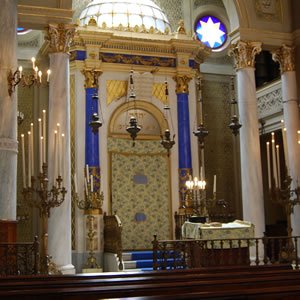 What is Jewish Temple?
The Second Temple was the Jewish holy temple which stood on the Temple Mount in Jerusalem during the Second Temple period, between 516 BCE and 70 CE. According to Jewish tradition, it replaced Solomon's Temple (the First Temple), which was destroyed
by the Neo-Babylonian Empire in 586 BCE, when Jerusalem was conquered and part of the population of the Kingdom of Judah was taken into exile to Babylon. Much like the Babylonians destroyed the First Temple, the Romans destroyed the Second Temple and Jerusalem in 70 CE as retaliation for an ongoing Jewish revolt. Jewish eschatology includes a belief that the Second Temple will be replaced by a future Third Temple.
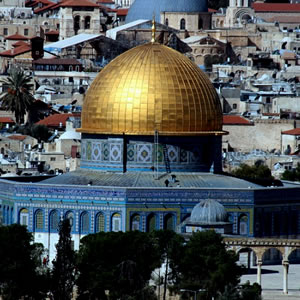 Where is Jerusalem?
Jerusalem is a city in the Middle East. It is located on a plateau in the Judaean Mountains between the Mediterranean and the Dead Sea. It is one of the oldest cities in the world, and is considered holy to the three major Abrahamic religions:
Judaism, Christianity, and Islam. Both Israel and the Palestinian Authority claim Jerusalem as their capital, as Israel maintains its primary governmental institutions there and the State of Palestine ultimately foresees it as its seat of power; however, neither claim is widely recognized internationally.
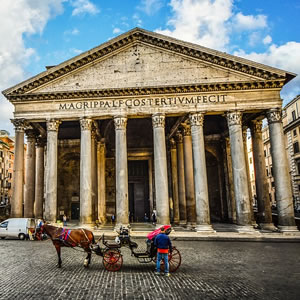 Where is Rome?
Rome is the capital city of Italy and a special comune (named Comune di Roma Capitale). Rome also serves as the capital of the Lazio region. With 2,872,800 residents in 1,285 km2 (496.1 sq mi), it is also the country's most populated comune. It is
the fourth-most populous city in the European Union by population within city limits. It is the centre of the Metropolitan City of Rome, which has a population of 4.3 million residents. Rome is located in the central-western portion of the Italian Peninsula, within Lazio (Latium), along the shores of the Tiber. The Vatican City is an independent country inside the city boundaries of Rome, the only existing example of a country within a city: for this reason Rome has been often defined as capital of two states. Rome's history spans 28 centuries. While Roman mythology dates the founding of Rome at around 753 BC, the site has been inhabited for much longer, making it one of the oldest continuously occupied sites in Europe.