758 views
·
Last viewed: 2 days ago
Uploaded: 22 Jul 2013 (13 years ago) · Shared: 30 Oct 2017
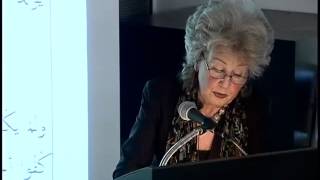
two neighboring religions certainly marks an immense progress in academic self-reflection. Yet the concept, however inclusive, again risks to exclude important elements of the nascent Islamic Culture. The lecture advocates a still more extended concept: Late Antique Studies. 'Late Antiquity' should not be regarded primarily as an epoch but rather as a broad field of discourse, a Denkraum, where texts and notions originating from antiquity (Hellenic and Ancient Oriental) were re-read under new -- religious or at least individualist -- perspectives. Such new readings in Arabic language do not exclusively originate with the Qur'an but have not a few precedents in pre-Islamic poetry. The construct of a 'Denkraum Late Antiquity' thus does no longer view Jahiliyya, pre-Islamic culture, as the other of Islam, but rather as the Arabian province of a vast space of debate involving diverse cultures, a space out of which the Qur'an and considerable other early Arabic literature emerged. A number of Qur'anic texts will be discussed as evidence.
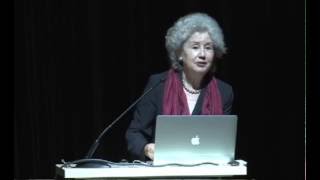
Professor Angelika Neuwirth was educated in Classics and Oriental Studies at German and international universities (Italy, Iran, Israel). She taught at the Universities of Bamberg, Munich, Amman, Cairo and since 1991 holds the chair of Arabic Studies at the Freie Universität Berlin. From 1994-1999 she served as the director of the Orient Institut der Deutschen Morgenländischen Gesellschaft in Beirut and Istanbul. Her major fields of research are classical and modern Arabic literature, as well as Late Antiquity Studies. In several recent publications Neuwirth has try to vindicate the Qur'an as a Late Antique text, which is not 'influenced by' but creatively in conversation with pagan, Christian and Jewish traditions, providing new answers to universally debated questions of its time. Neuwirth whose monograph 'Scripture and the Making of a Community -- Literary Readings of the Qur'an' is presently in print, has been acknowledged for her novel approach to interreligious studies with several honorary doctorates and awards.
Uploaded: 22 Jul 2013 (13 years ago) · Shared: 30 Oct 2017
Video Description (from Youtube)
Lecture: 'Relocating the Qur'an in 'Abrahamitic Religions': Straight Trajectories or Dead Alleys?' The new opening of formerly Early Islamic Studies to a more comparative approach encompassing thetwo neighboring religions certainly marks an immense progress in academic self-reflection. Yet the concept, however inclusive, again risks to exclude important elements of the nascent Islamic Culture. The lecture advocates a still more extended concept: Late Antique Studies. 'Late Antiquity' should not be regarded primarily as an epoch but rather as a broad field of discourse, a Denkraum, where texts and notions originating from antiquity (Hellenic and Ancient Oriental) were re-read under new -- religious or at least individualist -- perspectives. Such new readings in Arabic language do not exclusively originate with the Qur'an but have not a few precedents in pre-Islamic poetry. The construct of a 'Denkraum Late Antiquity' thus does no longer view Jahiliyya, pre-Islamic culture, as the other of Islam, but rather as the Arabian province of a vast space of debate involving diverse cultures, a space out of which the Qur'an and considerable other early Arabic literature emerged. A number of Qur'anic texts will be discussed as evidence.
Professor Angelika Neuwirth was educated in Classics and Oriental Studies at German and international universities (Italy, Iran, Israel). She taught at the Universities of Bamberg, Munich, Amman, Cairo and since 1991 holds the chair of Arabic Studies at the Freie Universität Berlin. From 1994-1999 she served as the director of the Orient Institut der Deutschen Morgenländischen Gesellschaft in Beirut and Istanbul. Her major fields of research are classical and modern Arabic literature, as well as Late Antiquity Studies. In several recent publications Neuwirth has try to vindicate the Qur'an as a Late Antique text, which is not 'influenced by' but creatively in conversation with pagan, Christian and Jewish traditions, providing new answers to universally debated questions of its time. Neuwirth whose monograph 'Scripture and the Making of a Community -- Literary Readings of the Qur'an' is presently in print, has been acknowledged for her novel approach to interreligious studies with several honorary doctorates and awards.
Search Results on 'The Quran in Abrahamic Religions - Angelika Neuwirth'
SCROLL TO :TOPICS | 4NEWS | 13ARTICLES | 4FAQ | 16VIDEO | 108LINKS | 0TOPICS #ANGELIKA NEUWIRTH THE QURAN ABRAHAMIC RELIGIONS Google Search
Topics include Angelika Neuwirth, The Quran, Abrahamic, Religions (4)
Who is Angelika Neuwirth?
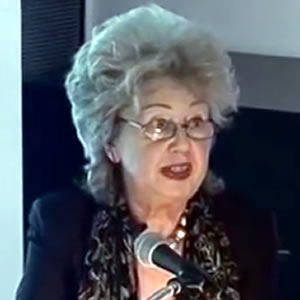
Angelika Neuwirth (born 1943) is a professor of Quranic studies from Freie University, Berlin, Germany. She studied islamic studies, semitic studies and classical philology at the Universities of Berlin, Tehran, Gottingen, Jerusalem, and Munich. Between 1994 and 1999 she was the director of the German Institute of Oriental Studies in Beirut and Istanbul. Neuwirth works as a professor in Freie University in Berlin and as a visiting professor at the University of Jordan in Amman, and her research focuses on the Quran, its interpretations, and modern Arabic literature in the Eastern Mediterranean, especially Palestinian poetry and prose related to the Arab-Israeli conflict. |
What is The Quran?

Quran, literally meaning "the recitation" is the central religious text of Islam, which Muslims believe to be a revelation from God (Allah). It is widely regarded as the finest work in classical Arabic literature. The Quran is divided into chapters (surah in Arabic), which are then divided into verses (ayah). Muslims believe that the Quran was verbally revealed by God to Muhammad through the angel Gabriel (Jibril), gradually over a period of approximately 23 years, beginning on 22 December 609 CE, when Muhammad was 40, and concluding in 632, the year of his death. Muslims regard the Quran as the most important miracle of Muhammad, a proof of his prophethood, and the culmination of a series of divine messages that started with the messages revealed to Adam and ended with Muhammad. |
What is Abrahamic?

The Abrahamic religions are a set of monotheistic religions that respect or admire the religious figure Abraham as a patriarch, namely Judaism, Christianity, and Islam. The term also often encompasses several smaller faiths. The religions of this set share doctrinal, historical, and geographic overlap that contrasts them with Indian religions, Iranian religions, and East Asian religions. The term, introduced in the 20th century, replaced "Judeo-Christian" to include Islam as an Abrahamic religion and acknowledge differences between Judaism and Christianity. The term Abrahamic religions (and its variations) is a collective religious descriptor for elements shared by Judaism, Christianity, and Islam. It features prominently in interfaith dialogue and civil discourse, as well as academic discourse. |
| What are Religions?
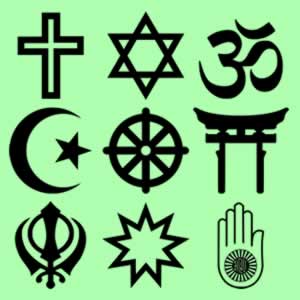
Religion is a range of social-cultural systems, including designated behaviors and practices, ethics, morals, beliefs, worldviews, texts, sanctified places, prophecies, or organizations, that generally relate humanity to supernatural, transcendental, and spiritual elements. There is no scholarly consensus over what precisely constitutes a religion. It is an essentially contested concept. Different religions may or may not contain various elements ranging from the divine, sacredness, faith, and a supernatural being or beings. The origin of religious belief is an open question, with possible explanations including awareness of individual death, a sense of community, and dreams. Religions have sacred histories, narratives, and mythologies, preserved in oral traditions, sacred texts, symbols, and holy places, that may attempt to explain the origin of life, the universe, and other phenomena. Religious practice may include rituals, sermons, commemoration or veneration (of deities or saints), sacrifices, festivals, feasts, trances, initiations, matrimonial and funerary services, meditation, prayer, music, art, dance, or public service. <br><br> There are an estimated 10,000 distinct religions worldwide, though nearly all of them have regionally based, relatively small followings. Four religions: Christianity, Islam, Hinduism, and Buddhism account for over 77% of the world's population, and 92% of the world either follows one of those four religions or identifies as non-religious, meaning that the vast majority of remaining religions account for only 8% of the population combined. |
News on Angelika Neuwirth, The Quran, Abrahamic, Religions (13)
Articles on Angelika Neuwirth, The Quran, Abrahamic, Religions (4)
Abrahamic Religions

29,551 views
|
Angels - 41 Angels from the Abrahamic Religions
32,807 views
|
Jesus in the Quran

22,269 views
|
Religions
75 views
|
FAQ on Angelika Neuwirth, The Quran, Abrahamic, Religions (16)
Youtube Videos on Angelika Neuwirth, The Quran, Abrahamic, Religions (108)
 Jesus in
  On reading
  Oldest Bible confirms
  Mathematical Miracle Of
  Jesus of
  Who is God in
  Baby Jesus: His Birth in
  Were There Multiple Versions of
  Bridging World
  Patterns of Numerical Values in
  Why does
  In
In  Is
Is  Jesus' Birth in
  Is
Is  In
In 
 Can you explain
  Is
Is 
 Reverend Moon, of
  Reverend Moon, of
 Ring Composition: Miracle Structure of
  What is worse, believing
  Can you explain
 Mithraism, like other Ancient Near East pagan
  Women's Rights in
  Ezekiel and Jethro in
  Prove a single verse is corrupt in
  Inheritance in
  Different Versions of
  Muslims must respect other
 Preservation of
  I want to convert to Islam. Let me read
  Which is more violent,
  How
How  All
All  Does
Does  Does
Does  God 'spoke' to me in
  How
How 
 What is
  Story of Moses and Khidr in
  Story of Moses and Khidr in
  Story of Moses and Khidr in
  Story of Moses and Khidr in
  Story of Moses and Khidr in
  Story of Moses and Khidr in
  Is
Is  Mathematical Miracles in
  What
What  Must I follow
  In
In  Is
Is  27 Miracles in
  Belief in One God is what sets Islam apart from other
  Prophet Moses & Al-Khidr: Story from
 Did a Sheep eat part of
  Creation of
  Jesus' Crucifixion is Unclear in
 Stories of Prophets: Prophets in
  Importance of Jerusalem in
  Exploring
  Allah, God of
  Evolution of Arabic Language in
  Is
Is  Palestine-Israel War -
  Who wrote
  Relationship between Islam, Christianity and Judaism using
  Adam, Eve and
  '
' Moses Before
  Miracles of
 Islamic Dilemma - Does
  History behind
  Development of
  Early Development of
  Key Themes of
  Modern Challenges in
  Early Islam focused on GOD, not Muhammad or
  All
All  Importance of reading
  Replace
  Every
Every  Why
Why  Early Muslims, Jews and Christians were called BELIEVERS in
 Did Governments Create
DISCLAIMER
All videos are shared for educational and information purposes only. All videos are hosted and viewable on Youtube servers. Video titles are generated using the original video title; overall content theme including actual dialogue and speech (Transcript); and A.I-based recommendations with a focus on SEO, keyword density, and internal search functions. The video title does not represent the views held by the Youtube video uploader, or any individual, organisation or business.
If you spot any mistake, omission or give feedback, kindly contact us with details
All videos are shared for educational and information purposes only. All videos are hosted and viewable on Youtube servers. Video titles are generated using the original video title; overall content theme including actual dialogue and speech (Transcript); and A.I-based recommendations with a focus on SEO, keyword density, and internal search functions. The video title does not represent the views held by the Youtube video uploader, or any individual, organisation or business.
If you spot any mistake, omission or give feedback, kindly contact us with details