Q Does the Quran encourage violence against the disbelievers (non-Muslims)?
A Academic Islamic scholarship clarifies that verses in the Quran addressing warfare against non-Muslims were historically revealed during active, state-level conflicts with the pagan tribes of Mecca and their military allies. Mainstream historians emphasize that these specific martial passages must be read within their situational context of self-defence and treaty violations, rather than as an open-ended command to attack peaceful non-Muslims.
The historical context is that this Quran verse was revealed at the Battle of Badr, a battle in which the pagans of Makkah traveled over 200 miles to destroy the Muslims of Madinah. The Pagans of Makkah had an army of about 1000 while the Muslims were only 300 followers. Muhammad and his followers had suffered severe persecutions and torture for 13 years in the city of Makkah. Having fled from Makkah to the safety of Madinah, they found that they were once again threatened.
From a historical and textual context this Quran verse does not promote the killing of innocents.
18 views (2 hrs ago)
A Academic Islamic scholarship clarifies that verses in the Quran addressing warfare against non-Muslims were historically revealed during active, state-level conflicts with the pagan tribes of Mecca and their military allies. Mainstream historians emphasize that these specific martial passages must be read within their situational context of self-defence and treaty violations, rather than as an open-ended command to attack peaceful non-Muslims.
The historical context is that this Quran verse was revealed at the Battle of Badr, a battle in which the pagans of Makkah traveled over 200 miles to destroy the Muslims of Madinah. The Pagans of Makkah had an army of about 1000 while the Muslims were only 300 followers. Muhammad and his followers had suffered severe persecutions and torture for 13 years in the city of Makkah. Having fled from Makkah to the safety of Madinah, they found that they were once again threatened.
From a historical and textual context this Quran verse does not promote the killing of innocents.
Explore More
The Quran Violence IslamSearch Google Search Explore Topics
 What is The Quran?
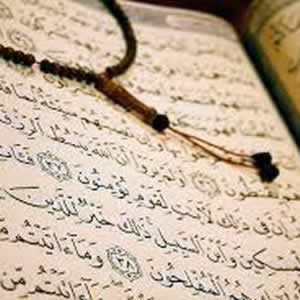
Quran, literally meaning "the recitation" is the central religious text of Islam, which Muslims believe to be a revelation from God (Allah). It is widely regarded as the finest work in classical Arabic literature. The Quran is divided into chapters (surah in Arabic), which are then divided into verses (ayah). Muslims believe that the Quran was verbally revealed by God to Muhammad through the angel Gabriel (Jibril), gradually over a period of approximately 23 years, beginning on 22 December 609 CE, when Muhammad was 40, and concluding in 632, the year of his death. Muslims regard the Quran as the most important miracle of Muhammad, a proof of his prophethood, and the culmination of a series of divine messages that started with the messages revealed to Adam and ended with Muhammad.
 What is Violence?
Violence in many forms is preventable. There is a strong relationship between levels of violence and modifiable factors such as concentrated poverty, income and gender inequality, the harmful use of alcohol, and the absence of safe, stable, and nurturing relationships between children and parents. Strategies addressing the underlying causes of violence can be effective in preventing violence. Violence is defined by the World Health Organization as "the intentional use of physical force or power, threatened or actual, against oneself, another person, or against a group or community, which either results in or has a high likelihood of resulting in injury, death, psychological harm, maldevelopment, or deprivation".
 What is Islam?
One of the major religions of the world, Islam literally translates to "submission," as a follower of Islam (Muslims) devotes their life to that of their God. The religion began with the teachings of Muhammad in the 7th century. The theology of Islam is based on the Qur'an, which was given to Muhammad by God. Some of the major fundamental principles of Islam include the Five Pillars, which hope to unite all Muslims into a community. Two different factions of Muslims exist - the majority are known as Sunni, with a small percentage known as Shi'a - both predominantly reside throughout the Middle East. Muhammad died in 632 AD and the religion of Islam formally started after his death. The Quran was formally compiled and finalised in 650 AD, prior to which it was 'memorised' and written across many parchments.