Live Screenshot
Source link:
https://www.csmonitor.com/Books/chapter-and-verse/2012/1224/The-apostle-Paul-One-of-the-important-influences-on-ChristmasPublished by: CS MONITOR on 24 Dec 2012
1808 views · Last view: 9 hrs ago
News Text (from CS MONITOR)
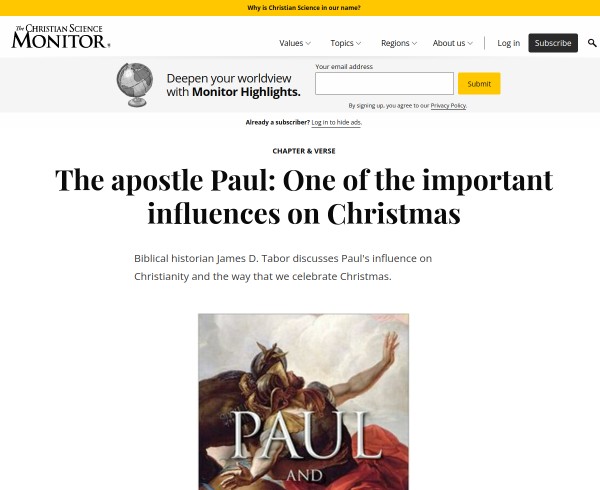
Biblical historian James D. Tabor discusses Paul's influence on Christianity and the way that we celebrate Christmas. Loading... Dec. 24, 2012, 8:05 a.m. ET When the world celebrates Christmas this week and Easter next year, it will walk in the steps of the apostle Paul. While he never met JesusPaul played a crucial role in focusing early Christianity on Jesus's birth, death, and resurrection.
In his new book "Paul and Jesus: How the Apostle Transformed Christianity," biblical historian James D. Tabor explores how this one man – stubborn, cranky and powerful – forever influenced a fledgling faith.
In an interview, I asked Tabor, chair of religious studies at the University of North Carolina at Charlotte, about Paul's teachings, his impact, and the never-ending debate over his legacy.
Q: How was Paul important to the development of Christianity?
A: Paul packages things – "I believe this, this and this" – and puts the movement on the road to the wider non-Jewish [...]
To view the original News article, click here
DISCLAIMER All news articles are shared for educational purposes only. The news content is hosted on the external news website. News articles titles are derived from the original news title, news content, dialogue, speech or general content theme. The news title may be edited and optimized for SEO, keyword density, information and internal website search purposes. You are advised to view the original news article for a better understanding. If you spot any mistakes, errors or omissions kindly contact us.
Search Results on 'The apostle Paul: One of the important influences on Christmas - CS Monitor'
SCROLL TO: TOPICS | 1 NEWS | 7 ARTICLES | 0 FAQ | 0 VIDEO | 35 LINKS | 0Topics include Christmas (1)
What is Christmas? Christmas is an annual festival commemorating the birth of Jesus Christ. It is observed primarily on December 25 as a religious and cultural celebration among billions of people around the world.
Christmas Day is a public holiday in many of the world's nations, is celebrated religiously by a
Christmas is an annual festival commemorating the birth of Jesus Christ. It is observed primarily on December 25 as a religious and cultural celebration among billions of people around the world.
Christmas Day is a public holiday in many of the world's nations, is celebrated religiously by a
majority of Christians, as well as culturally by many non-Christians, and forms an integral part of the holiday season centered around it. Although the month and date of Jesus' birth are unknown, by the early-to-mid fourth century the Western Christian Church had placed Christmas on December 25, a date that was later adopted in the East. Today, most Christians celebrate on December 25 in the Gregorian calendar, which has been adopted almost universally in the civil calendars used in countries throughout the world. |
 Is God Jesus with a birthdate on
 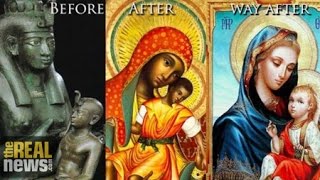 The African Origins of
  What is the history of
  Was Jesus born on
  Why is
  Pagan Origins of
  Pagan Origins of Easter and
  Origins of
  From Isaiah 60:3, Matthew copies the
  Origins of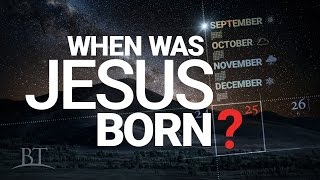
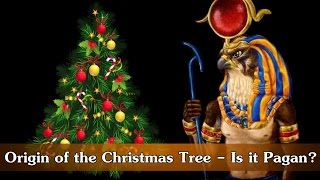 Origin of the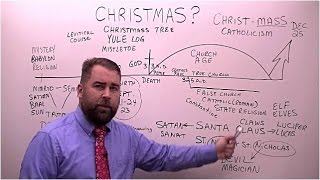
 Did You Know
 Pagan Origins of
  Origins of
  Significance of
  True Meaning of
  In Jeremiah 10:3, the
 The Real
  In 2017, the Black Man is enslaved to Halloween, Fireworks and
  History of
  Jesus was not born on
  Is the
  Why is
  The Church gave us
  Where is
  Christians celebrate
  Joseph, Son of David, Physical Father to Jesus - The Man Everyone Forgets at
  Birth of Jesus - A