3 views
·
Last viewed: 5 mins ago
Uploaded: 15 May 2023 (3 years ago) · Shared: 30 Sep 2026
Duration: 1:3:8
Uploaded: 15 May 2023 (3 years ago) · Shared: 30 Sep 2026
Duration: 1:3:8
Youtube Description:
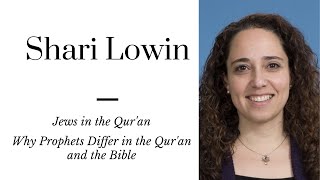
In this interview I chat with Professor Shari Lowin of Stonehill College. We discuss questions about prophecy in the Qur'an vs the Bible and why the Biblical and Qur'anic prophets are so different? Along with this we also speak about Jews in the Qur'an and why the Qur'an attributes certain theological statements and attributes to the Jews.
Professor Lowin's research centers on the interplay between Judaism and Islam in the early and early medieval Islamic periods, c. 800-1200 CE, focusing mainly on the development of Jewish and Muslim exegetical narratives. She is particularly interested in the ways in which the Muslim and Jews living in Islamic societies interacted with one another, namely as they contributed to and drew from each other’s exegetical corpus on shared scriptural forefathers. She is the author of, Arabic and Hebrew Love Poems of al-Andalus (Routledge, 2013). In the seven chapters of this book, she examines Hebrew and Arabic eros poetry (shirat ḥesheq/ `ishq poems) of religious scholars in 10th-13th century Muslim Spain. Her earlier work on Judaism and its relationship with Islam focused on the narratives of Abraham and on accounts of enemies of God in the midrash aggadah and in the ḥadīth. In one such study, a monograph entitled The Making of a Forefather: Abraham in Islamic and Jewish Exegetical Narratives (Brill, 2006), she demonstrates that while Judaism and Islam used each other’s narratives to create narratives of sacred history, they tweaked and adjusted each other’s accounts in their retellings.
If you enjoyed this video please remember to like this video and subscribe to the channel!
In this interview I chat with Professor Shari Lowin of Stonehill College. We discuss questions about prophecy in the Qur'an vs the Bible and why the Biblical and Qur'anic prophets are so different? Along with this we also speak about Jews in the Qur'an and why the Qur'an attributes certain theological statements and attributes to the Jews.
Professor Lowin's research centers on the interplay between Judaism and Islam in the early and early medieval Islamic periods, c. 800-1200 CE, focusing mainly on the development of Jewish and Muslim exegetical narratives. She is particularly interested in the ways in which the Muslim and Jews living in Islamic societies interacted with one another, namely as they contributed to and drew from each other’s exegetical corpus on shared scriptural forefathers. She is the author of, Arabic and Hebrew Love Poems of al-Andalus (Routledge, 2013). In the seven chapters of this book, she examines Hebrew and Arabic eros poetry (shirat ḥesheq/ `ishq poems) of religious scholars in 10th-13th century Muslim Spain. Her earlier work on Judaism and its relationship with Islam focused on the narratives of Abraham and on accounts of enemies of God in the midrash aggadah and in the ḥadīth. In one such study, a monograph entitled The Making of a Forefather: Abraham in Islamic and Jewish Exegetical Narratives (Brill, 2006), she demonstrates that while Judaism and Islam used each other’s narratives to create narratives of sacred history, they tweaked and adjusted each other’s accounts in their retellings.
If you enjoyed this video please remember to like this video and subscribe to the channel!
Explore More
Search Google Search Explore Topics Gabriel Reynolds Prophet Who is Gabriel Reynolds?
Gabriel Reynolds is an American academic and historian of religion who serves as professor of Islamic Studies and Theology at the University of Notre Dame. His scholarship focuses on World Religions and World Church, History of Christianity, Quranic Studies, Islamic Origins, and Muslim-Christian relations. Gabriel Said Reynolds obtained his PhD in Islamic Studies at Yale University.The 'Exploring the Quran and the Bible' Youtube channel is dedicated to thoughtful, cutting-edge, and respectful conversations with leading scholars worldwide on the Bible or the Quran.
 What is a Prophet?
In religion, a prophet is an individual who is regarded as being in contact with a divine being and is said to speak on that entity's behalf. They claim to be serving as an intermediary with humanity by delivering messages or teachings from the supernatural source to other people. The message that the prophet conveys is called a prophecy. In Islam, all prophetic messengers are prophets (such as Adam, Noah, Abraham, Moses, Jesus, and Muhammad) though not all prophets are prophetic messengers. The primary distinction is that a prophet is required to demonstrate God's law through his actions, character, and behavior without necessarily calling people to follow him, while a prophetic messenger is required to pronounce God's law (i.e. revelation) and call his people to submit and follow him.