37 views
·
Last viewed: 3 hrs ago
Uploaded: 15 Aug 2026 (2 months ago) · Shared: 16 Aug 2026
Duration: 23:04
Uploaded: 15 Aug 2026 (2 months ago) · Shared: 16 Aug 2026
Duration: 23:04
Youtube Description:
This MythVision conversation explores one of the most important questions about the history of religion: how do small religious movements become major world religions?
Dr. Price examines the powerful relationship between religion, government, culture, warfare, social control, and political authority, arguing that state support played a major role in the expansion of many ancient religious systems.
The discussion moves from Judaism and the ancient concept of the “sacred canopy” to Christianity, Islam, Buddhism, Zoroastrianism, Constantine, Theodosius, King Ashoka, and Muhammad. The conversation also explores how conquered peoples sometimes adopted aspects of the religions and rituals of their conquerors.
Derek Lambert and Dr. Price also discuss atheism, religious pluralism, Christian fundamentalism, evangelism, deconstruction, and the difficult relationship between believers and non-believers.
Why did some religions become global movements while others remained small?
Did political power help religion spread?
What happened when Christianity became connected to the state?
And can religion remain powerful after society loses its shared “sacred canopy”?
This conversation challenges conventional assumptions about the origins and expansion of the world's major religions.
Watch until the end for a fascinating discussion about religion, power, atheism, and the forces that shape human societies.
===============================================
One on one with Dr. Robert M. Price 👉 jemi.app/robert.m.price
Robert M. Price Patreon. 👉 / robertmprice
Dr. Robert M. Price Website 👉
The Journal of Higher Criticism 👉
/ @robertmpriceofficial
📺 Our second channel
@mythvisionTV
============================
FIND ALL LINKS HERE 👉
============================
RECOMMENDED ONLINE COURSES HERE
👉👉 Checkout MVP Courses to find new and upcoming online courses:
Sign up for Dr. James Tabor’s Course, “The Quest for the Historical Paul: Apostle or Apostate?” - -
Sign up for Dr. Kara Cooney’s Course, “Ancient Egyptian Cosmogony and Cosmology” - -
Sign up for Dr. Robyn Faith Walsh’s Course, “The Gospel Masterclass” - -
Sign up for Dr. James Tabor’s Course, “Jesus and The Dead Sea Scrolls” - -
Sign up for Dr. Robyn Faith Walsh’s Course, “Unforgettable Footprints of the Pauline Legacy” - -
Sign up for Dr. Dennis MacDonald’s Course, “Reading the Gospels with One Eye on Greek Poetry” - -
Sign up for Dr. James Tabor’s Course, 'Creating Jesus: Why Mark’s Gospel Was Forgotten?' - -
Sign up for Dr. Dale C. Allison Jr's Course, “The Quest for The Historical Jesus” - -
============================
GET RECOMMENDED BOOKS HERE: 👉
============================
Please consider supporting MythVision's work by joining our Patreon or contributing a one-time donation:
Patreon: 👉 / mythvision
Cashapp: 👉 $rewiredaddiction
Venmo: 👉 - - @Derek-Lambert-9
============================
CONTACT ME
Website: 👉
Discord: 👉 / discord
===========================
LISTEN TO THE PODCAST HERE:
🎧 Spotify:
🎧 Apple Podcast:
🎧 Castbox:
🎧 Pocket Casts:
🎧 iHeartRadio:
#Religion #RobertPrice #MythVision
This MythVision conversation explores one of the most important questions about the history of religion: how do small religious movements become major world religions?
Dr. Price examines the powerful relationship between religion, government, culture, warfare, social control, and political authority, arguing that state support played a major role in the expansion of many ancient religious systems.
The discussion moves from Judaism and the ancient concept of the “sacred canopy” to Christianity, Islam, Buddhism, Zoroastrianism, Constantine, Theodosius, King Ashoka, and Muhammad. The conversation also explores how conquered peoples sometimes adopted aspects of the religions and rituals of their conquerors.
Derek Lambert and Dr. Price also discuss atheism, religious pluralism, Christian fundamentalism, evangelism, deconstruction, and the difficult relationship between believers and non-believers.
Why did some religions become global movements while others remained small?
Did political power help religion spread?
What happened when Christianity became connected to the state?
And can religion remain powerful after society loses its shared “sacred canopy”?
This conversation challenges conventional assumptions about the origins and expansion of the world's major religions.
Watch until the end for a fascinating discussion about religion, power, atheism, and the forces that shape human societies.
===============================================
One on one with Dr. Robert M. Price 👉 jemi.app/robert.m.price
Robert M. Price Patreon. 👉 / robertmprice
Dr. Robert M. Price Website 👉
The Journal of Higher Criticism 👉
/ @robertmpriceofficial
📺 Our second channel
@mythvisionTV
============================
FIND ALL LINKS HERE 👉
============================
RECOMMENDED ONLINE COURSES HERE
👉👉 Checkout MVP Courses to find new and upcoming online courses:
Sign up for Dr. James Tabor’s Course, “The Quest for the Historical Paul: Apostle or Apostate?” - -
Sign up for Dr. Kara Cooney’s Course, “Ancient Egyptian Cosmogony and Cosmology” - -
Sign up for Dr. Robyn Faith Walsh’s Course, “The Gospel Masterclass” - -
Sign up for Dr. James Tabor’s Course, “Jesus and The Dead Sea Scrolls” - -
Sign up for Dr. Robyn Faith Walsh’s Course, “Unforgettable Footprints of the Pauline Legacy” - -
Sign up for Dr. Dennis MacDonald’s Course, “Reading the Gospels with One Eye on Greek Poetry” - -
Sign up for Dr. James Tabor’s Course, 'Creating Jesus: Why Mark’s Gospel Was Forgotten?' - -
Sign up for Dr. Dale C. Allison Jr's Course, “The Quest for The Historical Jesus” - -
============================
GET RECOMMENDED BOOKS HERE: 👉
============================
Please consider supporting MythVision's work by joining our Patreon or contributing a one-time donation:
Patreon: 👉 / mythvision
Cashapp: 👉 $rewiredaddiction
Venmo: 👉 - - @Derek-Lambert-9
============================
CONTACT ME
Website: 👉
Discord: 👉 / discord
===========================
LISTEN TO THE PODCAST HERE:
🎧 Spotify:
🎧 Apple Podcast:
🎧 Castbox:
🎧 Pocket Casts:
🎧 iHeartRadio:
#Religion #RobertPrice #MythVision
Explore More
Search Google Search Explore Topics Robert Price Government MythVision Religions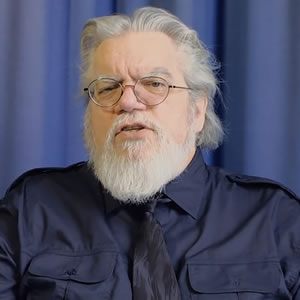 Who is Robert Price?
Robert McNair Price (born July 7, 1954) is an American theologian and writer, known for arguing against the existence of a historical Jesus (the Christ myth theory). He taught philosophy and religion at the Johnnie Colemon Theological Seminary. He is a professor of biblical criticism at the Center for Inquiry Institute, and the author of a number of books on theology and the historicity of Jesus. Price is a fellow of the Jesus Seminar, a group of 150 writers and scholars who study the historicity of Jesus, the organizer of a Web community for those interested in the history of Christianity, and sits on the advisory board of the Secular Student Alliance. He is a religious skeptic, especially of orthodox Christian beliefs, occasionally describing himself as a Christian atheist.
 What is Government?
A government is the system or group of people governing an organized community, generally a state. In the case of its broad associative definition, government normally consists of legislature, executive, and judiciary. Government is a means by which organizational policies are enforced, as well as a mechanism for determining policy. Each government has a kind of constitution, a statement of its governing principles and philosophy.
 Who is MythVision?
MythVision Podcast (MVP) brings you some of the finest information surrounding Mythology. Knowledge from a variety of people in search of a better understanding of ancient text. We discuss mythology, syncretism, astrotheology, gematria, sacred geometry, secret societies, ancient languages, history, prophecy, scholarship, conspiracies, heretical ideas, myth interpretations and much more.
What are Religions?Religion is a range of social-cultural systems, including designated behaviors and practices, ethics, morals, beliefs, worldviews, texts, sanctified places, prophecies, or organizations, that generally relate humanity to supernatural, transcendental, and spiritual elements. There is no scholarly consensus over what precisely constitutes a religion. It is an essentially contested concept. Different religions may or may not contain various elements ranging from the divine, sacredness, faith, and a supernatural being or beings. The origin of religious belief is an open question, with possible explanations including awareness of individual death, a sense of community, and dreams. Religions have sacred histories, narratives, and mythologies, preserved in oral traditions, sacred texts, symbols, and holy places, that may attempt to explain the origin of life, the universe, and other phenomena. Religious practice may include rituals, sermons, commemoration or veneration (of deities or saints), sacrifices, festivals, feasts, trances, initiations, matrimonial and funerary services, meditation, prayer, music, art, dance, or public service. There are an estimated 10,000 distinct religions worldwide, though nearly all of them have regionally based, relatively small followings. Four religions: Christianity, Islam, Hinduism, and Buddhism account for over 77% of the world's population, and 92% of the world either follows one of those four religions or identifies as non-religious, meaning that the vast majority of remaining religions account for only 8% of the population combined.