Uploaded: 16 Apr 2026 (6 months ago) · Shared: 09 May 2026
Duration: 1:14:16
Video Description
Discover how the devastating Rome-Persia War (602–628 AD) reshaped the geopolitical landscape and paved the way for the rise of Early Islam in Arabia. In this captivating MythVision episode, Oxford historian Dr. James Howard-Johnston delves into the dramatic seventh-century conflict between the Byzantine Christian Empire and Sasanian Persia. Amidst widespread plague, apocalyptic expectations, and political chaos, a transformative movement emerged that altered world history forever.
By examining early history, sacred texts, and the Quran itself, Dr. Howard-Johnston illuminates the hidden factors behind Islam's rapid expansion across the Near East. This insightful discussion bridges the shared historical context of Christian, Jewish, and Islamic traditions during a crucial era of faith, imperial collapse, and spiritual transformation. Explore the profound historical shifts that connected Jerusalem, Constantinople, and Medina, offering essential insights for anyone interested in religious history, biblical studies, and the geopolitical origins of global civilizations.
Explore More
James Howard-Johnston Derek Lambert Early Islam Islam Roman Iran MythSearch Google Search Explore Topics
 Who is James Howard-Johnston?
James Howard-Johnston (born 1942) is an English historian of the Byzantine Empire. He was University Lecturer in Byzantine studies at the University of Oxford. He is an emeritus fellow of Corpus Christi College, Oxford. His approach to Byzantium follows that of Edward Gibbon and concentrates on comparisons between the Byzantine state and its Western counterparts. Howard-Johnston has also done research on Late Antiquity, especially the Roman-Persian Wars and the early history of Islam.
 Who is Derek Lambert?
MythVision Podcast (MVP) brings you some of the finest information surrounding Mythology. Knowledge from a variety of people in search of a better understanding of ancient text. We discuss mythology, syncretism, astrotheology, gematria, sacred geometry, secret societies, ancient languages, history, prophecy, scholarship, conspiracies, heretical ideas, myth interpretations and much more.
 What is Early Islam?
Early Islam or the history of Islam is believed, by most historians to have originated with Muhammad's mission in Mecca and Medina at the start of the 7th century CE. Although Muslims regard this time as a return to the original faith passed down by the Abrahamic prophets, such as Adam, Noah, Abraham, Moses, David, Solomon, and Jesus, with the submission (Islam) to the will of God. According to the traditional account, the Islamic prophet Muhammad began receiving what Muslims consider to be divine revelations in 610 CE, calling for submission to the one God, preparation for the imminent Last Judgement, and charity for the poor and needy.
What is Islam?One of the major religions of the world, Islam literally translates to "submission," as a follower of Islam (Muslims) devotes their life to that of their God. The religion began with the teachings of Muhammad in the 7th century. The theology of Islam is based on the Qur'an, which was given to Muhammad by God. Some of the major fundamental principles of Islam include the Five Pillars, which hope to unite all Muslims into a community. Two different factions of Muslims exist - the majority are known as Sunni, with a small percentage known as Shi'a - both predominantly reside throughout the Middle East. Muhammad died in 632 AD and the religion of Islam formally started after his death. The Quran was formally compiled and finalised in 650 AD, prior to which it was 'memorised' and written across many parchments.
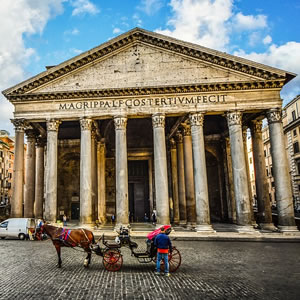 What is Roman?
In historiography, ancient Rome is Roman civilization. From the founding of the city of Rome in the 8th century BC to the collapse of the Western Roman Empire in the 5th century AD, encompassing the Roman Kingdom, Roman Republic and Roman Empire until the fall of the western empire. The civilization began as an Italic settlement in the Italian peninsula, dating from the 8th century BC, that grew into the city of Rome and which subsequently gave its name to the empire over which it ruled and to the widespread civilisation the empire developed. The Roman empire expanded to become one of the largest empires in the ancient world, though still ruled from the city, with an estimated 50 to 90 million inhabitants (roughly 20% of the world's population) and covering 5.0 million square kilometres at its height in AD 117.
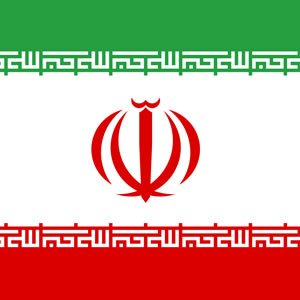 What is Iran?
Iran, also called Persia and officially the Islamic Republic of Iran is a country in Western Asia. With over 81 million inhabitants, Iran is the world's 18th most populous country. It is the second largest country in the Middle East and the 17th largest in the world.
 What is Myth?
Mythology refers to a collection of sacred, traditional tales from a specific culture that explain natural phenomena, world origins, and cultural values. This often featuring gods, goddesses, and heroes. It serves as a lens for interpreting shared human experiences through stories, rituals, and art. Myth is a genre of folklore consisting primarily of narratives that play a fundamental role in a society. For scholars, this is totally different from the ordinary sense of the term myth, meaning a belief that is not true, as the veracity of a piece of folklore is entirely irrelevant to determining whether it constitutes a myth. Myths are often endorsed by religious and secular authorities, and may be natural or supernatural in character. Many societies group their myths, legends, and history together, considering myths and legends to be factual accounts of their remote past. In particular, creation myths take place in a primordial age when the world had not achieved its later form. Origin myths explain how a society's customs, institutions, and taboos were established and sanctified. National myths are narratives about a nation's past that symbolize the nation's values. There is a complex relationship between recital of myths and the enactment of rituals.