317 views
·
Last viewed: 3 hrs ago
Uploaded: 07 May 2026 (5 months ago) · Shared: 07 May 2026
Duration: 39:00
Uploaded: 07 May 2026 (5 months ago) · Shared: 07 May 2026
Duration: 39:00
Youtube Description
➡📚View\Purchase the book(s)!: https://amzn.to/4jgZABy | https://amzn.to/3MaVZXb | https://amzn.to/455cVsB ▶: Subscribe to the Guests YouTube Channel(Or Other Platform/Website)!:
🌐: Additional Links/Other Links!:
Join the History Valley Community:
📢 Discord: Join the discussion here - https://discord.com/invite/pHYQZebhN5
🎉 Patreon: Support History Valley - https://www.patreon.com/HistoryValley
💰 Donate via PayPal: Contribute here - https://www.paypal.com/paypalme/JacobBerman22?locale.x=en_US
👉Sign up for Dr. Bart Ehrman’s course on the Genius of the Acts of the Apostles!
https://historyvalley--ehrman.thrivecart.com/acts-course/
👉Sign up for Dr. Mark Goodacre's course and Unlock The Mysteries of the Synoptic Gospels!
https://historyvalley--ehrman.thrivecart.com/synoptic-gospels-course/
👉Sign up for Dr. Kara Cooney's Course on Ancient Egyptian Cosmogony and Cosmology!
https://historyvalley--pursuit4knowledge.thrivecart.com/egyptiancreation/
👉Sign up for Dr. M. David Litwa's Course Redating The Gospels!
https://historyvalley--mdavidlitwa.thrivecart.com/redatinggospels/
👉Sign up for New Insights into the New Testament!
https://historyvalley--ehrman.thrivecart.com/nint-2024-elite-student-pass/
👉Sign up for Dr. Amy-Jill Levine's Course! The Parables of Jesus
https://historyvalley--ehrman.thrivecart.com/parables-of-jesus/
👉Sign up for Dr. Joshua Bowen's course! Myths Borrowed By The Old Testament
https://historyvalley--pursuit4knowledge.thrivecart.com/ot-myths/
👉Sign up for Dr. Bart D. Ehrman's course! Bible and the Quran: Comparing Their Historical Problems!
https://historyvalley--ehrman.thrivecart.com/bibleandquran/
👉Sign up for Dr. Bart D. Ehrman's course on Did Matthew, Mark, Luke and John Actually Write Matthew, Mark, Luke and John!
https://historyvalley--ehrman.thrivecart.com/mmlj-free-webinar/
👉Sign up for Dr. Bart D. Ehrman's course on The Genius of the Gospel Of Matthew - What Scholars Say About the First Gospel!
https://historyvalley--ehrman.thrivecart.com/matthew/
👉Sign up and join Dr. Jodi Magness on an enthralling archaeological journey through Jesus' world!
https://historyvalley--ehrman.thrivecart.com/timeofjesus/
👉Sign up for Dr. Bart D. Ehrman's course on the scribal corruption of scripture!
https://historyvalley--ehrman.thrivecart.com/corruption-of-scripture/
👉Sign up for Dr. James D. Tabors course on Jesus and the Dead Sea Scrolls!
https://historyvalley--pursuit4knowledge.thrivecart.com/dss/
👉Sign up for Dr. Robyn Faith Walsh's course on Paul The Apostle!
https://historyvalley--pursuit4knowledge.thrivecart.com/paulslegacy/
👉Sign up for Dr. Kipp Davis's course on the Real Israelite Religions!
https://historyvalley--pursuit4knowledge.thrivecart.com/israelite-religions/
👉Sign up for Dr. James D. Tabors course on the Gospel of Mark!
https://historyvalley--pursuit4knowledge.thrivecart.com/firstgospel/
👉Sign up for Dr. Dennis MacDonald's course on the Gospels and Greek Poetry!
https://historyvalley--pursuit4knowledge.thrivecart.com/homeric-mimesis/
👉Sign up for Dr. M. David Litwa's course on Mystery Cults!
https://historyvalley--pursuit4knowledge.thrivecart.com/mysterycults/
Join this channel to get access to perks:
https://www.youtube.com/channel/UC4yzcsaYuPJfPymf2arGCng/join
$ https://cash.app/$JBerman33
𝕏Twitter: https://x.com/HistoryValley
📧 Email: jacobberman553@gmail.com
✅ Centurions For Paul Facebook Group https://www.facebook.com/groups/957292477950756/
✅ History Valley Facebook group https://www.facebook.com/groups/639724514390191/
✅ Historical Jesus, higher criticism and Second Temple Judaism https://www.facebook.com/groups/1038530526485151
Explore More
Divine Council History Valley Nicholas Allen Polytheism Judaism Yahweh GODSearch Google Search Explore Topics
 What is Divine Council?
A Divine Council is an assembly of deities over which a higher-level god (Yahweh) presides. The Book of Psalms (Psalm 82:1), states God (elohim) stands in the divine assembly; He judges among the gods (elohim). The meaning of the two occurrences of "elohim" has been debated by Bible scholars, with some suggesting the God of Israel rules over a divine assembly of other Gods or angels.
 Who are History Valley?
History Valley podcast is a world history/religious history channel in which we discuss historical events, interview authors, PhD's, Professors and other authors about subjects pertaining to those things.
Who is Nicholas Allen?Nicholas Allen is a researcher with the South African National Research Foundation. He is both an historian and an artist. He has authored and co-authored numerous academic books and accredited scientific articles on various topics including Art History, New Testament, Cognate and Deuterocanonical Literature, Sindonology and the History of Judaism and Christianity.
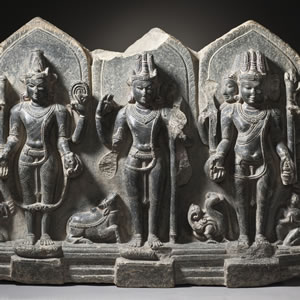 What is Polytheism?
Polytheism is the worship of or belief in multiple deities, usually as a pantheon of gods and goddesses. In most religions which accept polytheism, the different gods and goddesses are representations of forces of nature or ancestral principles, and can be viewed either as autonomous or as aspects or emanations of a creator deity or transcendental absolute principle (monistic theologies), which manifests immanently in nature (panentheistic and pantheistic theologies). Most of the polytheistic deities of ancient religions, with the notable exceptions of the Ancient Egyptian and Hindu deities, were conceived as having physical bodies. Polytheism is a type of theism. Within theism, it contrasts with monotheism, the belief in a singular God, in most cases transcendent. Important polytheistic religions practiced today include Chinese traditional religion, Hinduism, Japanese Shinto, and various neopagan faiths.
 What is Judaism?
Judaism encompasses the religion, philosophy, culture and way of life of the Jewish people. Judaism is a monotheistic religion, with the Torah as its foundational text (part of the larger text known as the Tanakh or Hebrew Bible), and supplemental oral tradition represented by later texts such as the Midrash and the Talmud. Judaism is considered by religious Jews to be the expression of the covenantal relationship that God established with the Children of Israel. Judaism includes a wide corpus of texts, practices, theological positions, and forms of organization. Within Judaism there are a variety of movements, most of which emerged from Rabbinic Judaism, which holds that God revealed his laws and commandments to Moses on Mount Sinai in the form of both the Written and Oral Torah. The Jews are an ethnoreligious group and include those born Jewish and converts to Judaism. In 2012, the world Jewish population was estimated at about 14 million, or roughly 0.2% of the total world population. About 42% of all Jews reside in Israel and about 42% reside in the United States and Canada, with most of the remainder living in Europe.
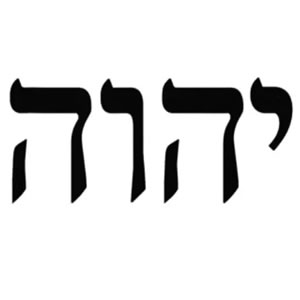 Who is Yahweh?
Yahweh was the national god of the Iron Age kingdoms of Israel (Samaria) and Judah. His exact origins are disputed, although they reach back to the early Iron Age and even the Late Bronze: his name may have begun as an epithet of El, head of the Bronze Age Canaanite pantheon, but the earliest plausible mentions of Yahweh are in Egyptian texts that refer to a similar-sounding place name associated with the Shasu nomads of the southern Transjordan. In the oldest biblical literature, Yahweh is a typical ancient Near Eastern "divine warrior", who leads the heavenly army against Israel's enemies; he later became the main god of the Kingdom of Israel (Samaria) and of Judah, and over time the royal court and temple promoted Yahweh as the god of the entire cosmos, possessing all the positive qualities previously attributed to the other gods and goddesses.
Who is GOD?In monotheism and henotheism, God is conceived as the Supreme Being and principal object of faith. The concept of God as described by theologians commonly includes the attributes of omniscience (infinite knowledge), omnipotence (unlimited power), omnipresence (present everywhere), omnibenevolence (perfect goodness), divine simplicity, and eternal and necessary existence. In theism, God is the creator and sustainer of the universe In deism, God is the creator, but not the sustainer, of the universe Monotheism is the belief in the existence of one God or in the oneness of God In pantheism, God is the universe itself In atheism, God is purported not to exist, while deemed unknown or unknowable within the context of agnosticism.