155 views
·
Last viewed: 5 days ago
Uploaded: 05 Feb 2024 (3 years ago) · Shared: 06 May 2026
Duration: 1:49:40
Uploaded: 05 Feb 2024 (3 years ago) · Shared: 06 May 2026
Duration: 1:49:40
Youtube Description
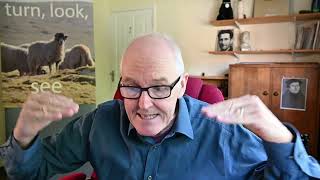
In Real Talk on Palestine, No. 7 with Professor Nader Hashemi, Director of the Alwaleed Center for Muslim-Christian Understanding and professor ofMiddle East and Islamic Politics at Georgetown University, discusses the complicity of Muslim governments, autocratic regimes, and ruling elites in Gaza and Middle Eastern Politics with Professor Khaled Abou El Fadl of UCLA School of Law. Moderated by Grace Song, Executive Director of The Usuli Institute. Recorded 2 February 2024, Day 118 of Israel's genocide in Palestine.
Explore More
Khaled Abou El Fadl Palestine IslamSearch Google Search Explore Topics
 Who is Khaled Abou El Fadl?
Building upon the foundations of the rich and nuanced Islamic jurisprudential tradition, we apply God's timeless moral imperatives to our current world to advance human knowledge, challenge the status quo, and set a new standard for beauty, reasonableness and goodness in the world. Under the guidance of Islamic scholar and jurist, Dr. Khaled Abou El Fadl, we are a team of dedicated academics, professionals and volunteers that are passionate about the beauty of the Islamic tradition. The Islamic tradition once inspired Muslims to be at the forefront of human discovery and knowledge. Today, Muslims have been left behind in virtually all global conversations and play no role in the moral leadership of our times. By returning to the foundational virtues of the Islamic tradition, we seek to rekindle the spirit of exploration, renew the commitment to knowledge, and represent a moral message that inspires the world.
 Where is Palestine?
Palestine is a geographic region in Western Asia. It is usually considered to include the Gaza Strip, the West Bank, Israel, and in some definitions, some parts of western Jordan. The name was used by ancient Greek writers, and it was later used for the Roman province Syria Palaestina, the Byzantine Palaestina Prima, and the Islamic provincial district of Jund Filastin. The region comprises most of the territory claimed for the biblical regions known as the Land of Israel, the Holy Land or Promised Land. Historically, it has been known as the southern portion of wider regional designations such as Canaan, Syria, ash-Sham, and the Levant. Situated at a strategic location between Egypt, Syria and Arabia, and the birthplace of Judaism and Christianity, the region has a long and tumultuous history as a crossroads for religion, culture, commerce, and politics.
 What is Islam?
One of the major religions of the world, Islam literally translates to "submission," as a follower of Islam (Muslims) devotes their life to that of their God. The religion began with the teachings of Muhammad in the 7th century. The theology of Islam is based on the Qur'an, which was given to Muhammad by God. Some of the major fundamental principles of Islam include the Five Pillars, which hope to unite all Muslims into a community. Two different factions of Muslims exist - the majority are known as Sunni, with a small percentage known as Shi'a - both predominantly reside throughout the Middle East. Muhammad died in 632 AD and the religion of Islam formally started after his death. The Quran was formally compiled and finalised in 650 AD, prior to which it was 'memorised' and written across many parchments.