159 views
·
Last viewed: 2 hrs ago
Uploaded: 05 May 2026 (5 months ago) · Shared: 06 May 2026
Duration: 29:24
Uploaded: 05 May 2026 (5 months ago) · Shared: 06 May 2026
Duration: 29:24
Youtube Description
G'day Legends, I hope you're doing well, I recently took some time away from the online discourse to collect my thoughts. Books/Gifts: PO Box145
Port Adelaide SA (South Australia) 5015
As an independent reporter, your support makes this possible. You can support the channel directly.
https://www.paypal.me/MWilliams745
https://buymeacoffee.com/willyoam
https://www.patreon.com/willybeatingcancer
OTHERS:
BTC - 3Q7Rcw2ikWpGicNUKLooCSfGw4bgo8C172
ETH - 0xFE9147566a017219406A7E1BF6FDEb08c25f4b1E
MERCH:
https://www.willyoam.com/
Telegram: https://t.me/Willy_OAM_REAL
I served in the Australian Infantry from 2014 to 2021, with specialist qualifications in Heavy Weapons and Anti-Armour, as well as Combat First Aid. I deployed to Afghanistan as a crew commander of an Armoured Mobility Vehicle.
Upon my return, I was unexpectedly diagnosed with an incurable and inoperable brain tumour that is slowly killing me. I was also awarded the Queen’s Order of Australia Medal (OAM), hence the post-nominals after my name.
After being medically separated from the Army, I flew to Ukraine in 2022 for six and a half months. I now make content full-time.
I really appreciate you being here. Thank you.
Business Email:
williams.mattphoto@gmail.com
Explore More
Authoritarian Technocracy Slave SinSearch Google Search Explore Topics
 What is Authoritarian?
Authoritarianism is a political system characterized by strong central power, often with limited political pluralism and a suppression of dissent. It's a system where authority is concentrated in the hands of a few, who may not be accountable to the people they govern. Authoritarianism can manifest in various ways, including through autocratic rule, oligarchic rule, or the rule of a single party or the military.
 What is Technocracy?
Technocracy is an ideological governing system in which decision-makers are selected on the basis of their expertise in Science or Technology. This system contrasts with the notion that elected representatives should be the primary decision-makers in government, though it does not necessarily imply eliminating elected representatives. Leadership skills for decision-makers are selected on the basis of specialized knowledge and performance, rather than political affiliations or parliamentary skills.
 What is Slave?
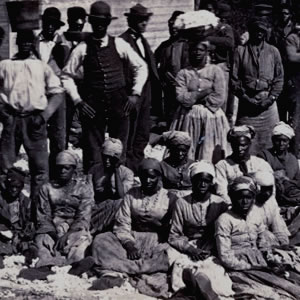
Slavery is any system in which principles of property law are applied to people. Thus allowing individuals to own, buy and sell other individuals, as a de jure form of property. A slave is unable to withdraw unilaterally from such an arrangement and works without remuneration. Slavery began to exist before written history, in many cultures. A person could become enslaved from the time of their birth, capture, or purchase. While slavery was institutionally recognized by most societies, it has now been outlawed in all recognized countries, the last being Mauritania in 2007. Nevertheless, there are an estimated 45.8 million people subject to some form of modern slavery worldwide.
 What is Sin?
In Abrahamic contexts, sin is the act of violating God's will. Sin can also be viewed as anything that violates the ideal relationship between an individual and God; or as any diversion from the ideal order for human living. To sin has been defined as "to miss the mark". Sins fall in a spectrum from minor errors to deadly misdeeds. Catholicism regards the least corrupt sins as venial sins which are part of human living and carry immediate consequences on earth, and, if unrepented for, more painful purgation, assuming the person is destined to heaven, as it is written in the formation letter "Purgatory", "most of the early Fathers of the Church speak of a cleansing fire, though we cannot tell whether this means actual or spiritual fire." Conversely, sins of great evil are mortal sins which bring the consequence of hell if they are not addressed either through an act of perfect contrition or going to confession about them.