Uploaded: 07 Apr 2026 (6 months ago) · Shared: 29 Apr 2026
Duration: 2:23:02
Video Description
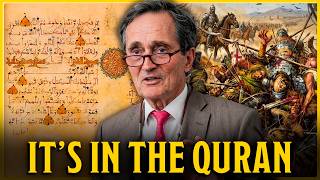
Join Dr. Suleyman Dost as he delves into the rich linguistic heritage of the Quran in pre-Islamic Arabia. This insightful video from Skepsislamica explores the development of the Arabic language and its profound impact on the revelation of the Quran. Discover how the linguistic nuances of the time influenced the structure and elegance of the Quran, a text that continues to guide and inspire millions of Muslims worldwide. This discussion also touches on the early history of the region, providing valuable context for understanding the interplay between language, faith, and culture. Whether you're a student of Islamic studies, a follower of Judaism or Christianity, or simply curious about the roots of one of the world's most influential texts, this video offers a unique perspective on the Quran's linguistic journey.
Explore More
Skepsislamica Pre-Islam The Quran IslamSearch Google Search Explore Topics
 Who are Skepsislamica?
We spotlight perspectives in Islamic history that often go unnoticed, keeping you informed on the latest academic research and discussions. Our content is non-sectarian and grounded in rigorous academic approaches to Islamic studies, offering deep and thoughtful analysis.
 What is Pre-Islam?
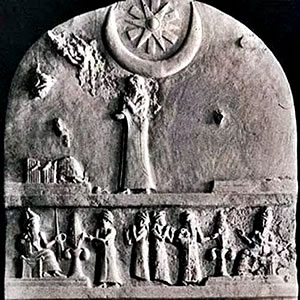
Pre-Islam refers to the period in history before the emergence and widespread adoption of Islam. It specifically denotes the time before the Prophet Muhammad's revelations and the establishment of Islamic faith, culture, and civilization.
 What is The Quran?
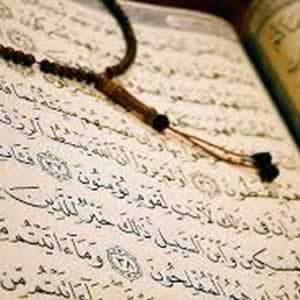
Quran, literally meaning "the recitation" is the central religious text of Islam, which Muslims believe to be a revelation from God (Allah). It is widely regarded as the finest work in classical Arabic literature. The Quran is divided into chapters (surah in Arabic), which are then divided into verses (ayah). Muslims believe that the Quran was verbally revealed by God to Muhammad through the angel Gabriel (Jibril), gradually over a period of approximately 23 years, beginning on 22 December 609 CE, when Muhammad was 40, and concluding in 632, the year of his death. Muslims regard the Quran as the most important miracle of Muhammad, a proof of his prophethood, and the culmination of a series of divine messages that started with the messages revealed to Adam and ended with Muhammad.
 What is Islam?
One of the major religions of the world, Islam literally translates to "submission," as a follower of Islam (Muslims) devotes their life to that of their God. The religion began with the teachings of Muhammad in the 7th century. The theology of Islam is based on the Qur'an, which was given to Muhammad by God. Some of the major fundamental principles of Islam include the Five Pillars, which hope to unite all Muslims into a community. Two different factions of Muslims exist - the majority are known as Sunni, with a small percentage known as Shi'a - both predominantly reside throughout the Middle East. Muhammad died in 632 AD and the religion of Islam formally started after his death. The Quran was formally compiled and finalised in 650 AD, prior to which it was 'memorised' and written across many parchments.