376 views
·
Last viewed: 1 day ago
Uploaded: 15 Apr 2026 (6 months ago) · Shared: 15 Apr 2026
Duration: 10:10
Uploaded: 15 Apr 2026 (6 months ago) · Shared: 15 Apr 2026
Duration: 10:10
Youtube Description
https://www.academia.edu/164688894/Al_Jallad_and_Sidky_2026_Late_Antique_All%C4%81h_Ancestral_Arabian_Religion_and_the_Monotheistic_Zeitgeist https://ora.ox.ac.uk/objects/uuid:eab81458-bb08-469e-bb3d-d2beed80bbd7
https://youtu.be/seRNFSgAHww?si=9Lm_gMrqF0vPD2g5
https://youtu.be/wI22N7Yr0YY?si=WDOR6PC_Jj7tLdIK
https://youtu.be/qpxzm6nwE04?si=yAj0jaWcsFqxsWXZ
Explore More
Ahmad Al-Jallad Evolution Pre-Islam Allah Islam Pagan GODSearch Google Search Explore Topics
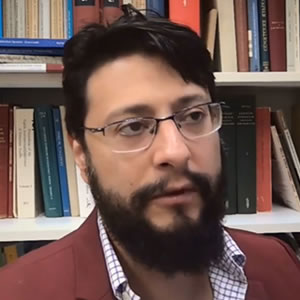 Who is Ahmad Al-Jallad?
Ahmad Al-Jallad is a Jordanian-American philologist, epigraphist, and a historian of language. Some of the areas he has contributed to include Quranic studies and the history of Arabic, including recent work he has done on pre-Islamic Arabian inscriptions written in Safaitic and Paleo-Arabic.
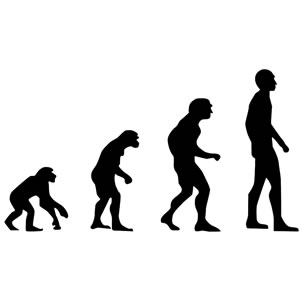 What is Evolution?
Evolution is change in the heritable characteristics of biological populations over successive generations. Evolutionary processes give rise to bio-diversity at every level of biological organisation, including the levels of species, individual organisms, and molecules. In the mid-19th century, Charles Darwin formulated the scientific theory of evolution by natural selection, published in his book On the Origin of Species (1859). Evolution by natural selection is a process first demonstrated by the observation that often, more offspring are produced than can possibly survive.
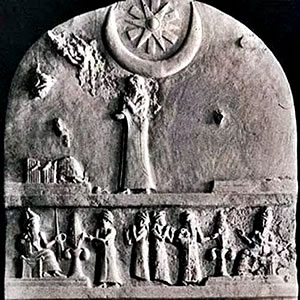 What is Pre-Islam?
Pre-Islam refers to the period in history before the emergence and widespread adoption of Islam. It specifically denotes the time before the Prophet Muhammad's revelations and the establishment of Islamic faith, culture, and civilization.
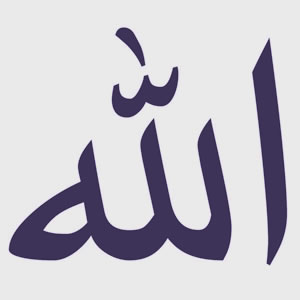 Who is Allah?
Allah is the Arabic word for God in Abrahamic religions. In the English language, the word generally refers to God in Islam. The word is thought to be derived by contraction from al-ilah, which means 'the god', and is related to El and Elah, the Hebrew and Aramaic words for God. The word Allah has been used by Arabic people of different religions since pre-Islamic times. More specifically, it has been used as a term for God by Muslims (both Arab and non-Arab) and Arab Christians.
 What is Islam?
One of the major religions of the world, Islam literally translates to "submission," as a follower of Islam (Muslims) devotes their life to that of their God. The religion began with the teachings of Muhammad in the 7th century. The theology of Islam is based on the Qur'an, which was given to Muhammad by God. Some of the major fundamental principles of Islam include the Five Pillars, which hope to unite all Muslims into a community. Two different factions of Muslims exist - the majority are known as Sunni, with a small percentage known as Shi'a - both predominantly reside throughout the Middle East. Muhammad died in 632 AD and the religion of Islam formally started after his death. The Quran was formally compiled and finalised in 650 AD, prior to which it was 'memorised' and written across many parchments.
 What is Pagan?
Paganism is a term first used in the fourth century by early Christians. It was applied on populations of the Roman Empire who practiced polytheism, either because they were increasingly rural and provincial relative to the Christian population or because they were not milites Christi (soldiers of Christ). Alternate terms in Christian texts for the same group were hellene, gentile, and heathen. Pagan and paganism were pejorative terms for the same polytheistic group, implying its inferiority. Paganism has broadly connoted the "religion of the peasantry", and for much of its history was a derogatory term. Both during and after the Middle Ages, pagan was a pejorative term that was applied to any non-Abrahamic or unfamiliar religion, and the term presumed a belief in false god(s).
 Who is GOD?
In monotheism and henotheism, God is conceived as the Supreme Being and principal object of faith. The concept of God as described by theologians commonly includes the attributes of omniscience (infinite knowledge), omnipotence (unlimited power), omnipresence (present everywhere), omnibenevolence (perfect goodness), divine simplicity, and eternal and necessary existence. In theism, God is the creator and sustainer of the universe In deism, God is the creator, but not the sustainer, of the universe Monotheism is the belief in the existence of one God or in the oneness of God In pantheism, God is the universe itself In atheism, God is purported not to exist, while deemed unknown or unknowable within the context of agnosticism.