266 views
·
Last viewed: 1 day ago
Uploaded: 28 Mar 2026 (7 months ago) · Shared: 29 Mar 2026
Duration: 5:30
Uploaded: 28 Mar 2026 (7 months ago) · Shared: 29 Mar 2026
Duration: 5:30
Youtube Description
This might be one of the most important discoveries in the study of ancient Arabia in decades. In this episode of MythVision, Dr. Ahmad Al-Jallad—oneof the world’s leading experts on pre-Islamic Arabian languages—reveals how a mysterious script, undeciphered for over a century, was finally cracked… almost by accident.
What was once thought to be an impossible puzzle—lacking bilingual texts, context, and even a known language—has now opened a completely new window into the ancient world.
This breakthrough gives us access to:
- Lost languages of Arabia
- Ancient religious beliefs and deities
- Forgotten writing systems
- And an entirely new layer of human history
Even more fascinating: this script may represent one of the last undeciphered writing systems on Earth—until now.
From inscriptions hidden in caves in Oman to a discovery made mid-flight, this is a story that feels more like Indiana Jones than academia.
If you’re interested in ancient history, archaeology, religion, or lost civilizations… this is a conversation you can’t miss.
https://www.science.org/content/article/mysterious-pre-islamic-script-oman-finally-deciphered
and perhaps a link to the dhofari script decipherment: https://www.biblicalarchaeology.org/daily/archaeology-today/pre-islamic-arabian-script-deciphered/
also for the info section on the youtube page, the text area: the Epigraphic Institute website: https://www.theepigraphicinstitute.org/
📺 Our second channel
@mythvisionTV
Check out Dr. Ahmad Al-Jallad sites:
- The Epigraphic Institute website: https://www.theepigraphicinstitute.org/
- A link to the dhofari script decipherment: https://www.biblicalarchaeology.org/daily/archaeology-today/pre-islamic-arabian-script-deciphered/
- Also - https://www.science.org/content/article/mysterious-pre-islamic-script-oman-finally-deciphered
============================
FIND ALL LINKS HERE 👉 https://linktr.ee/mythvision
============================
RECOMMENDED ONLINE COURSES HERE
👉👉 Checkout MVP Courses to find new and upcoming online courses:
https://mvp-courses.com/
Sign up for Dr. James Tabor’s Course, “The Quest for the Historical Paul: Apostle or Apostate?” - -
https://mythvisionpodcast.com/histori...
Sign up for Dr. Kara Cooney’s Course, “Ancient Egyptian Cosmogony and Cosmology” - -
https://mythvisionpodcast.com/egyptia...
Sign up for Dr. Robyn Faith Walsh’s Course, “The Gospel Masterclass” - -
https://mythvisionpodcast.com/gospels
Sign up for Dr. James Tabor’s Course, “Jesus and The Dead Sea Scrolls” - -
https://mythvisionpodcast.com/dss
Sign up for Dr. Robyn Faith Walsh’s Course, “Unforgettable Footprints of the Pauline Legacy” - -
https://mythvisionpodcast.com/paulsle...
Sign up for Dr. Dennis MacDonald’s Course, “Reading the Gospels with One Eye on Greek Poetry” - -
https://mythvisionpodcast.com/homeric...
Sign up for Dr. James Tabor’s Course, 'Creating Jesus: Why Mark’s Gospel Was Forgotten?' - -
https://www.mythvisionpodcast.com/fir...
Sign up for Dr. Dale C. Allison Jr's Course, “The Quest for The Historical Jesus” - -
https://www.mythvisionpodcast.com/jes...
============================
GET RECOMMENDED BOOKS HERE: 👉 https://amzn.to/35FqNYf
============================
Please consider supporting MythVision's work by joining our Patreon or contributing a one-time donation:
Patreon: 👉 / mythvision
Paypal: 👉 https://www.paypal.me/dereklambert7 - - @dereklambert7
Cashapp: 👉 $rewiredaddiction
Venmo: 👉 www.venmo.com/Derek-Lambert-9 - - @Derek-Lambert-9
Facebook Stars: fb.com/stars
============================
CONTACT ME
Website: 👉 https://mythvisionpodcast.com/
Email MythVision: 👉 mythvisionpodcast@gmail.com
Facebook Page: 👉 / mythvision
Facebook Group: 👉 / thewaterboyzradio
Twitter X: 👉 https://x.com/DerekPodcast - - @DerekPodcast
TikTok: 👉 / mythvision
Instagram: 👉 / dereklambert_7
Discord: 👉 / discord
===========================
LISTEN TO THE PODCAST HERE:
🎧 Spotify: https://open.spotify.com/show/4gf3XMe...
🎧 Apple Podcast: https://podcasts.apple.com/us/podcast...
🎧 Castbox: https://castbox.fm/vh/6551369
🎧 Pocket Casts: https://pca.st/61670kid
🎧 iHeartRadio: https://iheart.com/podcast/271777389/
===========================
👉👉 Checkout Our Other YouTube Channel: / @mythvisiontv
===========================
Affiliate Disclaimer:
Some links may be affiliate links, which means I may earn a small commission at no additional cost to you. All opinions expressed are my own, and I only recommend products or services I believe will add value to my audience. Thank you for supporting the channel!
Explore More
Ahmad Al-Jallad Derek Lambert Archaeology Polytheism Myth GOD NOAH
NOAH
Search Google Search Explore Topics
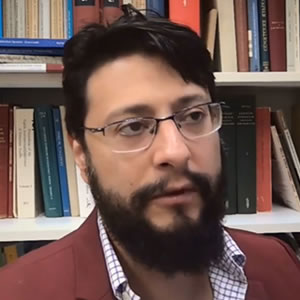 Who is Ahmad Al-Jallad?
Ahmad Al-Jallad is a Jordanian-American philologist, epigraphist, and a historian of language. Some of the areas he has contributed to include Quranic studies and the history of Arabic, including recent work he has done on pre-Islamic Arabian inscriptions written in Safaitic and Paleo-Arabic.
 Who is Derek Lambert?
MythVision Podcast (MVP) brings you some of the finest information surrounding Mythology. Knowledge from a variety of people in search of a better understanding of ancient text. We discuss mythology, syncretism, astrotheology, gematria, sacred geometry, secret societies, ancient languages, history, prophecy, scholarship, conspiracies, heretical ideas, myth interpretations and much more.
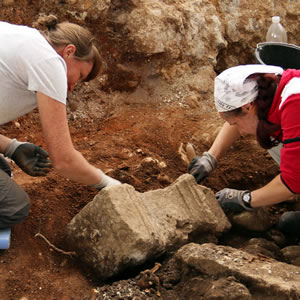 What is Archaeology?
Archaeology or archeology is the study of human activity through the recovery and analysis of material culture. The archaeological record consists of artifacts, architecture, biofacts or ecofacts, sites, and cultural landscapes. Archaeology can be considered both a social science and a branch of the humanities.
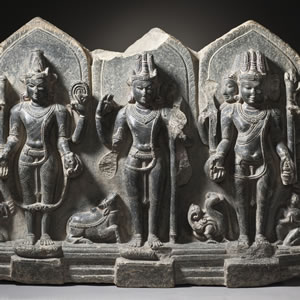 What is Polytheism?
Polytheism is the worship of or belief in multiple deities, usually as a pantheon of gods and goddesses. In most religions which accept polytheism, the different gods and goddesses are representations of forces of nature or ancestral principles, and can be viewed either as autonomous or as aspects or emanations of a creator deity or transcendental absolute principle (monistic theologies), which manifests immanently in nature (panentheistic and pantheistic theologies). Most of the polytheistic deities of ancient religions, with the notable exceptions of the Ancient Egyptian and Hindu deities, were conceived as having physical bodies. Polytheism is a type of theism. Within theism, it contrasts with monotheism, the belief in a singular God, in most cases transcendent. Important polytheistic religions practiced today include Chinese traditional religion, Hinduism, Japanese Shinto, and various neopagan faiths.
 What is Myth?
Mythology refers to a collection of sacred, traditional tales from a specific culture that explain natural phenomena, world origins, and cultural values. This often featuring gods, goddesses, and heroes. It serves as a lens for interpreting shared human experiences through stories, rituals, and art. Myth is a genre of folklore consisting primarily of narratives that play a fundamental role in a society. For scholars, this is totally different from the ordinary sense of the term myth, meaning a belief that is not true, as the veracity of a piece of folklore is entirely irrelevant to determining whether it constitutes a myth. Myths are often endorsed by religious and secular authorities, and may be natural or supernatural in character. Many societies group their myths, legends, and history together, considering myths and legends to be factual accounts of their remote past. In particular, creation myths take place in a primordial age when the world had not achieved its later form. Origin myths explain how a society's customs, institutions, and taboos were established and sanctified. National myths are narratives about a nation's past that symbolize the nation's values. There is a complex relationship between recital of myths and the enactment of rituals.
Who is GOD?In monotheism and henotheism, God is conceived as the Supreme Being and principal object of faith. The concept of God as described by theologians commonly includes the attributes of omniscience (infinite knowledge), omnipotence (unlimited power), omnipresence (present everywhere), omnibenevolence (perfect goodness), divine simplicity, and eternal and necessary existence. In theism, God is the creator and sustainer of the universe In deism, God is the creator, but not the sustainer, of the universe Monotheism is the belief in the existence of one God or in the oneness of God In pantheism, God is the universe itself In atheism, God is purported not to exist, while deemed unknown or unknowable within the context of agnosticism.