897 views
·
Last viewed: 59 mins ago
Uploaded: 17 Jan 2026 (9 months ago) · Shared: 18 Feb 2026
Duration: 1:37:53
Uploaded: 17 Jan 2026 (9 months ago) · Shared: 18 Feb 2026
Duration: 1:37:53
Video Description
In this enlightening video, Gabriel Reynolds delves into the intricate relationship between Islam, Christianity, and Judaism, drawing insights from the Quran. This discussion offers a profound exploration of the shared spiritual roots and historical connections among these three Abrahamic faiths. By examining key passages from the Quran, Reynolds provides valuable perspectives on how the texts of Islam, the Torah, and the Bible interrelate and complement each other. This video is a must-watch for anyone interested in understanding the early history and mutual respect among these religions, offering spiritual reminders and Islamic guidance that resonate with followers of all faiths.
Explore More
Gabriel Reynolds Skepsislamica Christianity The Quran Judaism Islam ONS SinSearch Google Search Explore Topics
 Who is Gabriel Reynolds?
Gabriel Reynolds is an American academic and historian of religion who serves as professor of Islamic Studies and Theology at the University of Notre Dame. His scholarship focuses on World Religions and World Church, History of Christianity, Quranic Studies, Islamic Origins, and Muslim-Christian relations. Gabriel Said Reynolds obtained his PhD in Islamic Studies at Yale University.The 'Exploring the Quran and the Bible' Youtube channel is dedicated to thoughtful, cutting-edge, and respectful conversations with leading scholars worldwide on the Bible or the Quran.
 Who are Skepsislamica?
We spotlight perspectives in Islamic history that often go unnoticed, keeping you informed on the latest academic research and discussions. Our content is non-sectarian and grounded in rigorous academic approaches to Islamic studies, offering deep and thoughtful analysis.
 What is Christianity?
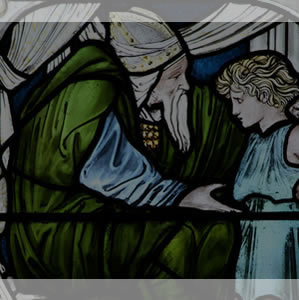
Christianity is a global religion centered on the life and teachings of Jesus Christ, who followers believe is the Son of God. It's a monotheistic faith, meaning Christians believe in one God who exists in three co-equal persons: God the Father, God the Son (Jesus Christ), and the Holy Spirit. Christianity is based on the Bible, with the Old Testament and New Testament serving as sacred texts.
 What is The Quran?
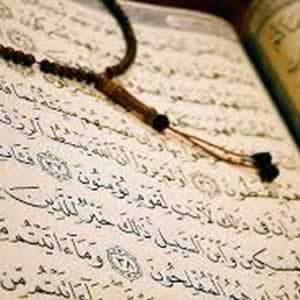
Quran, literally meaning "the recitation" is the central religious text of Islam, which Muslims believe to be a revelation from God (Allah). It is widely regarded as the finest work in classical Arabic literature. The Quran is divided into chapters (surah in Arabic), which are then divided into verses (ayah). Muslims believe that the Quran was verbally revealed by God to Muhammad through the angel Gabriel (Jibril), gradually over a period of approximately 23 years, beginning on 22 December 609 CE, when Muhammad was 40, and concluding in 632, the year of his death. Muslims regard the Quran as the most important miracle of Muhammad, a proof of his prophethood, and the culmination of a series of divine messages that started with the messages revealed to Adam and ended with Muhammad.
 What is Judaism?
Judaism encompasses the religion, philosophy, culture and way of life of the Jewish people. Judaism is a monotheistic religion, with the Torah as its foundational text (part of the larger text known as the Tanakh or Hebrew Bible), and supplemental oral tradition represented by later texts such as the Midrash and the Talmud. Judaism is considered by religious Jews to be the expression of the covenantal relationship that God established with the Children of Israel. Judaism includes a wide corpus of texts, practices, theological positions, and forms of organization. Within Judaism there are a variety of movements, most of which emerged from Rabbinic Judaism, which holds that God revealed his laws and commandments to Moses on Mount Sinai in the form of both the Written and Oral Torah. The Jews are an ethnoreligious group and include those born Jewish and converts to Judaism. In 2012, the world Jewish population was estimated at about 14 million, or roughly 0.2% of the total world population. About 42% of all Jews reside in Israel and about 42% reside in the United States and Canada, with most of the remainder living in Europe.
 What is Islam?
One of the major religions of the world, Islam literally translates to "submission," as a follower of Islam (Muslims) devotes their life to that of their God. The religion began with the teachings of Muhammad in the 7th century. The theology of Islam is based on the Qur'an, which was given to Muhammad by God. Some of the major fundamental principles of Islam include the Five Pillars, which hope to unite all Muslims into a community. Two different factions of Muslims exist - the majority are known as Sunni, with a small percentage known as Shi'a - both predominantly reside throughout the Middle East. Muhammad died in 632 AD and the religion of Islam formally started after his death. The Quran was formally compiled and finalised in 650 AD, prior to which it was 'memorised' and written across many parchments.
 Who are ONS?
The Office for National Statistics (ONS) is the official national statistical institute of the United Kingdom.
 What is Sin?
In Abrahamic contexts, sin is the act of violating God's will. Sin can also be viewed as anything that violates the ideal relationship between an individual and God; or as any diversion from the ideal order for human living. To sin has been defined as "to miss the mark". Sins fall in a spectrum from minor errors to deadly misdeeds. Catholicism regards the least corrupt sins as venial sins which are part of human living and carry immediate consequences on earth, and, if unrepented for, more painful purgation, assuming the person is destined to heaven, as it is written in the formation letter "Purgatory", "most of the early Fathers of the Church speak of a cleansing fire, though we cannot tell whether this means actual or spiritual fire." Conversely, sins of great evil are mortal sins which bring the consequence of hell if they are not addressed either through an act of perfect contrition or going to confession about them.