The Quran, Moses, Pharaoh and the Secrets of Egypt - ManyProphetsOneMessage

   30:03
788 views  ·  Last viewed: 2 days ago
Uploaded: 26 Dec 2020   (6 years ago)  ·  Shared: 28 Dec 2020

Video Description (from Youtube)

This video covers ten insights that the Qur'an has into the hidden past of ancient Egypt, proving that the Qur'an is of divine origins. To learn more about the miracles of the Qur’an, please download

your free copy of the book “The Eternal Challenge” at the the following link:

https://onereason.org/eternalchallenge/

This video is based partly on research done by Dr. Saifullah and Sharif Randhawa. Check out their websites:

www.Islamic-Awareness.org
quranic-musings.blogspot.com

For more detailed information on the ten points covered in this video please refer to the following articles:

https://www.manyprophetsonemessage.com/2013/11/13/hieroglyphs-affirm-the-historicity-of-the-quran/

https://www.islamic-awareness.org/quran/contrad/external/haman

https://www.islamic-awareness.org/quran/contrad/external/dirham.html

DISCLAIMER
All videos are shared for educational and information purposes only. All videos are hosted and viewable on Youtube servers. Video titles are generated using the original video title; overall content theme including actual dialogue and speech (Transcript); and A.I-based recommendations with a focus on SEO, keyword density, and internal search functions. The video title does not represent the views held by the Youtube video uploader, or any individual, organisation or business.

If you spot any mistake, omission or give feedback, kindly Contact Us with details

Overview & Key Concepts


What is The Quran?

Quran, literally meaning "the recitation" is the central religious text of Islam, which Muslims believe to be a revelation from God (Allah). It is

widely regarded as the finest work in classical Arabic literature. The Quran is divided into chapters (surah in Arabic), which are then divided into verses (ayah). Muslims believe that the Quran was verbally revealed by God to Muhammad through the angel Gabriel (Jibril), gradually over a period of approximately 23 years, beginning on 22 December 609 CE, when Muhammad was 40, and concluding in 632, the year of his death. Muslims regard the Quran as the most important miracle of Muhammad, a proof of his prophethood, and the culmination of a series of divine messages that started with the messages revealed to Adam and ended with Muhammad.
Who is Pharaoh?

Pharaoh is the common title of the monarchs of ancient Egypt. Coming from the First Dynasty (c. 3150 BCE) until the annexation of Egypt by the Roman

Empire in 30 BCE,[2] although the actual term "Pharaoh" was not used contemporaneously for a ruler until Merneptah, c. 1200 BCE.

What is a Prophet?

In religion, a prophet is an individual who is regarded as being in contact with a divine being and is said to speak on that entity's behalf. They

claim to be serving as an intermediary with humanity by delivering messages or teachings from the supernatural source to other people. The message that the prophet conveys is called a prophecy. In Islam, all prophetic messengers are prophets (such as Adam, Noah, Abraham, Moses, Jesus, and Muhammad) though not all prophets are prophetic messengers. The primary distinction is that a prophet is required to demonstrate God's law through his actions, character, and behavior without necessarily calling people to follow him, while a prophetic messenger is required to pronounce God's law (i.e. revelation) and call his people to submit and follow him.
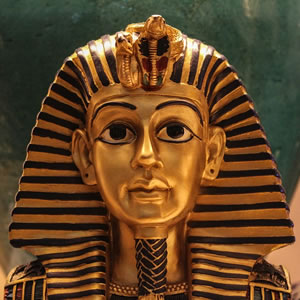
What is Egypt?

Egypt, officially the Arab Republic of Egypt, is a country spanning the northeast corner of Africa and southwest corner of Asia by a land bridge

formed by the Sinai Peninsula. Egypt is a Mediterranean country bordered by the Gaza Strip and Israel to the northeast, the Gulf of Aqaba and the Red Sea to the east, Sudan to the south, and Libya to the west. Across the Gulf of Aqaba lies Jordan, across the Red Sea lies Saudi Arabia, and across the Mediterranean lie Greece, Turkey and Cyprus, although none share a land border with Egypt.
Frequently Asked Questions


1.Why should we believe the Quran if it comes 600 years after Jesus?

The Quran may have come 600 years after Jesus, but does that make it false? Jesus came 1600 years after Moses, does that make Jesus false? The underlying or main argument here is the time between one person and another, but as we can see, if time is a problem then Christians should reject the other Prophets and Messengers since they have a greater number of years between them.

The complete manuscript collections of the New Testament and Old Testament date to the 4th and 5th century, within 100 years of the Qur'an, if Christians want to reject the Qur'an because it is 600 years after Jesus then they must be consistent and also reject the New Testament.

It should be noted that the Church itself did not ordain or make it canon (law) that the New Testament should be scripture until 393 and 397 CE in the Carthaginian councils. With all of these evidences, and centuries between Jesus and the New Testament, then they must reject the New Testament first. If not, then they are admitting that their argument is weak, unintelligent and absurd.


2.What is the Quran?

The Quran is the scripture revealed to Muhammad via the Angel Gabrial


3.How was the Quran revealed?

The Quran was revealed to Prophet Muhammad through the Angel Gabrial. Muhammad would repeat the exact words Gabrial gave him and they were written down and memorised.


4.What does the Quran say about Jews and Christians?

The Jews say "The Christians have nothing [true] to stand on," and the Christians say, "The Jews have nothing to stand on," although they [both] recite the Scripture. Thus the polytheists speak the same as their words. But Allah will judge between them on the Day of Resurrection concerning that over which they used to differ.
[Quran 2:113]


5.How authentic is the Quran historically?

Thanks to its undisputed authenticity, the text of the Quran holds a unique place among the books of Revelation, shared neither by the Old nor the New Testament.


6.How was the Quran text kept authentic?

As the Quran was revealed, the Prophet and the believers following him recited the text by heart and it was also written down by the scribes in his following.

It therefore starts off with two elements of authenticity that the Gospels do not possess. This continued up to the Prophet's death.

At a time when not everybody could write, but everyone was able to recite, recitation afforded a considerable advantage because of the double-checking possible when the definitive text was compiled.


7.How was the Quran revealed?

The Quranic revelation was made by Archangel Gabriel to Muhammad. It took place over a period of more than 23-years of the Prophet's life up to his death in 632 AD


8.How was the Quran preserved?

Whenever a fragment of the Quran was revealed, the Prophet called one of his literate companions and dictated it to him, and setting the exact position of the new fragment in the fabric of what had already been received.

Muhammad then asked the scribe to repeat back what he dictated so that he could correct any deficiencies.

Another famous story tells how every year in the month of Ramadan, the Prophet would recite the whole of the Quran (so far revealed) to Gabriel.

Since that day, Muslims recite the whole Quran during the month of Ramadan. The head scribe of the Quran was Zaid Ibn Thabit who was present at the final compilation of the Quran text.

Extremely diverse materials were used when recording: parchment, leather, wooden tablets, camels' scapula, soft stone for inscriptions, etc.

At the same time however, Muhammad encouraged the faithful to learn the Quran by heart. Many memorized the entire Quran by heart and helped to spread it abroad.

By preserving the Quran text both in writings (on materials) and by human memorization proved invaluable in the preservation of the entire text.


9.After the death of Muhammad, the Quran was changed?

This is false. The first three Caliphs, especially Uthman completed a critical analysis of the entire Quran text.

This was due to the rapid expansion of Islam in the first decade amongst people whose native language was not Arabic. So it was deemed essential the text retained its original purity.

Uthman sent copies of the standardized Quran text to the centre of the Islamic Empire. Today, copies attributed to Uthman exist can be found in Tashkent and Istanbul.

Apart from a few dialect variations in copying, the oldest documents known to the present day found throughout the Islamic world are identical; the same is true for documents preserved in Europe (fragments in the Bibliothque Nationale in Paris which, according to the experts date from the 8th Century AD).

The minor dialect variations do not change the general meaning of the text. For example, the absence of diacritical marks could make a verb either active or passive and in some instances, masculine or feminine. This is a minor issue since the context indicated the meaning in many instances.

Therefore the Quran has been fully preserved since its revelation.


10.Is Muhammad mentioned in the Quran?

The Bible speaks about a prophet who cannot read Gods word


11.Does the Quran tell Jews and Christians to refer to their Scriptures (Torah and Bible)?

When the Quran refers to the previous Scriptures (Torah, Gospel etc.), this is understood to mean the original revelations sent to Moses and Jesus, and not the 'corrupted' versions we have today


12.Does the Quran encourage violence against the disbelievers (non-Muslims)?

The historical context is that this Quran verse was revealed at the Battle of Badr, a battle in which the pagans of Makkah traveled over 200 miles to destroy the Muslims of Madinah. The Pagans of Makkah had an army of about 1000 while the Muslims were only 300 followers. Muhammad and his followers had suffered severe persecutions and torture for 13 years in the city of Makkah. Having fled from Makkah to the safety of Madinah, they found that they were once again threatened.

It is obvious from historical and textual context therefore that this Quran verse does not promote the killing of innocents.


13.Are Muslims told to kill polytheists in the Quran?

This Quran verse is often quoted out of context. The preceeding Quran verses inform us there was a war treaty between the Muslims and pagan Arabs, which the pagans of Arabia broke.

Therefore this verse applies to a very specific historical event and applied only to those who broke the agreement.

Naturally, in war violence is expected. If country A declares war with country B because a peace treaty was violated, then both countries will expect their soldiers to kill or be killed.


14.Does the Quran promote killing?

This Quran verse is often misquoted. The previous verses clearly state the command is to fight those who fight you, and not to overstep the limits. This verse does not promote the killing of innocents, Muslim or non-Muslim, and only allows for fighting in self-defence (when attacked).


15.Does the Quran promote violence?

This verse was revealed by God to Muhammad at a time when Muslims were being attacked by the enemy from Makkah on a regular basis. The verse only allows for self-defence fighting against those who 'withdraw not from you nor give you (guarantees) of peace besides restraining their hands'. So the guarantee of a peace treaty or agreement is required for the war and fighting to completely stop.


16.Does the Quran encourage Muslims to kill non-Muslims?

This verse was revealed about the Battle of Badr. The pagans of Mecca travelled more than 200 miles to Madinah with an army of about 1000 to kill the Muslims who numbered around 300. The Prophet Muhammad and fellow Muslims had suffered severe persecution, torture and even murder of their brethren for 13 years in the city of Mecca at the hands of these very same pagans.

And once the Muslims had fled Mecca and found a sanctuary in the city of Madinah, they were followed by the pagans of Mecca. By this verse God gave the order to Muslims to fight to defend their lives and faith, as they had previously been forbidden from defending themselves.


17.Is their violence in the Quran?

This verse is applicable to the Muslims during the time of Muhammad historical Muslims who were terrified of fighting in the battles to defend themselves because they were out numbered.

God bolstered their bravery by assuring them that they would be rewarded.


18.Does the Quran encourage ill-treatment of non-Muslims?

The 'disbelievers' in this verse refers to those who persecuted and attacked the Muslims. This is not a verse directing Muslim to just go out and be awful to non-Muslims.

In fact there is a lot in the Quran and hadith collections that command Muslims to be compassionate and kind to all of God's creation. One such hadith states: Whoever is deprived of gentleness is deprived of all good. (Muslim, Abu Dawood)

It is also reported by Abu Dawood (a hadith collection) that Muhammad said, 'Beware! Whoever is cruel and hard on a non-Muslim minority, or curtails their rights, or burdens them with more than they can bear, or takes anything from them against their free will; I (Muhammad) will complain against the person on the Day of Judgement.'


19.Why does the Quran discourage the asking of questions?

This is in reference to those who asked useless questions about revelation. If all their questions were answered, it would have made the duties of faith more specific and, therefore, more difficult to perform. There is mercy in leaving questions alone and specifics unspecified. 7

In Chapter 2 of the Quran, when the Children of Israel were told to slaughter a cow, they began to ask useless questions about what type of cow. All the questions were answered to the point that it became very difficult for them to find such a cow. If they had not asked, any cow would have been acceptable.

Useless, petty questions are just a stalling tactic; ask any mother or teacher. But asking honest, sincere questions to clarify matters of faith is, in fact, encouraged.


Videos on Egypt (43)

Video: Exodus Revealed - Hard Evidence in Red Sea of Israel's Escape From Egypt 1:24:53
Video: In Matthew 2:15, Out of Egypt I called my son - Is this referring to Jesus? - Tovia Singer 18:30
Video: In Jude 1:5, who delivered the People out of Egypt? - John Schoenheit (BiblicalUnitarian) 9:54
Video: Who was Pharaoh when Moses lived in Egypt? - Mohammed Mana 6:19
Video: In Matthew 2:15 and Hosea 11:1, Jesus came from Egypt. No other gospel narrates this event - Hamza Myatt vs Protestant Rich 47:41
Video: In Numbers 1:46, the Exodus had 2 Million Jews leave Egypt. Is the Bible historically reliable? - Ken Humphreys 21:40
Video: Jesus the Passover Lamb to Christians; God to Egyptians; and  Sacrificial Meal for Jews - Michael Skobac 7:50
Video: In 48 BC, Roman Emperor, Julius Caeser destroyed 700,000 texts by burning the Library of Alexandria, Egypt 8:35
Video: The Real Story of Jesus, Horus the Egyptian Sun God and Astrology 30:44
Video: Jesus' infancy is difficult to reconcile in the Gospels (his birthplace, Bethlehem, Jerusalem, Nazareth, Egypt, 3 Kings etc.) - Mike Licona 2:25
Video: Josephus wrote of the Egyptian Jesus - Lena Einhorn 1:01:45
Video: In Psalm 83, is Israel and USA going to war with Palestine, Iran, Iraq, Lebanon, Jordan, Egypt and Syria? 17:14
Video: Romans, Greeks, Egyptians rampant with Idolatory. Muslims kiss a Black Stone! - Shabir Yusuf vs Arun 39:00
Video: Moses: Haman, Hieroglyphs and Egyptian Scripture - Quran Miracle 7:33
Video: Was Jesus modelled on Horus, the Egyptian Sun God? 2:06
Video: Baptism is from Ancient Egyptian celebration of Monsoon floods, rain and water - Doug Michael 0:45
Video: Three Wise Men (Magi) travelled to Baby Jesus were Stars heralding birth of Osiris, Egyptian God - Doug Michael 0:16
Video: Origen (Lebanon, 253 AD) & Athanasius (Egypt, 363 AD) wrote of all 27 NT Bible books - Craig Blomberg 0:40
Video: Burning of Egypt's Library of Alexandria (48 BC) 2:42
Video: Ancient Library of Alexandria, Egypt 45:25
Video: Christianity stole from Black, Egyptian Pagans - John G Jackson 46:30
Video: Egyptian Black Man educated Greeks, Romans, and White Europeans - Leo Muhammad (NOI) 11:29
Video: Egypt's Morsi: His Final Hours - Al-Jazeera 47:26
Video: Egypt's Missing - Amnesty 4:56
Video: Egypt's PM Mohamed Morsi 2:20
Video: We are responsible for Morsi's death in Egypt - Ajmal Masroor 35:49
Video: In 325 AD, the Council of Nicaea defined Jesus as 'Homoousios', of same substance with God - Kegan Chandler 1:57
Video: In 325 AD, the Council of Nicaea defined Jesus as 'Homoousios', of same substance with God - Kegan Chandler 3:46
Video: God will destroy America, just like He destroyed Egypt - ISUPK 16:03
Video: The Quran, Moses, Pharaoh and the Secrets of Egypt - ManyProphetsOneMessage 30:03
Video: Egypt Holiday Nightmare! 17:42
Video: Khonsu: The Egyptian Moon God | ReligionForBreakfast 16:07
Video: 26:40
Video: Moses and The 10 Plagues of Egypt | Bible In Nutshell 6:10
Video: 46:50
Video: Egypt, Jordan, UAE, Saudi Arabia, Turkey, Qatar & Algeria abandon Gaza, Palestine | Norman Finkelstein 49:33
Video: 'Ahmed, my son was shot in the head. The Egypt-Israeli crossing is closed' | TRT World 2:31
Video: Jesus was copied from Osiris and Egyptian, North-African Mystery Cults? | Kara Cooney | MythVision 1:49:41
Video: Saudi Arabia, Egypt, Jordan & UAE are 'Zionist Slaves'; Lebanon protests | Free Palestine TV 17:11
Video: 37:30
Video: The Complete Story of The Bible | Bible In Nutshell 6:20
Video: Joseph - Journey from betrayal to Ruler of Egypt 10:48
Video: The 10 Plagues of Egypt - God's Wrath Upon Pharaoh | Epic Bible Animation 26:38

EXPLORE TOPICS : PHARAOH | 9 THE QURAN | 303 EGYPT | 70 PROPHET | 397 MESSENGER | 8   MOSES

Latest videos  •  6,061 videos  •  0 viewed/24 hour

SUBSCRIBE

Receive the latest news and updates by email - Subscribe Now!
About  |  Q&A  |  Contact Us    •    Terms  |  Privacy  |  Disclaimer  |  Sitemap
Connect:      Facebook  |    Twitter  |    Youtube
MuslimProphets.com is an educational website on the Prophets of God: David, Noah, Abraham, Moses, Jesus and Muhammad, who established the Abrahamic faiths of Judaism, Christianity and Islam. MuslimProphets.com explores contemporary social themes through Scripture, Evidences, Photo, Video, Maps, Current Affairs, Debate and 'alternative' Views held by Theologians, Apologists, Scholars and Street Preachers. Take a Site Tour

In accordance with Islamic etiquette, all prophet names should be followed with 'Peace Be Upon Him (PBUH)'. This is omitted to minimise text.

DISCLAIMER: All website content is for general information and educational purposes only and available in the public domain. Whilst all information comes from sources believed to be reliable, this cannot be guaranteed. External links are provided as a convenience and for informational purposes only. They do not constitute endorsement or approval for any products, services or comments by organizations or individuals. Title and Text links may be edited for external SEO, internal site and keyword search purposes. We bear no responsibility for the accuracy, legality, or content found on any external website or its subsequent links. Unless indicated, all images and content is licensed under a Creative Commons Attribution License distributed by Wikipedia, Wikimedia Commons, Pixabay, Pxhere, Pexels, Unsplash, Flickr and others. All Torah, Psalms, Old and New Testament Bible quotes are from the King James Version (KJV) Holy Bible in the public domain. All Quran quotes are from Taqi-ud-Din al-Hilali/Muhsin Khan English Quran translation.

ALWAYS DO YOUR OWN RESEARCH. If you spot any mistake, error or omission of information, contact us so we can correct it.