723 views
·
Last viewed: 6 hrs ago
Uploaded: 17 Dec 2018 (8 years ago) · Shared: 21 Aug 2019
Duration: 1:57
Uploaded: 17 Dec 2018 (8 years ago) · Shared: 21 Aug 2019
Duration: 1:57
Youtube Description
https://trinities.org/blog/podcast-247-kegan-chandler-on-the-term-homoousios/ The famous church historian Eusebius tells us that at the famous 325council at Nicea, it was the emperor Constantine who suggested using the word homoousios (variously translated as “consubstantial,” “same esssence,” “same substance”).
Is this plausible? And if so, why would Constantine have done such a thing? What, if anything, in his own religious background would point him towards that term? What was Constantine’s theology, and how might he have understood it?
In this episode Kegan Chandler answers these questions using the latest historical research. He argues that we can go beyond the now widely agreed point that homoousios was employed by this council because it was not then a popular or widely used term, and so it did not have any widely accepted meaning. This enabled the majority of bishops to use the term as a stick with which to drive out Arius and his party, who did not like the term, while various bishops chose to interpret it in various ways, depending on their theological proclivities (e.g. Marcellan neo-monarchianism or Eusebian subordinationism). Whatever the various anti-Arian bishops were thinking, here Chandler ventures an educated guess as to what Constantine was thinking… and it has something to do with Egypt!
Links for this episode @ https://trinities.org/blog/podcast-247-kegan-chandler-on-the-term-homoousios/
The live-streamed version of this lecture.
The God of Jesus in Light of Christian Dogma
his blog Buried Deep
The God of Jesus
@Academia.edu
Rufinus’s corruption of Origen’s On First Principles – Part 1
Rufinus’s corruption of Origen’s On First Principles – Part 2
podcast 30 – The Council of Nicea
podcast 175 – Marcellus of Ancyra
This week’s thinking music is “Again, Once Again” by fluffy.
Explore More
Kegan Chandler Homoousios Egypt PaganSearch Google Search Explore Topics
 Who is Kegan Chandler?
Kegan Chandler is a Christian author and researcher of Early Christianity, pagan religion, and Gnosticism. He is an adjunct professor at Atlanta Bible College. Chandler holds a Master of Theology from Campbellsville University's School of Theology, where he studied Church History and Theology, and is a graduate of SCAD University, where he studied Graeco-Roman drama, medieval literature, and dramatic writing. He is the author of the forthcoming book 'Constantine and the Divine Mind' (Wipf and Stock, TBD), and 'The God of Jesus in Light of Christian Dogma' (Restoration Fellowship, 2016). He is also an award-winning screenwriter, and currently writes for his blog on Church history. Chandler also sits on the board of directors of the Unitarian Christian Alliance (formed 2019), and New Life Ministries of America, Inc., a small non-profit which has been producing Christian literature and financing overseas missions since 1994.
 What is Homoousios?
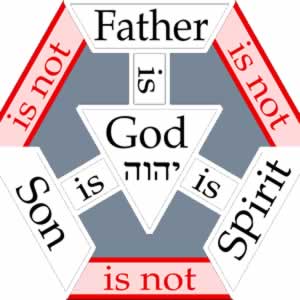
Homoousios or Homoousion ('same in being, same in essence') is a Christian theological term. Homoousios is most notably used in the Nicene Creed in 325 AD, for describing Jesus (God the Son) as "same in being" or "same in essence" with God the Father. The same term was later also applied to the Holy Spirit in order to designate him as being "same in essence" with the Father and the Son. Those notions became cornerstones of theology in Nicene Christianity, and also represent one of the most important theological concepts within the Trinitarian doctrinal understanding of God.
 What is Egypt?
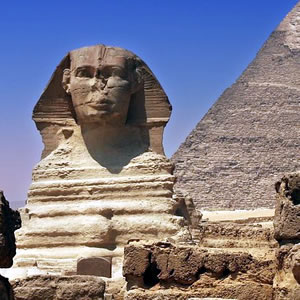
Egypt, officially the Arab Republic of Egypt, is a country spanning the northeast corner of Africa and southwest corner of Asia by a land bridge formed by the Sinai Peninsula. Egypt is a Mediterranean country bordered by the Gaza Strip and Israel to the northeast, the Gulf of Aqaba and the Red Sea to the east, Sudan to the south, and Libya to the west. Across the Gulf of Aqaba lies Jordan, across the Red Sea lies Saudi Arabia, and across the Mediterranean lie Greece, Turkey and Cyprus, although none share a land border with Egypt.
 What is Pagan?
Paganism is a term first used in the fourth century by early Christians. It was applied on populations of the Roman Empire who practiced polytheism, either because they were increasingly rural and provincial relative to the Christian population or because they were not milites Christi (soldiers of Christ). Alternate terms in Christian texts for the same group were hellene, gentile, and heathen. Pagan and paganism were pejorative terms for the same polytheistic group, implying its inferiority. Paganism has broadly connoted the "religion of the peasantry", and for much of its history was a derogatory term. Both during and after the Middle Ages, pagan was a pejorative term that was applied to any non-Abrahamic or unfamiliar religion, and the term presumed a belief in false god(s).