736 views
·
Last viewed: 5 hrs ago
Uploaded: 05 Oct 2019 (7 years ago) · Shared: 11 Oct 2019
Duration: 3:31
Uploaded: 05 Oct 2019 (7 years ago) · Shared: 11 Oct 2019
Duration: 3:31
Video Description
Explore the intriguing question of whether Ignatius, Polycarp, Clement, Tertullian, and Origen were true followers of God or the Antichrist in this insightful video. Delving into the early history of Christianity and its intersections with Judaism and Islam, the discussion provides a balanced and respectful analysis. Discover how these early Church figures are viewed through the lens of different faiths and gain a deeper understanding of their roles in religious history. Approved of God, this video offers valuable spiritual reminders and Islamic guidance for seekers of truth. Join us as we unravel the complexities of faith and explore the teachings of the Quran, Bible, and Torah.
Explore More
approvedofGod Antichrist Tertullian Ignatius Polycarp Origen GODSearch Google Search Explore Topics
 Who are approvedofGod?
I am here to teach all people, but especially the "body of Christ" (the Church), that the bible is sufficient for what we believe. Throughout the centuries, men have brought many doctrines into the church that have caused confusion and separation. My desire and goal is to clarify some of these errors and bring all Christians back to the basics of the Bible.
 Who is Antichrist?
The word 'antichrist' combines two roots: anti + Khristos. Anti can mean not only 'against' and 'opposite of', but also 'in place of'. Khristos, translated 'Christ', is Greek for the Hebrew 'Messiah'. Both Christ and Messiah literally mean 'Anointed One', and refer to Jesus of Nazareth in Christian and Islamic theology. In Christianity, antichrist is a term found solely in the First Epistle of John and Second Epistle of John, and often lowercased in Bible translations. In Islamic eschatology, Masih ad-Dajjal is an anti-messiah figure (similar to the Christian concept of a last antichrist), who will appear to deceive humanity before the second coming of Isa, as Jesus is known by Muslims. The concept of an antichrist is absent in traditional Judaism; however, in the medieval diaspora, his inevitable destruction is narrated as the symbol of ultimate victory of good over evil in the Messianic age.
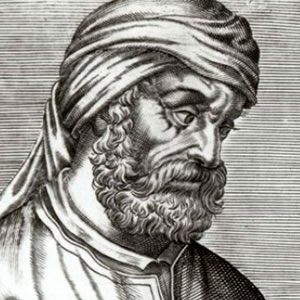 Who was Tertullian?
Tertullian (155-240 AD) was a prolific early Christian author from Carthage in the Roman province of Africa. Of Berber origin, he was the first Christian author to produce an extensive corpus of Latin Christian literature. He also was an early Christian apologist and a polemicist against heresy, including contemporary Christian Gnosticism. Tertullian has been called "the father of Latin Christianity" and "the founder of Western theology." Though conservative in his worldview, Tertullian originated new theological concepts and advanced the development of early Church doctrine. He is perhaps most famous for the term trinity (Latin: trinitas). According to The Stanford Encyclopedia of Philosophy, "Tertullian's trinity [is] not a triune God, but rather a triad or group of three, with God as the founding member".
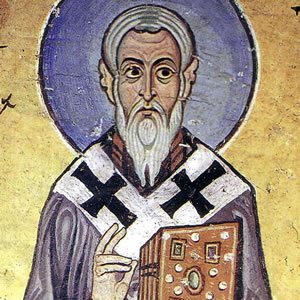 Who was Ignatius?
Ignatius of Antioch (35-107 AD) was an early Christian writer and bishop of Antioch. En route to Rome, where he met his martyrdom, Ignatius wrote a series of letters. This correspondence now forms a central part of the later collection known as the Apostolic Fathers, of which he is considered one of the three chief ones together with Pope Clement I and Polycarp.
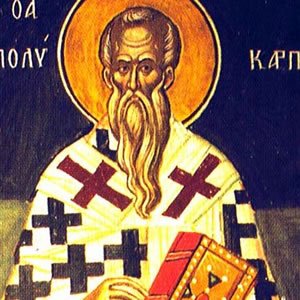 Who was Polycarp?
Polycarp (69-155 AD) was a 2nd-century Christian bishop of Smyrna. According to the Martyrdom of Polycarp he died a martyr, bound and burned at the stake, then stabbed when the fire failed to touch him. Polycarp is regarded as a saint and Church Father in the Eastern Orthodox, Oriental Orthodox, Catholic, Anglican, and Lutheran churches.
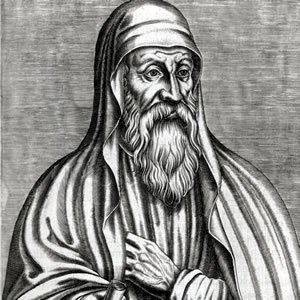 Who was Origen?
Origen of Alexandria (184-253 AD) was an early Christian scholar, ascetic, and theologian. He who was born and spent the first half of his career in Alexandria. He was a prolific writer who wrote roughly 2,000 treatises in multiple branches of theology, including textual criticism, biblical exegesis and biblical hermeneutics, homiletics, and spirituality. He was one of the most influential figures in early Christian theology, apologetics, and asceticism. He has been described as "the greatest genius the early church ever produced".
Who is GOD?In monotheism and henotheism, God is conceived as the Supreme Being and principal object of faith. The concept of God as described by theologians commonly includes the attributes of omniscience (infinite knowledge), omnipotence (unlimited power), omnipresence (present everywhere), omnibenevolence (perfect goodness), divine simplicity, and eternal and necessary existence. In theism, God is the creator and sustainer of the universe In deism, God is the creator, but not the sustainer, of the universe Monotheism is the belief in the existence of one God or in the oneness of God In pantheism, God is the universe itself In atheism, God is purported not to exist, while deemed unknown or unknowable within the context of agnosticism.