655 views
·
Last viewed: 1 day ago
Uploaded: 08 Apr 2020 (7 years ago) · Shared: 02 Mar 2021
Duration: 21:11
Uploaded: 08 Apr 2020 (7 years ago) · Shared: 02 Mar 2021
Duration: 21:11
Youtube Description
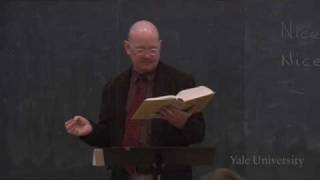
Did the flood mentioned in the Bible (Genesis 6-8) actually happen? Was it just a fable that was stolen from Mesopotamian epics? Is there any evidencethat can support the Biblical account?
Don't forget to help us create more videos! We need your support:
https://www.patreon.com/inspiringphilosophy
https://www.youtube.com/channel/UC5qDet6sa6rODi7t6wfpg8g/join
Sources:
Jeffery Rose - New Light on Human Prehistory in the Arabo-Persian Gulf Oasis
Mohammed El Bastawesy - The geomorphological and hydrogeological evidences for a Holocene deluge in Arabia
Ward E. Sanford - Thoughts on Eden, the Flood, and the Persian Gulf www2.wheaton.edu/ACG/news/news0701.html.
Speleothem-based paleoclimate record from northern Oman
https://pubs.geoscienceworld.org/gsa/geology/article-abstract/26/6/499/206854/Speleothem-based-paleoclimate-record-from-northern?redirectedFrom=fulltext
Edward S. Curtis - The North American Indian
Edward H. Mann - The Aboriginal Inhabitants of the Andaman Islands
Aboriginal Memories of Inundation of the Australian Coast Dating from More than 7000 Years Ago
https://www.tandfonline.com/doi/full/10.1080/00049182.2015.1077539
Sediment Cores from White Pond, South Carolina, contain a Platinum Anomaly, Pyrogenic Carbon Peak, and Coprophilous Spore Decline at 12.8 ka
https://www.ncbi.nlm.nih.gov/pmc/articles/PMC6805854/
Evidence for an extraterrestrial impact 12,900 years ago that contributed to the megafaunal extinctions and the Younger Dryas cooling
https://www.pnas.org/content/104/41/16016
Younger Dryas sea level and meltwater pulse 1B recorded in Barbados reef crest coral Acropora palmata
https://agupubs.onlinelibrary.wiley.com/doi/full/10.1002/2015PA002847
The abrupt termination of the Younger Dryas climate event
https://www.nature.com/articles/339532a0
A recent bottleneck of Y chromosome diversity coincides with a global change in culture
https://www.ncbi.nlm.nih.gov/pmc/articles/PMC4381518/
Cultural hitchhiking and competition between patrilineal kin groups explain the post-Neolithic Y-chromosome bottleneck
https://www.nature.com/articles/s41467-018-04375-6
Paul Copan & Douglas Jacoby - Origins: The Ancient Impact and Modern Implications of Genesis 1-11
S. Joshua Swamidass - The Genealogical Adam and Eve
Modelling the recent common ancestry of all living humans
https://www.nature.com/articles/nature02842?fbclid=IwAR3kgH4UmbXXZe17xd4xNZxL3RuUpJMi04gM0DINvjq9di8KI-h_rU9GvwQ
John Walton & Tremper Longman III - The Lost World of the Flood
Edward Lipinski's - El's Abode: Mythological Traditions Related to Mount Hermon and
to the Mountains of Armenia
Irving Finkel - The Ark Before Noah
James Hoffmeier - Genesis: History, Fiction, or Neither?
John Walton - Ancient Israelite Literature in its Cultural Context
Nahum Sarna - The JPS Torah Commentary: Genesis
W.G. Lambert & A. R. Millard - Atrahasis: The Babylonian Story of the Flood
Kenneth A. Kitchen - The Bible In Its World
Richard Hess & David Toshio Tsumura - I Studied Inscription From Before the Flood
Richard Hess - Israelite Religions
Explore More
InspiringPhilosophy Philosophy Flood Philo NOAH
NOAH
Search Google Search Explore Topics
 Who are InspiringPhilosophy?
My name is Michael Jones. I plan on creating a new video for InspiringPhilosophy.org every month dealing with philosophical and apologetic questions.
 What is Philosophy?
Philosophy is the study of general and fundamental problems concerning matters such as existence, knowledge, values, reason, mind, and language. The term was probably coined by Pythagoras (c. 570-495 BCE). Philosophical methods include questioning, critical discussion, rational argument, and systematic presentation. Classic philosophical questions include: Is it possible to know anything and to prove it? What is most real? Philosophers also pose more practical and concrete questions such as: Is there a best way to live? Is it better to be just or unjust (if one can get away with it)? Do humans have free will?
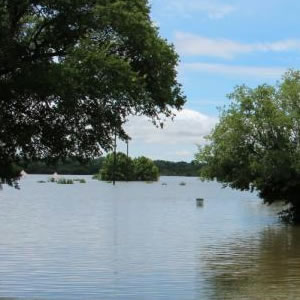 What is Flood?
A flood is a myth in which a great flood, usually sent by a deity or deities, destroys civilization, often in an act of divine retribution. Parallels are often drawn between the flood waters of these myths and the primeval cosmic ocean which appear in certain creation myths, as the flood waters are described as a measure for the cleansing of humanity, for example in preparation for rebirth. Most flood myths also contain a culture hero, who "represents the human craving for life". The oldest known narrative of a divinely initiated flood originates from the Sumerian culture in Mesopotamia, among others expressed in the Akkadian Atra-Hasis epic, which dates to the 18th century BCE. Comparable flood narratives appear in many other cultures, including the biblical Genesis flood narrative, manvantara-sandhya in Hinduism, Deucalion and Pyrrha in Greek mythology, also the Cheyenne, Blackfeet and Puebloan traditions.
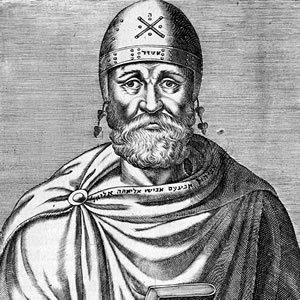 Who was Philo?
Philo of Alexandria (20 BC-50 AD) was a Hellenistic Jewish philosopher who lived in Alexandria, in the Roman province of Egypt. Philo used philosophical allegory to harmonize Jewish scripture, mainly the Torah, with Greek philosophy. His method followed the practices of both Jewish exegesis and Stoic philosophy. His allegorical exegesis was important for some Christian Church Fathers, but he had very little reception history within the Rabbinic Judaism. He adopted allegorical instead of literal interpretations of the Hebrew Bible. Some scholars hold that his concept of the Logos as God's creative principle influenced early Christology.