954 views
·
Last viewed: 4 hrs ago
Uploaded: 28 Jul 2020 (6 years ago) · Shared: 07 Oct 2019
Duration: 24:59
Uploaded: 28 Jul 2020 (6 years ago) · Shared: 07 Oct 2019
Duration: 24:59
Youtube Description
Assalamualaikum, All Praises And Thanks To Allah [SWT]. We Send Blessings And Salute Upon Our Leader Muhammad [SAW] & Upon His Blessed Family & UponHis Beloved Companions.
We Are Moving On To Another Incident Happened At The Time Of Musa AS. Allah SWT Mentions To Us An Amazing Story In Surah Al Kahf. It Is None Other Than The Story Of Al-Khidr. Share These Stories And Earn Great Rewards From Your Creator...
Like us on:- https://www.facebook.com/islamicinspirationhdeng
Follow us on:- https://twitter.com/islamicinspira3
Contact us on:- https://islamicinspirationhdeng@gmail.com
Watch on:- https://youtube.com/c/IslamicInspiration
Visit us on:- https://google.com/+IslamicInspiration
Explore More
The Quran Prophet Khidr MOSES
MOSES
Search Google Search Explore Topics
 What is The Quran?
Quran, literally meaning "the recitation" is the central religious text of Islam, which Muslims believe to be a revelation from God (Allah). It is widely regarded as the finest work in classical Arabic literature. The Quran is divided into chapters (surah in Arabic), which are then divided into verses (ayah). Muslims believe that the Quran was verbally revealed by God to Muhammad through the angel Gabriel (Jibril), gradually over a period of approximately 23 years, beginning on 22 December 609 CE, when Muhammad was 40, and concluding in 632, the year of his death. Muslims regard the Quran as the most important miracle of Muhammad, a proof of his prophethood, and the culmination of a series of divine messages that started with the messages revealed to Adam and ended with Muhammad.
 What is a Prophet?
In religion, a prophet is an individual who is regarded as being in contact with a divine being and is said to speak on that entity's behalf. They claim to be serving as an intermediary with humanity by delivering messages or teachings from the supernatural source to other people. The message that the prophet conveys is called a prophecy. In Islam, all prophetic messengers are prophets (such as Adam, Noah, Abraham, Moses, Jesus, and Muhammad) though not all prophets are prophetic messengers. The primary distinction is that a prophet is required to demonstrate God's law through his actions, character, and behavior without necessarily calling people to follow him, while a prophetic messenger is required to pronounce God's law (i.e. revelation) and call his people to submit and follow him.
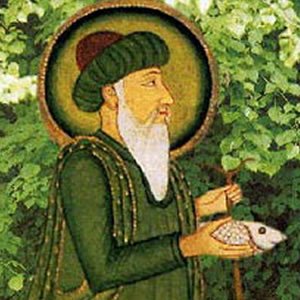 Who was Khidr?
Khidr is a quaranic figure of Islam. He is described in Surah Al-Kahf, as a righteous servant of God possessing great wisdom or mystic knowledge. In various Islamic and non-Islamic traditions, Khidr is described as an angel, prophet, or wali who guards the sea, teaches secret knowledge and aids those in distress. He prominently figures as patron of the Islamic saint ibn Arabi. The figure of al-Khidr has been syncretized over time with various other figures including Duraosa and Sorush in Iran, Sargis the General and Saint George in Asia Minor and the Levant, Elijah and Samael (the divine prosecutor) in Judaism, Elijah among the Druze, John the Baptist in Armenia, and Jhulelal in Sindh and Punjab in South Asia. Though not mentioned by name in the Quran, he is named by Islamic scholars as the figure described in Quran 18:65-82 as a servant of God who has been given 'knowledge' and who is accompanied and questioned by the prophet Musa (Moses) about the many seemingly unfair or inappropriate actions he (Al-Khidr) takes (damaging a ship, killing a young man, repaying inhospitality by repairing a wall). At the end of the story Khidr explains the circumstances unknown to Moses that made each of the actions fair and appropriate.