Story of Moses and Khidr in the Quran - Nouman Ali Khan 6/6

677 views  ·  Last viewed: 2 days ago
Uploaded: 23 Feb 2016   (11 years ago)  ·  Shared: 24 Apr 2019

Video Description (from Youtube)

To watch the full in-depth tafsir of Surah al-Kahf, join us on http://bayyinah.tv

Who is Nouman Ali Khan?

Nouman Ali Khan is an American Muslim speaker. He is an Arabic instructor who founded The Bayyinah Institute for Arabic and Quran Studies, after serving as a professor of Arabic at Nassau Community College. Khan has been named one of the 500 most influential Muslims in the world by the Royal Islamic Strategic Studies Centre of Jordan.
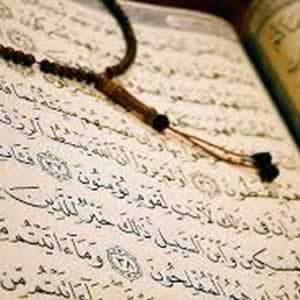
What is The Quran?

Quran, literally meaning "the recitation" is the central religious text of Islam, which Muslims believe to be a revelation from God (Allah). It is widely regarded as the finest work in classical Arabic literature. The Quran is divided into chapters (surah in Arabic), which are then divided into verses (ayah). Muslims believe that the Quran was verbally revealed by God to Muhammad through the angel Gabriel (Jibril), gradually over a period of approximately 23 years, beginning on 22 December 609 CE, when Muhammad was 40, and concluding in 632, the year of his death. Muslims regard the Quran as the most important miracle of Muhammad, a proof of his prophethood, and the culmination of a series of divine messages that started with the messages revealed to Adam and ended with Muhammad.
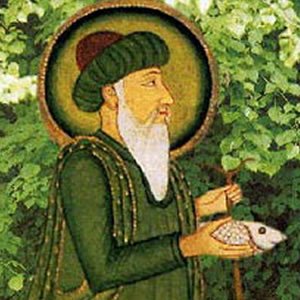
Who was Khidr?

Khidr is a quaranic figure of Islam. He is described in Surah Al-Kahf, as a righteous servant of God possessing great wisdom or mystic knowledge. In various Islamic and non-Islamic traditions, Khidr is described as an angel, prophet, or wali who guards the sea, teaches secret knowledge and aids those in distress. He prominently figures as patron of the Islamic saint ibn Arabi. The figure of al-Khidr has been syncretized over time with various other figures including Duraosa and Sorush in Iran, Sargis the General and Saint George in Asia Minor and the Levant, Elijah and Samael (the divine prosecutor) in Judaism, Elijah among the Druze, John the Baptist in Armenia, and Jhulelal in Sindh and Punjab in South Asia. <br><br> Though not mentioned by name in the Quran, he is named by Islamic scholars as the figure described in Quran 18:65-82 as a servant of God who has been given 'knowledge' and who is accompanied and questioned by the prophet Musa (Moses) about the many seemingly

unfair or inappropriate actions he (Al-Khidr) takes (damaging a ship, killing a young man, repaying inhospitality by repairing a wall). At the end of the story Khidr explains the circumstances unknown to Moses that made each of the actions fair and appropriate.

DISCLAIMER
All videos are shared for educational and information purposes only. All videos are hosted and viewable on Youtube servers. Video titles are generated using the original video title; overall content theme including actual dialogue and speech (Transcript); and A.I-based recommendations with a focus on SEO, keyword density, and internal search functions. The video title does not represent the views held by the Youtube video uploader, or any individual, organisation or business.

If you spot any mistake, omission or give feedback, kindly contact us with details

Latest videos  •  6,043 videos  •  0 viewed/24 hour

SUBSCRIBE

Receive the latest news and updates by email - Subscribe Now!
About  |  Q&A  |  Contact Us    •    Terms  |  Privacy  |  Disclaimer  |  Sitemap
Connect:      Facebook  |    Twitter  |    Youtube
MuslimProphets.com is an educational website on the Prophets of God: David, Noah, Abraham, Moses, Jesus and Muhammad, who established the Abrahamic faiths of Judaism, Christianity and Islam.

MuslimProphets.com explores contemporary social themes through Scripture, Evidences, Photo, Video, Maps, Current Affairs, Debate and 'alternative' Views held by Theologians, Apologists, Scholars and Street Preachers.

In accordance with Islamic etiquette, all prophet names should be followed with 'Peace Be Upon Him (PBUH)'. This is omitted to minimise text.

DISCLAIMER
The historical information provided on this website is for educational and informational purposes only.

History is an ongoing interpretation of past events. Historical accounts are shaped by the perspectives, biases, and cultural influences of their time; therefore, no content on this website should be taken as absolute, 100% factual truth. We encourage readers to approach historical narratives with a critical mind.

All website content is available in the public domain. While all information is gathered from sources believed to be reliable, its absolute accuracy cannot be guaranteed.

EXTERNAL LINKS & SEO
External links are provided as a convenience and for informational purposes only. They do not constitute an endorsement or approval of any products, services, or opinions of any organization or individual. Title and text links may be edited for external SEO, internal site structure, and keyword search purposes. We bear no responsibility for the accuracy, legality, or content found on any external website or its subsequent links.

MEDIA & SOURCE ATTRIBUTIONS
Unless otherwise indicated, all images and content are licensed under a Creative Commons Attribution License distributed by Wikipedia, Wikimedia Commons, Pixabay, Unsplash, and similar platforms. While every effort is made to accurately source all media, contact us if you believe your copyright has been infringed so we can address and resolve the matter promptly.

All Torah, Psalms, and Old/New Testament Bible quotes are from the King James Version (KJV) Holy Bible, which is in the public domain.
All Quran quotes are from the Taqi-ud-Din al-Hilali / Muhsin Khan English Quran translation.

CORRECTIONS
If you spot a mistake, error, or omission of information, please contact us so we can review and correct it.