Youtube Description:
Dr. Michael S. Heiser talks about the name Jesus, more specifically the origins of the name Jesus. He examines if there is any link between the name Jesus and Zeus. Learn more about this episode and others at Fringe Pop 321.com:
If you like the work that we do here at Fringe Pop 321, please consider supporting us at our Patreon page: Thank you for your support!
Dr. Michael S. Heiser talks about the name Jesus, more specifically the origins of the name Jesus. He examines if there is any link between the name Jesus and Zeus. Learn more about this episode and others at Fringe Pop 321.com:
If you like the work that we do here at Fringe Pop 321, please consider supporting us at our Patreon page: Thank you for your support!
Explore More
 Who is Michael Heiser?
Michael Heiser earned an MA (1998) and PhD (2004) in Hebrew Bible and Ancient Semitic Languages from the University of Wisconsin-Madison. His dissertation was entitled, "The Divine Council in Late Canonical and Non-Canonical Second Temple Jewish
Literature". Before going to the UW-Madison, Mike also earned an M.A. in Ancient History from the University of Pennsylvania (1992; major fields, Ancient Syria-Palestine and Egyptology). Mike can do translation work in roughly a dozen ancient languages, among them Biblical Hebrew, Biblical Greek, Aramaic, Syriac, Egyptian hieroglyphs, Phoenician, Moabite, and Ugaritic cuneiform. He has also studied Akkadian and Sumerian independently.
 Who is Yeshua?
Yeshua was a common alternative form of the name "Yehoshua" - Joshua in later books of the Hebrew Bible and among Jews of the Second Temple period. The name corresponds to the Greek spelling Iesous, from which, through the Latin Iesus, comes the
English spelling Jesus. The Hebrew spelling Yeshua appears in some later books of the Hebrew Bible. Once for Joshua the son of Nun, and 28 times for Joshua the High Priest and other priests called Jeshua - although these same priests are also given the spelling Joshua in 11 further instances in the books of Haggai and Zechariah. It differs from the usual Hebrew Bible spelling of Joshua, found 218 times in the Hebrew Bible.
 What is Pagan?
Paganism is a term first used in the fourth century by early Christians. It was applied on populations of the Roman Empire who practiced polytheism, either because they were increasingly rural and provincial relative to the Christian population or
because they were not milites Christi (soldiers of Christ). Alternate terms in Christian texts for the same group were hellene, gentile, and heathen. Pagan and paganism were pejorative terms for the same polytheistic group, implying its inferiority. Paganism has broadly connoted the "religion of the peasantry", and for much of its history was a derogatory term. Both during and after the Middle Ages, pagan was a pejorative term that was applied to any non-Abrahamic or unfamiliar religion, and the term presumed a belief in false god(s).
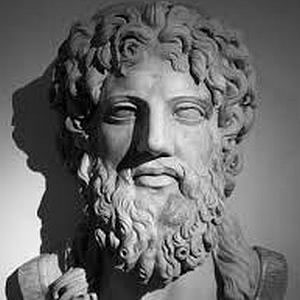 Who is Zeus?
Zeus is the sky and thunder god in ancient Greek religion. He rules as king of the gods of Mount Olympus. His name is cognate with the first element of his Roman equivalent Jupiter. His mythologies and powers are similar, though not identical, to
those of Indo-European deities such as Indra, Jupiter, Perkanas, Perun, Thor, and Odin. Zeus is the child of Cronus and Rhea, the youngest of his siblings to be born, though sometimes reckoned the eldest as the others required disgorging from Cronus's stomach. In most traditions, he is married to Hera, by whom he is usually said to have fathered Ares, Hebe, and Hephaestus.
Who is GOD?In monotheism and henotheism, God is conceived as the Supreme Being and principal object of faith. The concept of God as described by theologians commonly includes the attributes of omniscience (infinite knowledge), omnipotence (unlimited power)
omnipresence (present everywhere), omnibenevolence (perfect goodness), divine simplicity, and eternal and necessary existence.
In theism, God is the creator and sustainer of the universe
In deism, God is the creator, but not the sustainer, of the universe
Monotheism is the belief in the existence of one God or in the oneness of God
In pantheism, God is the universe itself
In atheism, God is purported not to exist, while deemed unknown or unknowable within the context of agnosticism.