Explore More
TruthSurge Celsus Gospel Philo Sin JESUS
JESUS
Search Google Search Explore Topics
 Who are TruthSurge?
I am a Youtuber who enjoys making videos on music, religion and other stuff. I am an ex-Christian atheist with many thoughts and ideas to share concerning Christianity and its origins.
 Who was Celsus?
Celsus was a 2nd-century Greek philosopher and opponent of early Christianity. He is known for his literary work, On The True Doctrine (or Discourse, Account), which survives exclusively in quotations from it in Contra Celsum, a refutation written in 248 by Origen of Alexandria. On The True Doctrine is the earliest known comprehensive criticism of Christianity. It was written c. 175 to 177, shortly after the death of Justin Martyr (who was possibly the first Christian apologist), and was probably a response to his work.
 What is Gospel?
Gospel is the Old English translation of Greek evangelion, meaning "good news". It originally meant the Christian message itself, but in the 2nd century it came to be used for the books in which the message was set out. The four gospels of the New Testament: Matthew, Mark, Luke and John are the main source of information on the life of Jesus.
 Who was Philo?
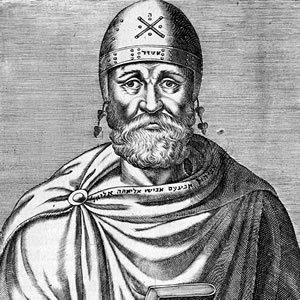
Philo of Alexandria (20 BC-50 AD) was a Hellenistic Jewish philosopher who lived in Alexandria, in the Roman province of Egypt. Philo used philosophical allegory to harmonize Jewish scripture, mainly the Torah, with Greek philosophy. His method followed the practices of both Jewish exegesis and Stoic philosophy. His allegorical exegesis was important for some Christian Church Fathers, but he had very little reception history within the Rabbinic Judaism. He adopted allegorical instead of literal interpretations of the Hebrew Bible. Some scholars hold that his concept of the Logos as God's creative principle influenced early Christology.
What is Sin?In Abrahamic contexts, sin is the act of violating God's will. Sin can also be viewed as anything that violates the ideal relationship between an individual and God; or as any diversion from the ideal order for human living. To sin has been defined as "to miss the mark". Sins fall in a spectrum from minor errors to deadly misdeeds. Catholicism regards the least corrupt sins as venial sins which are part of human living and carry immediate consequences on earth, and, if unrepented for, more painful purgation, assuming the person is destined to heaven, as it is written in the formation letter "Purgatory", "most of the early Fathers of the Church speak of a cleansing fire, though we cannot tell whether this means actual or spiritual fire." Conversely, sins of great evil are mortal sins which bring the consequence of hell if they are not addressed either through an act of perfect contrition or going to confession about them.