1101 views
·
Last viewed: 1 day ago
Uploaded: 14 Jul 2017 (9 years ago) · Shared: 06 Feb 2019
Duration: 2:23
Uploaded: 14 Jul 2017 (9 years ago) · Shared: 06 Feb 2019
Duration: 2:23
Video Description
Explore the fascinating early history of Christian theology in this insightful video presented by approvedofGod. Uncover how the pivotal phrase "God from God, Light from Light" entered the Nicene
Explore More
approvedofGod Church Father Nicene Creed Eusebius Church Pagan Philo GODSearch Google Search Explore Topics
 Who are approvedofGod?
I am here to teach all people, but especially the "body of Christ" (the Church), that the bible is sufficient for what we believe. Throughout the centuries, men have brought many doctrines into the church that have caused confusion and separation. My desire and goal is to clarify some of these errors and bring all Christians back to the basics of the Bible.
What is Church Father?The Church Fathers, Early Church Fathers, Christian Fathers, or Fathers of the Church are ancient and influential Christian theologians and writers. There is no definitive list. The era of these scholars who set the theological and scholarly foundations of Christianity largely ended by AD 700. In the past, the Church Fathers were regarded as authoritative, and more restrictive definitions were used which sought to limit the list to authors treated as such.
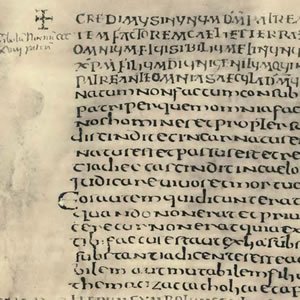 What is Nicene Creed?
The Nicene Creed is a statement of belief widely used in Christian liturgy. It is called Nicene because it was originally adopted in the city of Nicaea (present day Iznik, Turkey) by the First Council of Nicaea in 325 CE. In 381, it was amended at the First Council of Constantinople, and the amended form is referred to as the Nicene or the Niceno-Constantinopolitan Creed.
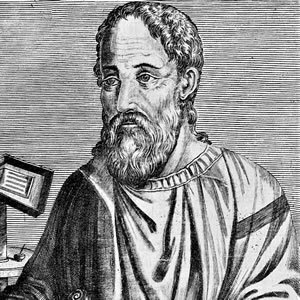 Who was Eusebius?
Eusebius of Caesarea (260-340 AD) was a historian of Christianity, exegete, and Christian polemicist. He became the bishop of Caesarea Maritima about 314 AD. Together with Pamphilus, he was a scholar of the Biblical canon and is regarded as an extremely learned Christian of his time. During the Council of Antiochia (325) he was excommunicated for subscribing to the heresy of Arius (Arianism), and thus withdrawn during the First Council of Nicaea where he accepted that the Homoousion referred to the Logos. Never recognized as a saint, he became counselor of Constantine the Great, and with the bishop of Nicomedia he continued to polemicize against Saint Athanasius of Alexandria, Church Fathers, since he was condemned in the First Council of Tyre in 335.
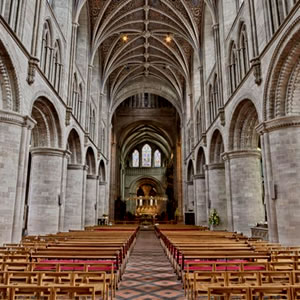 What is the Church?
A church is a building used for Christian worship services and Christian activities. The earliest identified Christian church is a house church founded between 233 AD and 256 AD. The word church also describes a body or assembly of Christian believers, while "the Church" refers to the worldwide Christian religious community.
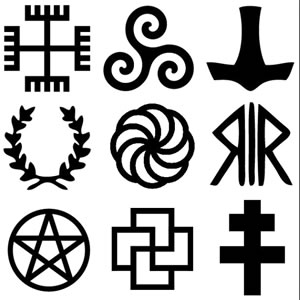 What is Pagan?
Paganism is a term first used in the fourth century by early Christians. It was applied on populations of the Roman Empire who practiced polytheism, either because they were increasingly rural and provincial relative to the Christian population or because they were not milites Christi (soldiers of Christ). Alternate terms in Christian texts for the same group were hellene, gentile, and heathen. Pagan and paganism were pejorative terms for the same polytheistic group, implying its inferiority. Paganism has broadly connoted the "religion of the peasantry", and for much of its history was a derogatory term. Both during and after the Middle Ages, pagan was a pejorative term that was applied to any non-Abrahamic or unfamiliar religion, and the term presumed a belief in false god(s).
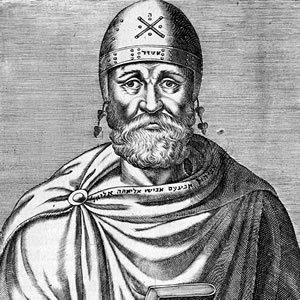 Who was Philo?
Philo of Alexandria (20 BC-50 AD) was a Hellenistic Jewish philosopher who lived in Alexandria, in the Roman province of Egypt. Philo used philosophical allegory to harmonize Jewish scripture, mainly the Torah, with Greek philosophy. His method followed the practices of both Jewish exegesis and Stoic philosophy. His allegorical exegesis was important for some Christian Church Fathers, but he had very little reception history within the Rabbinic Judaism. He adopted allegorical instead of literal interpretations of the Hebrew Bible. Some scholars hold that his concept of the Logos as God's creative principle influenced early Christology.
Who is GOD?In monotheism and henotheism, God is conceived as the Supreme Being and principal object of faith. The concept of God as described by theologians commonly includes the attributes of omniscience (infinite knowledge), omnipotence (unlimited power), omnipresence (present everywhere), omnibenevolence (perfect goodness), divine simplicity, and eternal and necessary existence. In theism, God is the creator and sustainer of the universe In deism, God is the creator, but not the sustainer, of the universe Monotheism is the belief in the existence of one God or in the oneness of God In pantheism, God is the universe itself In atheism, God is purported not to exist, while deemed unknown or unknowable within the context of agnosticism.