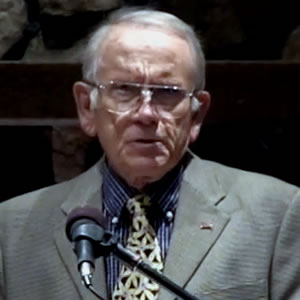
Bible differs when Jesus became God's Son: Birth, Baptism, Resurrection or Eternity - Charles Hedrick

   8:21
647 views  ·  Last viewed: 7 hrs ago
Uploaded: 18 Jul 2018   (8 years ago)  ·  Shared: 19 Jul 2018

Video Description (from Youtube)

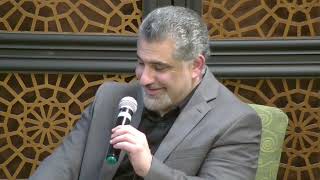
Charles Hedrick (born 11 April 1934) is a distinguished Professor Emeritus at Missouri State University whose research interests include Christian Origins, Jesus of Nazareth, New Testament

Introduction, Parables, Gnosticism etc. He has written books in the areas of Gospels, Nag Hammadi, Gnosticism, the Graeco-Roman world and related topics.
Link to Charles Hedrick videos:
http://muslimprophets.com/videos.php?search=Charles+Hedrick

Link to the original video:
https://www.youtube.com/watch?v=CB3bQkxqP_g

DISCLAIMER

We do NOT own the video materials and all credits belong to the respectful owners. In case of copyright issues, please contact us immediately for further credits or clip delete.

COPYRIGHT

Under Section 107 of the Copyright Act 1976, allowance is made for 'fair use' for purposes such as criticism, comment, news reporting, teaching, scholarship and research. Fair use is a use permitted by copyright statute that might otherwise be infringing. Non-profit, educational or personal use tips the balance in favour of fair use.

DISCLAIMER
All videos are shared for educational and information purposes only. All videos are hosted and viewable on Youtube servers. Video titles are generated using the original video title; overall content theme including actual dialogue and speech (Transcript); and A.I-based recommendations with a focus on SEO, keyword density, and internal search functions. The video title does not represent the views held by the Youtube video uploader, or any individual, organisation or business.

If you spot any mistake, omission or give feedback, kindly Contact Us with details

Overview & Key Concepts


Who is Charles Hedrick?

Charles Hedrick (born 1934) is a distinguished Professor Emeritus at Missouri State University. Hedrick's research interests include Christian

Origins, Jesus of Nazareth, New Testament Introduction, Parables, Gnosticism etc. He has written books in the areas of Gospels, Nag Hammadi, Gnosticism, the Graeco-Roman world and related topics.

What is Resurrection?

Resurrection is the concept of coming back to life after death. In a number of ancient religions, a dying-and-rising god is a deity which dies and

resurrects. The death and resurrection of Jesus, an example of resurrection, is the central focus of Christianity. As a religious concept, it is used in two distinct respects: a belief in the resurrection of individual souls that is current and ongoing (Christian idealism, realized eschatology), or else a belief in a singular resurrection of the dead at the end of the world. The resurrection of the dead is a standard eschatological belief in the Abrahamic religions.

What is Baptism?

Baptism is a Christian sacrament of admission and adoption, almost invariably with the use of water into Christianity. The canonical Gospels report

that Jesus was baptized. Baptism has been called a holy sacrament and an ordinance of Jesus Christ. In some denominations, baptism is also called christening, but for others the word 'christening' is reserved for the baptism of infants. Baptism has also given its name to the Baptist churches and denominations. The usual form of baptism among the earliest Christians was for the candidate to be immersed, either totally (submerged completely under the water) or partially (standing or kneeling in water while water was poured on him or her).

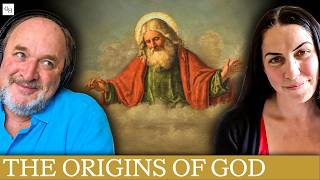
Who is GOD?

In monotheism and henotheism, God is conceived as the Supreme Being and principal object of faith. The concept of God as described by theologians

commonly includes the attributes of omniscience (infinite knowledge), omnipotence (unlimited power), omnipresence (present everywhere), omnibenevolence (perfect goodness), divine simplicity, and eternal and necessary existence.
<ul>
<li>In theism, God is the creator and sustainer of the universe</li>
<li>In deism, God is the creator, but not the sustainer, of the universe</li>
<li>Monotheism is the belief in the existence of one God or in the oneness of God</li>
<li>In pantheism, God is the universe itself</li>
<li>In atheism, God is purported not to exist, while deemed unknown or unknowable within the context of agnosticism. </li>
</ul>

Frequently Asked Questions


1.Does the resurrection of Jesus prove he is God?

No. Jesus himself raised people after their death:

1. Jairus' daughter (Mark 5:35-43)
2. Son of a widow at Nain (Luke 11:11-17)
3. Lazarus, who was dead for four days (John 11-1-44)
4. Women received their dead by resurrection (Hebrews 11:35)
5. Elijah raised a widows son from death (I Kings 17:17-24)

Therefore, the resurrection itself would not make Jesus unique or divine even.


2.How did the early Jewish-Christians view Jesus' resurrection?

The earliest Jewish-Christians did not believe that the resurrection meant Jesus was God, but rather that he was a righteous man approved by God through miracles, wonders, and signs. Based on texts like Acts 2:22-24, they maintained the theological view that Jesus had been raised by God, not that he was the Creator himself.


3.What is the significance of Jesus' resurrection?

The resurrection of Jesus is of crucial importance to Christian doctrine. The Christian religion was founded many years after the death of Jesus based on the beliefs in his resurrection. Put simply, if there was no resurrection story, their would be no Christianity.

The reported resurrection of Jesus serves as the absolute foundational cornerstone of orthodox Christian theology and identity. Historical scholars note that institutional Christianity was organized years after Jesus' death primarily upon the early community's collective belief that he had triumphed over death. Academic consensus agrees that without the preservation and widespread propagation of this resurrection narrative, Christianity as an independent world religion would not exist.


4.Did Jesus' disciple question his resurrection?

Yes, the New Testament canonical records openly document that even members of Jesus' inner circle of chosen followers struggled to accept his physical resurrection. In the Gospel of Matthew (Matthew 28:17), the text captures his final appearance on a mountain in Galilee, explicitly stating that when the disciples saw him, they worshipped him, 'but some doubted'. Modern historians view this candid admission as highly credible, showing that belief in the resurrection was complex even for early eyewitnesses.


5.What is the credibility of the Jesus' resurrection?

The resurrection is the most controversial creed issue facing Christianity today. There are numerous explanations for the resurrection, all of which are contested. There is no concensus if Jesus' tomb was found empty or not; whether disciples saw anything or not; even if anything happened or not.


Videos on Baptism (6)

Video: In Matthew 28:19, Baptisms should have been in the Name of Father, Son and Holy Spirit - Hashim vs Spanish Lady 59:47
Video: The Pre-Christian Origins of Baptism | ReligionForBreakfast 5:01
Video: Baptism is from Ancient Egyptian celebration of Monsoon floods, rain and water - Doug Michael 0:45
Video: Jesus' Crucifixion is plagarized from John The Baptist's baptism - Richard Carrier 1:34
Video: Bible differs when Jesus became God's Son: Birth, Baptism, Resurrection or Eternity - Charles Hedrick 8:21
Video: In 90 AD, Docetism held Jesus became divine at his Baptism, and lost divinity on death - Lorence Yufa | Milwaukee Atheists 1:22

EXPLORE TOPICS : RESURRECTION | 51 CHARLES HEDRICK | 20 BAPTISM | 8 GOD | 0   JESUS

Latest videos  •  6,061 videos  •  0 viewed/24 hour

SUBSCRIBE

Receive the latest news and updates by email - Subscribe Now!
About  |  Q&A  |  Contact Us    •    Terms  |  Privacy  |  Disclaimer  |  Sitemap
Connect:      Facebook  |    Twitter  |    Youtube
MuslimProphets.com is an educational website on the Prophets of God: David, Noah, Abraham, Moses, Jesus and Muhammad, who established the Abrahamic faiths of Judaism, Christianity and Islam. MuslimProphets.com explores contemporary social themes through Scripture, Evidences, Photo, Video, Maps, Current Affairs, Debate and 'alternative' Views held by Theologians, Apologists, Scholars and Street Preachers. Take a Site Tour

In accordance with Islamic etiquette, all prophet names should be followed with 'Peace Be Upon Him (PBUH)'. This is omitted to minimise text.

DISCLAIMER: All website content is for general information and educational purposes only and available in the public domain. Whilst all information comes from sources believed to be reliable, this cannot be guaranteed. External links are provided as a convenience and for informational purposes only. They do not constitute endorsement or approval for any products, services or comments by organizations or individuals. Title and Text links may be edited for external SEO, internal site and keyword search purposes. We bear no responsibility for the accuracy, legality, or content found on any external website or its subsequent links. Unless indicated, all images and content is licensed under a Creative Commons Attribution License distributed by Wikipedia, Wikimedia Commons, Pixabay, Pxhere, Pexels, Unsplash, Flickr and others. All Torah, Psalms, Old and New Testament Bible quotes are from the King James Version (KJV) Holy Bible in the public domain. All Quran quotes are from Taqi-ud-Din al-Hilali/Muhsin Khan English Quran translation.

ALWAYS DO YOUR OWN RESEARCH. If you spot any mistake, error or omission of information, contact us so we can correct it.