641 views
·
Last viewed: 6 hrs ago
Uploaded: 07 Jun 2025 (1 year ago) · Shared: 12 Jun 2025
Duration: 25:57
Uploaded: 07 Jun 2025 (1 year ago) · Shared: 12 Jun 2025
Duration: 25:57
Youtube Description
“Hajj is just a pagan ritual” — that’s the claim flying around. Hindu origins? Idol worship? Pre-Islamic copy-paste? Time to break this downproperly.
In this podcast: 👇
🕋 Is going around the Kaaba really a pagan thing?
🪨 What’s the deal with the Black Stone — idol or something else?
🧖♂️ Pagans wore Ihram too? For real?
📜 Did Islam just copy old Arab rituals?
🤔 Why doesn't the Quran mention OTHER PROPHETS going for Hajj?
Let’s get into all the viral claims — and what history actually says.
#hajj #islam #podcast
Explore More
Pagan Kabah HajjSearch Google Search Explore Topics
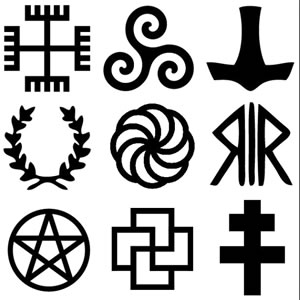 What is Pagan?
Paganism is a term first used in the fourth century by early Christians. It was applied on populations of the Roman Empire who practiced polytheism, either because they were increasingly rural and provincial relative to the Christian population or because they were not milites Christi (soldiers of Christ). Alternate terms in Christian texts for the same group were hellene, gentile, and heathen. Pagan and paganism were pejorative terms for the same polytheistic group, implying its inferiority. Paganism has broadly connoted the "religion of the peasantry", and for much of its history was a derogatory term. Both during and after the Middle Ages, pagan was a pejorative term that was applied to any non-Abrahamic or unfamiliar religion, and the term presumed a belief in false god(s).
 What is Kabah?
The Black Stone (al-Hajaru al-Aswad, "Black Stone") is a rock set into the eastern corner of the Kaaba, the ancient building located in the center of the Grand Mosque in Mecca, Saudi Arabia. It is revered by Muslims as an Islamic relic which, according to Muslim tradition, dates back to the time of Adam and Eve. The stone was venerated at the Kaaba in pre-Islamic pagan times. According to Islamic tradition, it was set intact into the Kaaba's wall by the prophet Muhammad in 605 CE, five years before his first revelation. Since then it has been broken into fragments and is now cemented into a silver frame in the side of the Kaaba. Muslim pilgrims circle the Kaaba as a part of the tawaf ritual during the hajj and many try to stop and kiss the Black Stone, emulating the kiss that Islamic tradition records that it received from Muhammad. Muslims do not worship the Black Stone.
 What is Hajj?
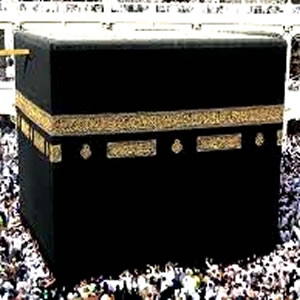
The Hajj is an annual Islamic pilgrimage to Mecca, Saudi Arabia, the holiest city for Muslims. It is a mandatory religious duty for Muslims that must be carried out at least once in their lifetime by all adult Muslims who are physically and financially capable of undertaking the journey, and can support their family during their absence. In Islamic terminology, Hajj is a pilgrimage made to Kaaba, the "House of God", in the sacred city of Mecca in Saudi Arabia. The rites of Hajj are performed over 5 or 6 days. It is a demonstration of the solidarity of the Muslim people, and their submission to God (Allah).