0 views
·
Last viewed: 57 years ago
Uploaded: 16 Jan 2026 (9 months ago) · Shared: 01 Oct 2026
Duration: 6:00
Uploaded: 16 Jan 2026 (9 months ago) · Shared: 01 Oct 2026
Duration: 6:00
Youtube Description:
– Complete talk "James: The Brother of Jesus (peace be upon him)":
– More Professor Dr. Ali Ataie videos:
This talk was delivered at the Muslim Community Center - East Bay (MCC East Bay) in Pleasanton, California on January 10, 2026.
Ustadh Ali Ataie is a perennial student and researcher who has been involved in interfaith activities for over two decades. He holds a Master's in biblical studies, with a focus on New Testament and biblical languages. He also has a PhD in cultural and historical religious studies from the Graduate Theological Union. His doctoral work focused on Muslim hermeneutics of biblical texts, especially the Gospel of John. He lives in San Ramon, California, with his wife, Roya, and three daughters. Learn more about him at
– More Professor Dr. Ali Ataie videos:
The "Islamic dilemma" is a name given to a specific apologetic argument used in Christian-Muslim discourse. The argument posits a logical inconsistency in the Islamic view of previous scriptures (the Torah and the Gospel).
The Core Argument
The dilemma, often presented by Christian apologists, can be summarized as follows: the Quran affirms the divine origin, authority, and preservation of the earlier scriptures (the Torah and the Gospel/Injil). This leads to two possible scenarios, both of which, according to the argument's proponents, suggest that Islam is false:
- Scenario 1: The previous scriptures are authentic. If the Torah and the Gospels (Injil) in Christian and Jewish hands are the inspired, preserved Word of God, then Islam is false because it contradicts the core doctrines found within them (e.g., the Trinity, the divinity, death, and resurrection of Jesus).
- Scenario 2: The previous scriptures are corrupted. If the Torah and the Gospels are corrupted (a common position held by many Muslims), Islam is still considered false by the argument's proponents because the Quran itself affirms their authority and commands people to judge by what is revealed in them (e.g., Surah 5:47, Surah 10:94).
Therefore, proponents argue, the Quran's claims about previous scriptures create a self-defeating contradiction.
Muslim Responses and Counterarguments
Muslim scholars and apologists have responded to this argument, stating that it falls short and is based on a misunderstanding of the Quranic position. Common counterarguments include:
- The Quran as a "supreme authority": The Quran describes itself as a "guardian" or "supreme authority" (muhaymin) over previous scriptures, meaning it is the final criterion by which truth is separated from falsehood in earlier texts, not that every single word in existing Bibles is affirmed.
- Corruption of teachings, not necessarily the text: Early Muslim scholars often suggested that the corruption (tahrif) was of the meaning or interpretation of the texts, or involved a small group of people hiding or twisting words, not a total, worldwide corruption of the entire physical text itself.
- "Injil" is not the New Testament Gospels: Some argue that the "Injil" mentioned in the Quran is a specific, single, uncorrupted book of revelation given to Jesus that is now lost, distinct from the four canonical Gospels written by different authors.
- Historical Context: The Qur'an's commands to the People of the Book to follow their scriptures were aimed at the communities in Muhammad's time, perhaps referring to the laws and general guidance within those scriptures that were still considered valid at that point.
The "Islamic dilemma" remains a common point of debate and discussion in interfaith dialogue between some Christian and Muslim communities
– More Professor Dr. Ali Ataie videos:
More MCC East Bay:
Calendar of Events:
Weekly Updates:
Support MCC:
MCC Podcast:
– Complete talk "James: The Brother of Jesus (peace be upon him)":
– More Professor Dr. Ali Ataie videos:
This talk was delivered at the Muslim Community Center - East Bay (MCC East Bay) in Pleasanton, California on January 10, 2026.
Ustadh Ali Ataie is a perennial student and researcher who has been involved in interfaith activities for over two decades. He holds a Master's in biblical studies, with a focus on New Testament and biblical languages. He also has a PhD in cultural and historical religious studies from the Graduate Theological Union. His doctoral work focused on Muslim hermeneutics of biblical texts, especially the Gospel of John. He lives in San Ramon, California, with his wife, Roya, and three daughters. Learn more about him at
– More Professor Dr. Ali Ataie videos:
The "Islamic dilemma" is a name given to a specific apologetic argument used in Christian-Muslim discourse. The argument posits a logical inconsistency in the Islamic view of previous scriptures (the Torah and the Gospel).
The Core Argument
The dilemma, often presented by Christian apologists, can be summarized as follows: the Quran affirms the divine origin, authority, and preservation of the earlier scriptures (the Torah and the Gospel/Injil). This leads to two possible scenarios, both of which, according to the argument's proponents, suggest that Islam is false:
- Scenario 1: The previous scriptures are authentic. If the Torah and the Gospels (Injil) in Christian and Jewish hands are the inspired, preserved Word of God, then Islam is false because it contradicts the core doctrines found within them (e.g., the Trinity, the divinity, death, and resurrection of Jesus).
- Scenario 2: The previous scriptures are corrupted. If the Torah and the Gospels are corrupted (a common position held by many Muslims), Islam is still considered false by the argument's proponents because the Quran itself affirms their authority and commands people to judge by what is revealed in them (e.g., Surah 5:47, Surah 10:94).
Therefore, proponents argue, the Quran's claims about previous scriptures create a self-defeating contradiction.
Muslim Responses and Counterarguments
Muslim scholars and apologists have responded to this argument, stating that it falls short and is based on a misunderstanding of the Quranic position. Common counterarguments include:
- The Quran as a "supreme authority": The Quran describes itself as a "guardian" or "supreme authority" (muhaymin) over previous scriptures, meaning it is the final criterion by which truth is separated from falsehood in earlier texts, not that every single word in existing Bibles is affirmed.
- Corruption of teachings, not necessarily the text: Early Muslim scholars often suggested that the corruption (tahrif) was of the meaning or interpretation of the texts, or involved a small group of people hiding or twisting words, not a total, worldwide corruption of the entire physical text itself.
- "Injil" is not the New Testament Gospels: Some argue that the "Injil" mentioned in the Quran is a specific, single, uncorrupted book of revelation given to Jesus that is now lost, distinct from the four canonical Gospels written by different authors.
- Historical Context: The Qur'an's commands to the People of the Book to follow their scriptures were aimed at the communities in Muhammad's time, perhaps referring to the laws and general guidance within those scriptures that were still considered valid at that point.
The "Islamic dilemma" remains a common point of debate and discussion in interfaith dialogue between some Christian and Muslim communities
– More Professor Dr. Ali Ataie videos:
More MCC East Bay:
Calendar of Events:
Weekly Updates:
Support MCC:
MCC Podcast:
Explore More
Search Google Search Explore Topics Ali Ataie Gospel GOD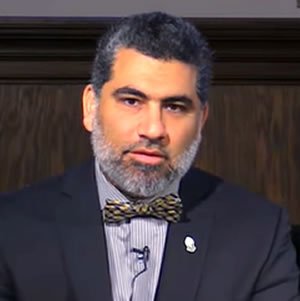 Who is Ali Ataie?
Ali Ataie is a teacher, researcher who specializes in interfaith work. He has been involved in many dialogues and debates with Christian scholars regarding famous topics including the resurrection of Jesus and the Prophethood of Muhammad. As a lecturer and instructor, he visited California Polytechnic State University, California State University East Bay, UC Davis, UC Berkeley, and UCLA.
 What is Gospel?
Gospel is the Old English translation of Greek evangelion, meaning "good news". It originally meant the Christian message itself, but in the 2nd century it came to be used for the books in which the message was set out. The four gospels of the New Testament: Matthew, Mark, Luke and John are the main source of information on the life of Jesus.
 Who is GOD?
In monotheism and henotheism, God is conceived as the Supreme Being and principal object of faith. The concept of God as described by theologians commonly includes the attributes of omniscience (infinite knowledge), omnipotence (unlimited power), omnipresence (present everywhere), omnibenevolence (perfect goodness), divine simplicity, and eternal and necessary existence. In theism, God is the creator and sustainer of the universe In deism, God is the creator, but not the sustainer, of the universe Monotheism is the belief in the existence of one God or in the oneness of God In pantheism, God is the universe itself In atheism, God is purported not to exist, while deemed unknown or unknowable within the context of agnosticism.