386 views
·
Last viewed: 2 weeks ago
Uploaded: 25 Jan 2017 (10 years ago) · Shared: 11 Mar 2018
Duration: 12:14
Uploaded: 25 Jan 2017 (10 years ago) · Shared: 11 Mar 2018
Duration: 12:14
Youtube Description
► Subscribe Now: https://goo.gl/2tmfa8 ► Donate: http://www.gofundme.com/MercifulServantVideos ► Become A Patron:https://www.patreon.com/mercifulservant
► Rational Believer: https://www.youtube.com/channel/UCe9vItWRBhVS02qWncdJBlQ
If you like our content and would like to stay updated please subscribe and press the bell (next to the subscribe button) to receive updates and notifications!
MS Website: http://www.themercifulservant.com
MS Facebook: https://www.facebook.com/MercifulServantHD
MS Twitter: https://twitter.com/MercifulServnt
MS Instagram: http://instagram.com/mercifulservant
MS SoundCloud: http://www.soundcloud.com/mercifulservant
Personal Facebook: https://www.facebook.com/mercifulservant
PLEASE NOTE:
Any of the views expressed by the speakers do not necessarily represent the views of The Merciful Servant or any other projects it may have or intend to do. The Merciful Servant and it's affiliates do not advocate nor condone any unlawful activity towards any individual or community.
COPYRIGHT NOTICE:
We allow anyone to translate our content and reshare videos but the video must remain branded under themercifulservant (with our logo and channel link) all speakers and artists should also be credited in the description,
Video Footage: All footage used in our videos are licensed to MercifulServant Media, and you are not permitted to cut clips and use in your own videos (without permission from the original owner of the stock footage or images) Please contact us for more information. you must also seek permission from the footage owner before monetisation of any content.
Explore More
Islam KabahSearch Google Search Explore Topics
 What is Islam?
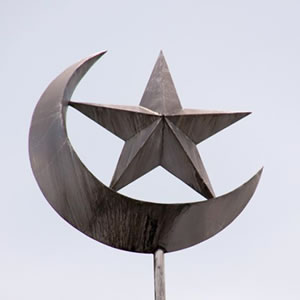
One of the major religions of the world, Islam literally translates to "submission," as a follower of Islam (Muslims) devotes their life to that of their God. The religion began with the teachings of Muhammad in the 7th century. The theology of Islam is based on the Qur'an, which was given to Muhammad by God. Some of the major fundamental principles of Islam include the Five Pillars, which hope to unite all Muslims into a community. Two different factions of Muslims exist - the majority are known as Sunni, with a small percentage known as Shi'a - both predominantly reside throughout the Middle East. Muhammad died in 632 AD and the religion of Islam formally started after his death. The Quran was formally compiled and finalised in 650 AD, prior to which it was 'memorised' and written across many parchments.
 What is Kabah?
The Black Stone (al-Hajaru al-Aswad, "Black Stone") is a rock set into the eastern corner of the Kaaba, the ancient building located in the center of the Grand Mosque in Mecca, Saudi Arabia. It is revered by Muslims as an Islamic relic which, according to Muslim tradition, dates back to the time of Adam and Eve. The stone was venerated at the Kaaba in pre-Islamic pagan times. According to Islamic tradition, it was set intact into the Kaaba's wall by the prophet Muhammad in 605 CE, five years before his first revelation. Since then it has been broken into fragments and is now cemented into a silver frame in the side of the Kaaba. Muslim pilgrims circle the Kaaba as a part of the tawaf ritual during the hajj and many try to stop and kiss the Black Stone, emulating the kiss that Islamic tradition records that it received from Muhammad. Muslims do not worship the Black Stone.