35:17
654 views
·
Last viewed: 15 hrs ago
Uploaded: 30 Jul 2015 (11 years ago) · Shared: 05 Dec 2017
Video Description (from Youtube)
EXPLORE TOPICS :
CHRISTMAS |
37
DECEMBER 25TH |
7
JOHN SPONG |
8
ISAIAH |
40
JEWISH |
224
JEWS |
140
JUDAISM |
74
 JESUS
JESUS
JESUS
Overview & Key Concepts
Who is John Spong?
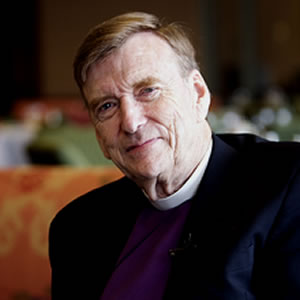 John Shelby "Jack" Spong (born 1931) is a retired American bishop of the Episcopal Church. From 1979 to 2000 he was Bishop of Newark. He is a liberal
Christian theologian, religion commentator and author. He calls for a fundamental rethinking of Christian belief away from theism and traditional doctrines. Spong attended the University of North Carolina at Chapel Hill, where he was elected to the Phi Beta Kappa honor society and graduated with a Bachelor of Arts degree in 1952. He received his Master of Divinity degree from the Virginia Theological Seminary in 1955. He has had honorary Doctor of Divinity degrees conferred on him by Virginia Theological Seminary and Saint Paul's College, Virginia, as well as an honorary Doctor of Humane Letters conferred by Muhlenberg College in Pennsylvania. Spong has also been a strong proponent of the church reflecting the changes in society at large. Towards these ends, he calls for a new Reformation, in which many of Christianity's basic doctrines should be reformulated.
What is Christmas?
 Christmas is an annual festival commemorating the birth of Jesus Christ. It is observed primarily on December 25 as a religious and cultural
celebration among billions of people around the world.
Christmas Day is a public holiday in many of the world's nations, is celebrated religiously by a majority of Christians, as well as culturally by many non-Christians, and forms an integral part of the holiday season centered around it. Although the month and date of Jesus' birth are unknown, by the early-to-mid fourth century the Western Christian Church had placed Christmas on December 25, a date that was later adopted in the East. Today, most Christians celebrate on December 25 in the Gregorian calendar, which has been adopted almost universally in the civil calendars used in countries throughout the world.
What is Isaiah?
 Book of Isaiah, or Isaiah is the first of the Latter Prophets in the Hebrew Bible and the first of the Major Prophets in the Christian Old Testament
It is identified by a superscription as the words of the 8th-century BCE prophet Isaiah ben Amoz, but there is extensive evidence that much of it was composed during the Babylonian captivity and later. The consensus through most of the 20th century, that the book comprises three separate collections of oracles: Proto-Isaiah (chapters 1-39), containing the words of Isaiah; Deutero-Isaiah (chapters 40-55), the work of an anonymous 6th-century BCE author writing during the Exile; and Trito-Isaiah (chapters 56-66), composed after the return from Exile. While virtually no scholars today attribute the entire book, or even most of it, to one person, the book's essential unity has become a focus in current research.
What is Jewish?
 Judaism is an Abrahamic, monotheistic, ethnic religion that comprises the collective spiritual, cultural, and legal traditions of the Jewish people
Religious Jews regard Judaism as their means of observing the Mosaic covenant, which they believe was established between God and the Jewish people. The religion is considered one of the earliest monotheistic religions. Jewish religious doctrine encompasses a wide body of texts, practices, theological positions, and forms of organization. Among Judaism's core texts is the Torah - the first five books of the Hebrew Bible - and a collection of ancient Hebrew scriptures. The Tanakh, known in English as the Hebrew Bible, has the same books as Protestant Christianity's Old Testament, with some differences in order and content.
Frequently Asked Questions
1.How did the Early Jewish-Christians practise their religion?
2.Did Jesus claim to be 'King of the Jews'?
3.How was Jesus Jewish?
4.What did early Jewish-Christians think of Apostle Paul?
5.Were the early Christians Jews?
6.Did Saul kill the early Jewish-Christians?
7.How did the Jews view Apostle Paul?
8.According to Apostle Paul, why did God give Jews the Torah?
9.How did Apostle Paul differ with the Jewish Rabbis?
10.How did the early Jewish-Christians view Jesus' resurrection?
11.Who seperated Christianity from Judaism?
12.Why Jews do not accept Jesus as the Messiah?
13.What does the Quran say about Jews and Christians?
14.How was Apostle Paul viewed by the Jews?
15.Does the Quran tell Jews and Christians to refer to their Scriptures (Torah and Bible)?
16.In the time of Jesus, what qualities would identify the Messiah, to the Jews?
17.How did the 1st century Jews view the Holy Spirit?
18.Jesus claimed to be God. The Jews must have understood this, as they accused him of blasphemy and were ready to stone him?
19.Why do Jews let the hair grow on the sides of there head?
20.How did Jews view the Greek Bible (Septuagint)?
21.In the time of Jesus, how were the Jews viewed by the Greeks?
Videos on Christmas (32)
 28:45
28:45
452
1420070400
1787405940
Is God Jesus with a birthdate on Christmas?
001725
1
 11:44
11:44
854
1452384000
1787410158
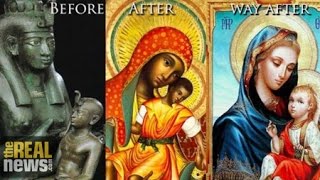
The African Origins of Christmas - Real News
000704
2
477 views
20:04
477
1480896000
1787188283
What is the history of Christmas?
001204
3
 8:55
8:55
559
1496793600
1787261869
Why is Christmas on December 25th? | ReligionForBreakfast
000535
4
 59:26
59:26
579
1496793600
1787342407
Pagan Origins of Christmas Exposed - Yahweh Ministry
003566
5
 1:56:00
637
1501545600
1787407398
Pagan Origins of Easter and Christmas - Jim Staley
006960
6
 1:00:07
613
1510767841
1787396943
Origins of Christmas: Early Church Fathers condemned Birthdays - Ken Humphreys
003607
7
 35:17
35:17
654
1512501630
1787356971
From Isaiah 60:3, Matthew copies the Christmas Story. Baby Jesus born to Joseph, a fatherly figure invented to reconcile warring Jewish tribes - John Spong
002117
8
 1:04
1:04
413
1513189470
1787364806
Origins of Christmas in 60 Minutes - Ken Humphreys
000064
9
 28:26
28:26
895
1513217179
1787394268
Christmas on 25 December was a Pagan festival. Early Christians never knew Jesus' exact birth date - BeyondTV
001706
10
 6:18
6:18
435
1513414893
1786531357
Origin of the Christmas Tree - Is it Pagan?
000378
11
 1:07:48
629
1513437594
1787368576
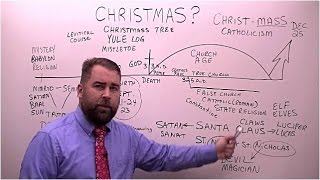
Christmas and Pagan Influences - Robert Breaker
004068
12
 1:02:08
565
1515151321
1787263839
Did You Know Christmas is Pagan? - Yahweh Ministry
003728
13
 0:42
0:42
767
1528562125
1787276317
Christmas and Easter mark the Winter Solstice and Equinox (Astrology) - Doug Michael
000042
14
 3:06
3:06
888
1528561274
1787409751
Christmas, 25th December was Ancient Pagan festival. Church absorbed it into Christian theology - Doug Michael
000186
15
 1:14
1:14
618
1528559944
1787400517
Christmas traditions originate in Scandinavia. Yule, God of fertility offered human sacrifices - Doug Michael
000074
16
 22:53
22:53
589
1535662687
1787165617
Pagan Origins of Christmas - Abdullah Hakim Quick
001373
17
425 views
25:42
425
1536830452
1787246914
Origins of Christmas, Bible & Pagan Gods
001542
18
1004 views
41:13
1004
1544291535
1787380790
Significance of Christmas - Bilal Philips
002473
19
287 views
9:12
287
1544954432
1787047103
True Meaning of Christmas - Farrakhan
000552
20
 4:46
4:46
1286
1545341604
1787264787
In Jeremiah 10:3, the Christmas Tree is symbolic of the Christian Trinity, not Paganism - Tony Costa
000286
21
 34:14
34:14
647
1545834832
1787366508
Christmas, December 25th is under the control of the Devil Satan and Pagan Culture
002054
22
 1:05:50
456
1546174315
1787330489
Christmas, a global Social Engineering experiment - Leo Muhammad (NOI)
003950
23
236 views
30:51
236
1546332467
1786530609
The Real Christmas Story - Mike Aus
001851
24
 20:54
20:54
1007
1553512925
1787361550
In 2017, the Black Man is enslaved to Halloween, Fireworks and Christmas - Leo Muhammad (NOI)
001254
25
 15:24
15:24
507
1577279432
1787379822
History of Christmas. Can Muslims celebrate? - Bilal Philips (DeenShowTV)
000924
26
 20:34
20:34
388
1638715962
1787337694
Is the Christmas Tree Pagan? - Tony Costa
001234
27
 57:40
57:40
183
1770948374
1787387549
Why is Christmas on December 25th? | Tom Schmidt | ReligionForBreakfast
003460
28
165 views
6:00
165
1771431186
1787397032
The Church gave us Christmas | ISUPK
000360
29
 36:46
36:46
298
1771431194
1787403212
Christians celebrate Christmas in Dbayeh, Lebanon's Refugee Camp | Free Palestine TV
002206
30
 10:46
10:46
25
1785773963
1787084484
Joseph, Son of David, Physical Father to Jesus - The Man Everyone Forgets at Christmas | Red Lamb Stories
000646
31
 23:36
23:36
14
1786532987
1787346443
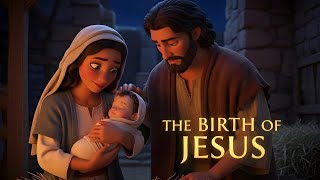
Birth of Jesus - A Christmas Story of Hope, Humility & Redemption | Bible Chronicles Animation
001416
32
EXPLORE TOPICS :
CHRISTMAS |
37
DECEMBER 25TH |
7
JOHN SPONG |
8
ISAIAH |
40
JEWISH |
224
JEWS |
140
JUDAISM |
74
JESUS
JESUS