756 views
·
Last viewed: 2 days ago
Uploaded: 12 Nov 2017 (9 years ago) · Shared: 05 Dec 2017
Duration: 1:32
Uploaded: 12 Nov 2017 (9 years ago) · Shared: 05 Dec 2017
Duration: 1:32
Youtube Description
In discussions between Muslims, Trinitarian Christians and Unitarian Christians it is often only the Trinitarians who would claim the Synoptics andPaul teach Jesus as deity. Karen Armstrong, through this quote, clearly sides against their side.
Explore More
Search Google Search Explore Topics Karen Armstrong Apostle Paul GOD Who is Karen Armstrong?
Karen Armstrong, (born 1944) is a British author and commentator of Irish Catholic descent. She is known for her books on comparative religion. A former Roman Catholic religious sister, Armstrong went from a conservative to a more liberal and mystical Christian faith. She attended St Anne's College, Oxford, while in the convent and majored in English. She became disillusioned and left the convent in 1969. Her work focuses on commonalities of the major religions, such as the importance of compassion and the Golden Rule.
 Who was Apostle Paul?
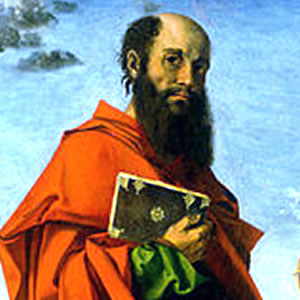
Paul the Apostle (Latin: Paulus), commonly known as Saint Paul and also known by his Jewish name Saul of Tarsus was an apostle (though not one of the Twelve Apostles) who taught the gospel of Christ to the first century world. Paul is generally considered one of the most important figures of the Apostolic Age and in the mid-30s to the mid-50s AD he founded several churches in Asia Minor and Europe. He took advantage of his status as both a Jew and a Roman citizen to minister to both Jewish and Roman audiences. According to writings in the New Testament and prior to his conversion, Paul was dedicated to persecuting the early disciples of Jesus in the area of Jerusalem. In Acts, Paul was traveling on the road from Jerusalem to Damascus on a mission to 'arrest them and bring them back to Jerusalem' when the resurrected Jesus appeared to him in a great light. He was struck blind, but after three days his sight was restored by Ananias of Damascus and Paul began to preach that Jesus of Nazareth is the Jewish Messiah and the Son of God.
Who is GOD?In monotheism and henotheism, God is conceived as the Supreme Being and principal object of faith. The concept of God as described by theologians commonly includes the attributes of omniscience (infinite knowledge), omnipotence (unlimited power), omnipresence (present everywhere), omnibenevolence (perfect goodness), divine simplicity, and eternal and necessary existence. In theism, God is the creator and sustainer of the universe In deism, God is the creator, but not the sustainer, of the universe Monotheism is the belief in the existence of one God or in the oneness of God In pantheism, God is the universe itself In atheism, God is purported not to exist, while deemed unknown or unknowable within the context of agnosticism.