899 views
·
Last viewed: 2 days ago
Uploaded: 24 Nov 2017 (9 years ago) · Shared: 30 Jun 2018
Duration: 30:04
Uploaded: 24 Nov 2017 (9 years ago) · Shared: 30 Jun 2018
Duration: 30:04
Youtube Description
Make sure to like and Subscribe! Follow us on Facebook to see what we're up to: https://www.facebook.com/AtheistCommunityOfMilwaukee/ Follow us onTwitter: https://twitter.com/MKEAtheists
Support us on Patreon: https://www.patreon.com/MKEAtheists
Check out our new website: https://www.MilwaukeeAtheists.com
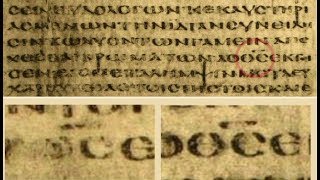
The son, the father, and the holy spirit. This is the trinity, one of the most interesting and highly debated doctrines in all of Christianity. God, in 3 parts. From its conception, there have been many disagreements on the nature of Christ. Things concerning his divinity and his relationship to God. The modern view of the trinity is one of the most mysterious and incomprehensible doctrines in Christianity. Was Jesus God? Was Jesus possessed by God's spirit? Were Jesus and God two separate but equal beings? Was Jesus human? Was Jesus just a prophet? These questions have plagued Christianity since it's conception. This doctrine is the untouchable doctrine of Christianity and it continues to become more complicated as time goes on. Why is this? What were the early Christian ideas? What contentions were brought up? and how have these ideas changed over time? These are just some of the questions I set out to answer in this video.
Sources:
Bart Ehrman - Misquoting Jesus
Bart Ehrman - Jesus, Interrupted
Bart Ehrman - Lost Christianities
Bruce Metzger - The Text of the New Testament: Its Transmission, Corruption, and Restoration
David Fitzgerald - Jesus, Mything in Action
Alan Segal - Life After Death
Diarmaid MacCulloch - Christianity: The First 3000 Years
William Rusch - The Trinitarian Controversy
Non-book sources:
http://www.ntcanon.org/Marcion.shtml
http://www.vexen.co.uk/religion/docetism.html
http://www.vexen.co.uk/religion/christianity_historical.html#Docetism
http://www.heraldmag.org/olb/contents/reference/mscript1.pdf
https://plato.stanford.edu/entries/trinity/trinity-history.html
http://www.bbc.co.uk/religion/religions/christianity/beliefs/trinity_1.shtml
Explore More
Early Christian TrinitySearch Google Search Explore Topics
 What is Early Christian?
Early Christianity, the period of Christianity preceding the First Council of Nicaea in 325 AD. This typically divides historically into the Apostolic Age and the Ante-Nicene Period (from the Apostolic Age until Nicea). The first Christians, as described in the first chapters of the Book of Acts, were all Jews either by birth or conversion and historians refer to them as Jewish Christians. The early Gospel message spread orally, probably originally in Aramaic, and later in Greek. The New Testament's Acts of the Apostles and Epistle to the Galatians record that the first Christian community centered on Jerusalem and that its leaders included Peter, James, the brother of Jesus, and John the Apostle.
 What is Trinity?
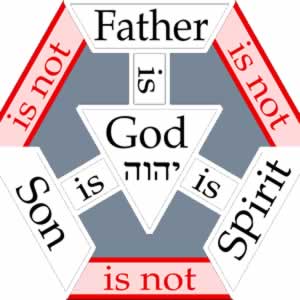
The Christian doctrine of the Trinity (Latin: trinus "threefold") holds that God is one God, but three coeternal consubstantial persons or hypostases. These being the Father, the Son (Jesus Christ), and the Holy Spirit - as "one God in three Divine Persons". The three Persons are distinct, yet are one "substance, essence or nature" (homoousios).